Key Technical Points and Daily Management Methods for Silver Crucian Carp Farming
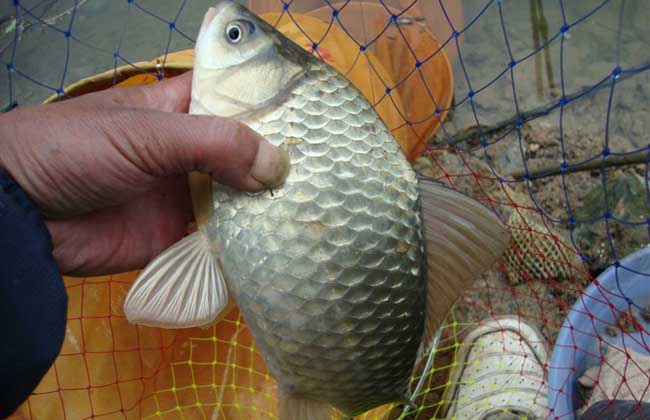
The silver crucian carp, also known as Hanoi crucian carp, Oukuma crucian carp, Japanese crucian carp, etc., originated in Lake Biwa in Japan and was introduced to China in 1976. It is named for its silvery-white body color and is commonly called crucian carp among the public. Its flesh is tender, its farming methods are fairly widespread, and it has a high reproduction rate, a high hatching rate, and a wide farming range. It can be farmed in ponds, reservoirs, lakes, cages, and other places. Now let us take a look at silver crucian carp farming techniques!
Extensive Farming Techniques
Extensive farming of silver crucian carp involves stocking fry and fingerlings in appropriate amounts according to pond productivity, without fertilizing or feeding. After 1 to 3 years, the marketable fish are harvested. Generally, pond yields reach 100 to 200 kg per hectare, and many ponds reach 400 to 500 kg per hectare.
Fertilization Farming Techniques
In storage ponds where no organic fertilizer flows in, nutrient elements are scarce, and transparency is high, fertilization is used to promote the reproduction of plankton, which is then used as feed to farm silver crucian carp. Applying 95 kg of ammonium nitrate and 16 kg of superphosphate per hectare and stocking 118 kg of silver crucian carp fry and fingerlings can yield an annual output of 500 kg per hectare. If 3.5 tons of dry chicken manure is applied per hectare and 125 kg of silver crucian carp fry and fingerlings are stocked, the annual output has reached 820 kg per hectare.
Feeding Farming Techniques
In storage ponds rich in nutrient elements, stocking 190 kg of silver crucian carp fry and fingerlings per hectare and feeding 75 kg of silkworm pupae, 230 kg of wheat bran, and 160 kg of rice bran, the silver crucian carp output has reached 1900 kg per hectare, common carp 230 kg per hectare, and hemibarbus and shrimp 80 kg per hectare, with a total output of 2210 kg per hectare. In storage ponds where no organic fertilizer flows in and nutrient elements are lacking, stocking 60 kg of silver crucian carp fry and fingerlings per hectare and feeding 600 kg of silkworm pupae and 600 kg of wheat bran, the silver crucian carp output can reach 600 kg per hectare, common carp and hemibarbus 150 kg per hectare, with a total output of 750 kg per hectare.
Fertilization and Feeding Farming
In a pond stocked with 375 kg of silver crucian carp fry and fingerlings and 50 kg of common carp fry and fingerlings per hectare, and additionally supplied with 10 tons of soy sauce residue and 4 tons of silkworm pupae, the silver crucian carp output can reach 3300 kg per hectare and common carp 500 kg per hectare. In a pond where 310 kg of silver crucian carp fry and fingerlings and 60 kg of common carp fry and fingerlings are stocked per hectare, 300 kg of chicken manure is applied, and 600 kg of silkworm pupae, 4 tons of rice bran, and 300 kg of compound feed are fed, the silver crucian carp output has reached 1900 kg per hectare and common carp 1300 kg per hectare.