Is the white croaker a saltwater fish or a freshwater fish?
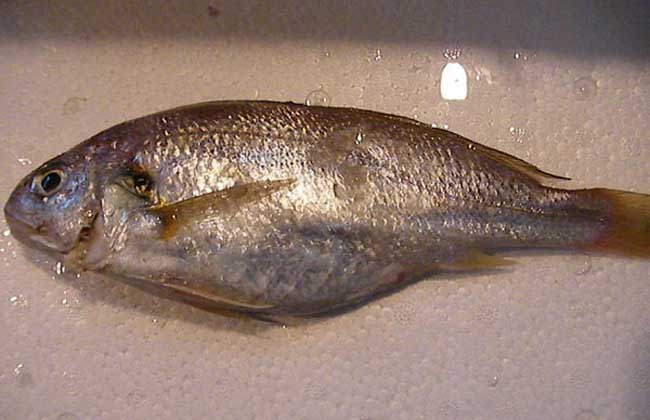
The white croaker is a fish of the genus Pennahia in the family Sciaenidae, also known as white rice fish, white croaker, white plum, white croaker, and sand wei kou, among other names. It mainly inhabits sandy and muddy seabed waters within a depth of 40 meters. When the spawning season arrives, it has the habit of gathering and migrating, feeding on small fish, crustaceans and so on. Now let us take a look at whether the white croaker lives in the sea!
Does the white croaker live in the sea?
The white croaker lives in the sea, inhabiting sandy and muddy seabed waters within a depth of 40 meters. The white croaker is one of the marine economic fish species, but its yield along the coast of China is not large. It is mainly distributed in the tropical, subtropical and warm temperate zones of the Northwest Pacific, including the South China Sea, the East China Sea and the southern Yellow Sea of China, and during the reproductive period it gathers in schools and migrates toward the coast.
Domestic distribution of the white croaker
1. Shandong Peninsula: it usually migrates north to Laizhou Bay in April to May, spawning in places such as the mouth of the Yalu River and Haizhou Bay, migrates south in September to October, and returns to its overwintering ground in November to December.
2. Jeju Island group: it spawns around July between the mouth of the Yangtze River and Zhoushan.
3. Offshore waters of Wenzhou: it moves north in April to spawn between Zhoushan and the mouth of the Yangtze River, and returns south to overwinter after October.
Dietary restrictions for the white croaker
1. Eating salted fish is more carcinogenic for young children than for adults. The reason salted fish can cause nasopharyngeal carcinoma is that during the curing process part of the protein in the fish breaks down into amines. Animal experiments also show that rats fed salted fish develop cancerous changes, while the control group not fed salted fish does not develop cancerous changes.
2. Fish contain purine substances. If one has gout, it is caused by a disorder of purine metabolism in the body, mainly manifested as an excessively high uric acid level in the blood, which can cause a series of symptoms in the joints, connective tissue, kidneys and other parts of the body. Therefore, people suffering from gout will have their symptoms worsened by eating fish.
How to select a white croaker
1. Observe the fish shape: heavily polluted fish have abnormal shapes, some with large heads and small tails, curved spines or even deformities, and some with yellowed skin and bluish tails.
2. Look at the fish eyes: fresh fish have plump, protruding eyes with clear, transparent corneas. If the eyeballs do not protrude, the corneas are wrinkled, or there is blood congestion inside the eyes, the fish is not fresh.
3. Smell the fish gills: the gill filaments of fresh fish are bright red, with transparent mucus, having the salty fishy smell of saltwater fish or the earthy fishy smell of freshwater fish. The gills of non-fresh fish turn dark, grayish red or grayish purple, and the mucus smells rank.
4. Touch the fish body: the surface of fresh fish has transparent mucus, and the scales are glossy and tightly attached to the fish body, not easily falling off. The surface mucus of non-fresh fish is mostly opaque, and the scales have poor gloss and fall off more easily.
5. Press the fish flesh: fresh fish flesh is firm and elastic, and the indentation after finger pressure disappears immediately, with no off odor. Non-fresh fish flesh is somewhat loose, and the indentation after finger pressure disappears more slowly, with a slight rank odor.
6. Look at the fish belly: the belly of fresh fish is not swollen, and the anal pore is white and sunken. The anal pore of non-fresh fish protrudes slightly.