Key Points and Methods of Longsnout Catfish Aquaculture Technology Explained
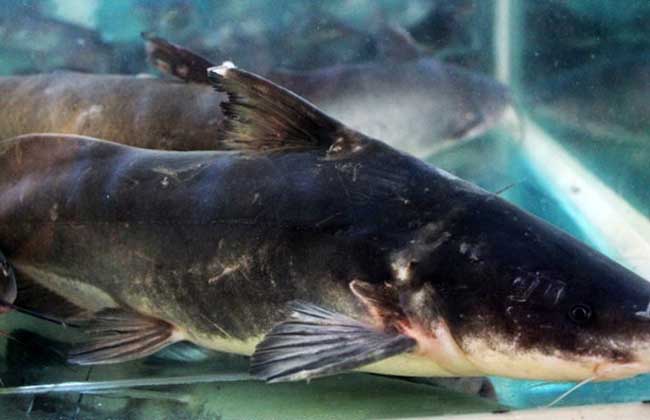
The longsnout catfish, scientific name Leiocassis longirostris, also known as jiangtuan, feituo, feiwangyu, etc., is a freshwater fish of the family Bagridae, genus Leiocassis, distributed in the Liao River, Huai River, Yangtze River, Min River to Pearl River and other water systems of eastern China as well as western Korea. Its flesh is tender and delicious, rich in nutrients, and it has extremely high aquaculture prospects and economic value. Let us take a look at longsnout catfish aquaculture technology together below!
Pond Conditions
The water quality is required to be fresh with relatively high dissolved oxygen and a pH value of 7 to 8.2. Therefore, the pond should be selected in a place close to a water source, with convenient drainage and irrigation, and a quiet environment. The pond area is generally preferably 1000 to 3000 sq m, with a water depth of 1.5 to 2 m, rectangular, running east to west, with the pond walls hardened with brick, stone or cement, and the pond bottom silt not exceeding 10 cm. Each pond is equipped with one 3-kilowatt impeller aerator.
Fry Stocking
Select artificially domesticated and bred one-winter-age fry, robust in constitution and uniform in size. Generally, 800 to 1200 fry of 70 to 100 g are stocked per mu, paired with 250 to 300 silver carp of 150 to 200 g, 75 to 100 bighead carp, and additionally 5 mandarin fish or bass to control wild miscellaneous fish in the pond. Omnivorous competing fish such as common carp, grass carp and tilapia must not be stocked. Fry stocking is generally best in early March. Ten days before fry stocking, use 100 to 150 kg/mu of quicklime, slaked into slurry, and splash it over the whole pond; after 7 days, add water to the required water level. Before fry stocking, soak the fish bodies in a 15 to 20 mg/L potassium permanganate solution or 3 to 5% salt water for 15 minutes to kill pathogens and harmful organisms.
Feed Feeding
After the longsnout catfish has undergone feed conversion domestication at the fry and fingerling stage, compound feed is mainly used, and its crude protein content must reach 40 to 45%. The main raw materials are imported fishmeal, dried fish, soybean cake, peanut cake, wheat bran, yeast powder, mineral salts, vitamins, etc., made into hard pellet feed with particle sizes of 3 mm, 4 mm and 5 mm. At the initial stage, the feed particle size is 3 mm, and as the fish gains weight, it is later changed to 4 mm and 5 mm. Feeding must be done at a fixed point, at a fixed time and in a fixed amount, with a feeding platform built on one side of the pond. After fry stocking, domestication is carried out: first train with sound at the feeding platform so that the pond fish form a conditioned reflex, then slowly feed by hand scattering. Feed twice a day at 8 a.m. and 8 p.m., with the ratio of morning to afternoon feeding amount being 4:6. Each operation must be careful until the fish school is full and leaves. The daily feeding amount is generally 1.5 to 3%.
Water Quality Regulation
The longsnout catfish prefers pond water that is fresh with relatively high dissolved oxygen. Normally, water quality management should be strengthened, insisting on frequently adding fresh water, starting the aerator in a timely manner, and reasonably using biological agents to regulate water quality. June to September is the peak growth season for the longsnout catfish, so water should be flushed once every other day, and sludge discharged and water changed once a month, with the water change amount being 1/4 of the pond water. Increase aeration equipment as much as possible and start the aerator at appropriate times: start at noon on sunny days, in the early morning on cloudy days, in the middle of the night during continuous rainy weather; do not start in the evening, start early when fish float to the surface, and start every day during the peak growth season. Operating time should be short at noon and long at midnight, short in cool weather and long in muggy weather, long under heavy load and short under light load. Regularly apply photosynthetic bacteria at a dosage of 10 to 20 g/cubic meter. Regularly splash quicklime water; generally, during the aquaculture period, splash once about every half month at a dosage of 5 to 10 kg per mu. Always keep the pond water dissolved oxygen not lower than 5 mg/L, pH value at 7.2 to 8.2, and water transparency preferably at 30 to 40 cm, but this should be flexibly controlled according to the season and the fertility of the pond water quality. The water quality should not be too clear and lean; medium fertility, slightly on the light side, is preferable. If the water source is abundant and the temperature suitable, the method of micro-flow water supplemented by regular water flushing can also be used.
Daily Management
Patrol the pond frequently, insisting on patrolling in the morning, midday and afternoon every day, removing residual feed and dirt and cleaning the feeding platform, and observing whether the pond fish show signs of floating to the surface. In the hot summer season or when the weather changes suddenly, increase the number of nighttime patrols or arrange night-shift management. Start feeding early: begin feeding and domestication on the second day after fry stocking. In conjunction with pond patrols, observe the weather, water color and the fish's feeding situation every day. Every 15 days, randomly sample fish bodies to check the fish's feeding and fatness condition, and by weighing and counting, estimate the fish's growth rate, the total amount of pond fish and the feed conversion value, so as to determine the feeding amount for the next stage.
Disease Prevention and Control
Every half month, splash quicklime over the whole pond once at a dosage of about 10 kg/mu. Add 1.5% allicin to the feed for a long period. Each month, also make medicated bait with Yusukang and feed it for 3 consecutive days to prevent enteritis. Each month, alternately splash Lvshawang and copper sulfate over the whole pond, with the use concentration of Lvshawang at 0.2 to 0.3 g/cubic meter and copper sulfate at 0.3 to 0.5 g/cubic meter. During feeding management, always pay attention to observing the feeding situation of the fish school. If abnormal reactions or diseased fish are found, symptomatic treatment should be given as early as possible.