How to keep Chinese fighting fish well? Detailed methods and tips
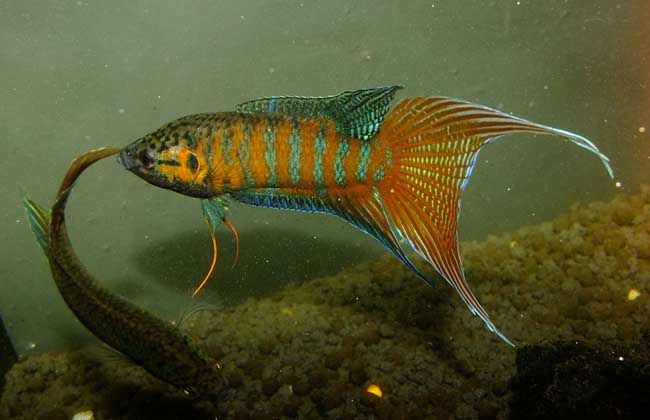
Chinese fighting fish is the collective name for four known species of the genus Macropodus in China and Southeast Asia, namely the red and blue fork-tailed fighting fish, the Hong Kong, China black fork-tailed fighting fish, the Vietnam black fork-tailed fighting fish and the round-tailed fighting fish. They often live in shallow puddles or on banks with dense aquatic plants. They are beautiful in appearance and color and can be kept as ornamental fish. Let us take a look below at how to keep Chinese fighting fish!
What varieties of Chinese fighting fish are there?
1. Round-tailed fighting fish: The round-tailed fighting fish is a fish of the genus Macropodus in the family Osphronemidae. Its feeding habit is mainly carnivorous. In the natural environment it mainly feeds on rice field pests and mosquito larvae. Under artificial breeding conditions, newly hatched fry use live foods such as paramecia and vinegar eels as first food, and once they grow to about 3 cm they can accept artificial feed.
2. Fork-tailed fighting fish: The body shape of the fork-tailed fighting fish is similar to that of the round-tailed fighting fish. The pelvic fins have 1 segmented fin ray that is especially elongated, and the fin rays of male fish are even more elongated. The caudal fin is forked. It mostly lives in shallow water areas such as mountain ponds, rice fields and springs, and feeds on invertebrates. During the breeding season, the male spits bubbles to make a nest and gathers the eggs in it. The male has the habit of guarding the nest.
What food do Chinese fighting fish eat?
1. Brine shrimp: Brine shrimp are widely distributed in salt pans or salt lakes on land, and have very high nutritional value for artificially farmed fish and shrimp. The winter eggs of brine shrimp are a very special kind of dormant egg. They can be sun-dried and canned, sold on the market as a commodity, and can be hatched very conveniently as high-quality live bait. Brine shrimp are widely used in aquaculture.
2. Red worms: Red worms mostly live on the banks of river basins or in the sludge at the bottom of rivers, densely gathered on the surface layer of the sludge, with one end fixed in the sludge and one end extending out of the sludge and trembling in the water. Upon any disturbance, they immediately retract into the sludge. The nutritional value of aquatic earthworms is extremely high. Before feeding, they must be rinsed repeatedly in clean water. They are bait that goldfish and koi love to eat very much, and are also the main bait for eel fry and young soft-shelled turtles.
3. Bloodworms: Bloodworms mainly refer to the common name of several kinds of aquatic annelids with bright red body color, including animals of the genus Tubifex in the family Tubificidae of the class Oligochaeta, which can be used to feed tropical fish. Species of the genus Glycera in the family Glyceridae of the class Polychaeta are sometimes also called bloodworms. The aquatic larvae of some insects of the genus Chironomus in the family Chironomidae also have blood-red body color and are also called bloodworms.
4. Daphnia: Daphnia live in freshwater. In autumn, some small male Daphnia hatch from summer eggs and begin sexual reproduction. The eggs they produce are called “winter eggs”. Winter eggs are larger than summer eggs, have thicker egg shells and more yolk. Fertilized winter eggs are also called “resting eggs”. They survive severe cold or dry environments and develop into new females the following spring when the temperature is higher. Except for a few that live in seawater, they are mostly the most common zooplankton in various freshwater waters.
How to keep Chinese fighting fish well?
1. Water quality selection: Fighting fish are not strict about temperature requirements. Generally they can survive within 4-31°C, and 24-27°C is most suitable for their growth. Neutral water is suitable for the pH, with a pH value of 6.5-7.2. Under artificial breeding conditions, the dissolved oxygen content is best kept at 5 mg/L. In addition, attention should also be paid to controlling the content of some toxins in the water quality.
2. Fish tank selection: There are no special restrictions on the container for keeping fighting fish. First, a thin layer of cleaned bottom sand or colored sand should be spread on the bottom of the fish tank. On one hand, it can stabilize the roots of cultivated aquatic plants; on the other hand, it can provide attachment for microorganisms. The ratio of water to bottom sand is preferably 5:1. In order to maintain sufficient oxygen in the tank and provide places for fish to hide, aquatic plants with low CO2 requirements such as hornwort and black algae should be appropriately planted.
3. Water quality management: To keep fighting fish, it is only necessary every 3-7 days to use a plastic hose to remove feces and dirt at the bottom of the tank by siphon method, draw off about 1/3 of the dirty water, and inject dechlorinated tap water to create a clean water quality environment. In small aquariums, because there is no power equipment to drive water circulation, attention must be paid at all times to removing the oil film on the water surface formed by residual bait and feces. You can use bamboo chopsticks to hold a piece of absorbent paper and gently drag it across the water surface. In addition, some beneficial microorganisms and trace elements should be added in due course according to the water quality conditions.
4. Bait feeding: Fighting fish are omnivorous fish that lean toward carnivory, so a variety of baits can be fed in combination. Try not to make the diet of fighting fish too monotonous. Usually artificial dry bait has complete nutritional components and is clean and hygienic, and is a necessary bait for most people when feeding fighting fish. Before feeding, it must be rinsed. Each feeding amount should be enough to be eaten within 5 minutes, and feeding once a day is enough.
5. Precautions: Chinese fighting fish is a very lively fish, especially adult fish. When the environment changes suddenly or when they are frightened, they may jump out of the tank. Therefore, when keeping them, when the environment changes, be sure to add a lid to the fish tank to prevent the tragedy of jumping out of the tank.
Prevention and treatment of common diseases in Chinese fighting fish
1. Fungus: It is almost always caused by abnormal water quality and temperature. This symptom spreads quickly, so it is necessary to disinfect commonly used utensils and carry out whole-tank treatment. It can be cured quickly with fungus medicine sold on the market, or it can be treated with a salt bath, but the effect is slower. This disease very easily infects fighting fish, and if not treated in time, it can quickly cause death.
2. White spot disease: White spot disease is a common disease of tropical fish and is not only seen in fighting fish. Irregular changes in water quality and temperature easily cause this disease. It is characterized by white round spots attached to the surface of the body. In the early stage of the disease, the water temperature can be raised to 30 degrees, or methylene blue can be used and the water temperature can also be raised to 30 degrees, or a salt water bath plus heating also has a good effect.
3. Pepper disease: Pepper disease is smaller white (or coffee-colored) spots than those of white spot disease, densely packed, like pepper covering the surface of the fish. It is generally caused by sudden changes in water quality. Using a salt water bath can achieve a good effect.
4. Pinecone disease: Pinecone disease is not easy to cure. It is an infection caused by deterioration of water quality. The symptoms are that the fish scales stand upright and the fish body secretes a large amount of mucus. Treatment must use antifungal medicine together with antibacterial medicine, and more attention should be paid to residual bait and water quality.
5. Fin rot: Fin rot is a disease that fighting fish often develop. In appearance it looks like a small hole has broken in the middle of the fin. It is generally caused by sudden changes in water quality or by movement, transport or fighting when health is poor. The treatment method can use yellow medicine and pay more attention to water quality to avoid secondary infection.
6. Ascites: In appearance it looks like abnormal swelling of the belly. The cause is almost always improper bait and poor water quality, but it may also be caused by internal parasites. Generally, start with improving water quality and changing bait (reducing feeding), or even temporarily not feeding. If there is no effect, use internal deworming drugs after a period of time. This symptom often occurs together with pinecone disease, and treating this symptom requires a great deal of patience.