What fish can be kept together with the flowerhorn?
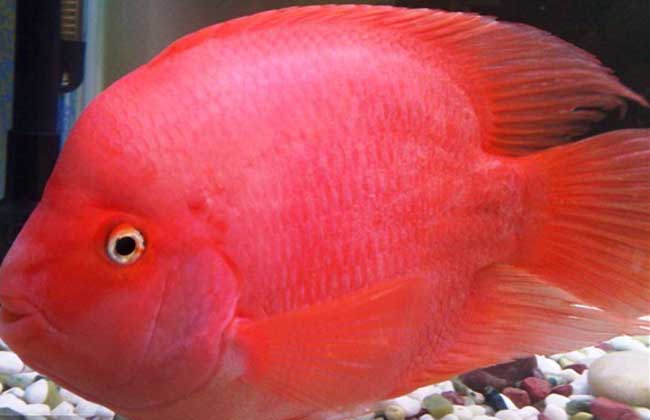
The flowerhorn (also known as the "God of Wealth" fish) is native to the Amazon River in South America, but it is also found in Vietnam, Thailand, Malaysia and other places. Its whole body is golden yellow, the edges of the scales on its body surface show a faint red, and under the light it radiates a golden glow all over. Thanks to its beautiful colours and auspicious meaning, it is loved by many people and kept for ornamentation. Let us take a look below at what fish can be kept together with the flowerhorn!
What fish can be kept together with the flowerhorn?
1. Silver arowana: The silver arowana, scientific name Osteoglossum bicirrhosum, also known as silver arowana, silver knife fish, silver band and so on, lives in tropical rivers and lakes. It likes quiet, and usually swims among dense aquatic plants. When it encounters prey it can strike quickly, feeding on fish, shrimp and shellfish. Among all osteoglossids it is considered quite gentle and can be kept with fish of the same size, and it is also the most prolific breeder of all osteoglossids.
2. Parrotfish: Parrotfish are tropical fish that live in coral reefs, named for their brilliant colours and mouths that resemble a parrot's beak. The young fish mimic drifting bits of algae with the current, hide in the sand when frightened, and bury themselves in the sand to sleep at night. They are carnivorous, feeding on small benthic animals. They have a row of teeth on both the upper and lower jaws, and can not only bite off coarse, hard algae but even spiny sea urchins are not spared; they can also bite through hard coral, and will even eat toxic food without hesitation.
3. Oscar: The oscar, scientific name Astronotus ocellatus, also known as the piglet fish, tail-star fish, black pig fish, flower pig fish and so on, has a black oval body covered with irregular red and orange-yellow markings, just like a map, hence its name. The oscar is one of the larger tropical fish, reaching 30 cm in length under suitable natural conditions, and several different varieties now exist. After being kept by humans it becomes quite affectionate, swimming over to show welcome when people approach the aquarium.
Points to note when keeping flowerhorns in a community tank
1. The stocking density of a flowerhorn community tank and the size of the fish must not differ too much, otherwise large fish will bully small fish.
2. The flowerhorn is not strict about water quality, and the keeping water temperature is 22-26°C. The water should be neutral or slightly acidic soft water, and foods include small live fish, fish meat, shrimp meat, tubifex worms and so on.
3. The flowerhorn likes light and aquatic plants, adapts to large spaces, and stays in the middle and upper layers. It has a good constitution, a gentle temperament, and recognises people. It grows fast: a small fish can weigh about one kilogram after a year of rearing, and can reach a maximum of 20 kilograms.
Flowerhorn rearing and management methods
1. Pond selection: For the flowerhorn, an intensive rearing pond with abundant cold and hot water sources, no pollution, suitable water fertility, and convenient drainage and irrigation should be chosen as the broodstock rearing pond, with an area of 2-3 mu and a water depth of 2 m being suitable.
2. Stocking: The stocking density of flowerhorns should not be too high; no more than 120 kg of broodstock per mu of water surface. Before stocking, pay attention to pond clearing and disinfection, and require that the introduced stock is pure, uniform in size, free of disease and injury, and strong in constitution.
3. Feeding: For flowerhorn rearing, feed such as wheat bran, soybean cake and soybeans can be given; formula pellet feed is best, and where conditions allow, animal liver and silkworm pupae etc. can also be fed. The feed should be placed on a fixed feeding platform, with the amount eaten up each day without leftovers being suitable. Feed twice a day, and reduce appropriately in rainy and low-temperature weather.
4. Heat preservation: The flowerhorn is quite strict about temperature, with a suitable water temperature of 22-32°C. On rainy days or when cold air arrives, hot water should be added in time to raise the temperature. Normally the pond water depth should be maintained, and when raising the temperature take care not to do it too hastily, to prevent a sudden temperature change from harming broodstock growth. When the water temperature is too high, add cold water in time.
5. Water maintenance: First, ensure the water depth is above 2 m; second, ensure the water source, and make sure cold and hot water are supplied in sufficient quantity in good time; third, ensure water quality, keeping the water fertile, lively, tender and fresh, with transparency above 35 cm. New water should be added frequently, generally 2-3 times a month, adding 10-20 cm each time. Before adding water, release the old water, and in summer the frequency and amount of water changes can be appropriately increased.
6. Food maintenance: First, ensure the food is nutritious; the feed should be fresh feed with a relatively high protein content, and rotten, spoiled or nutritionally incomplete feed must not be given. Second, ensure the amount of food; this species is omnivorous and has a large food intake, so feed according to need. Third, ensure the hygiene of the feeding platform; clean the feeding platform frequently, remove leftover bait and debris, and regularly hang baskets for disinfection.
7. Disease prevention: For flowerhorn diseases, prevention should be the main approach. Keep the pond water temperature above 20 degrees, regularly disinfect the water body with 10-15 kg of quicklime per mu, or use a 1 ppm bleaching powder solution. Sulfonamide drugs can be mixed into bait and fed, water quality should be adjusted in time, and the feeding platform should be cleaned frequently and disinfected. Common diseases include print disease, red-skin disease and anchor worm disease, and generally they can be cured by treating the symptoms.
8. Guarding against risks: First, remove weeds around the pond and guard strictly against poultry and livestock entering the pond. Second, during the overwintering period keep all-day duty, deal with hidden dangers promptly, pay close attention in rainy, muggy and sharply cold weather, and watch and manage diligently. Third, guard against theft.