Key Points and Detailed Methods of Snakehead (Seven-star Fish) Aquaculture Techniques
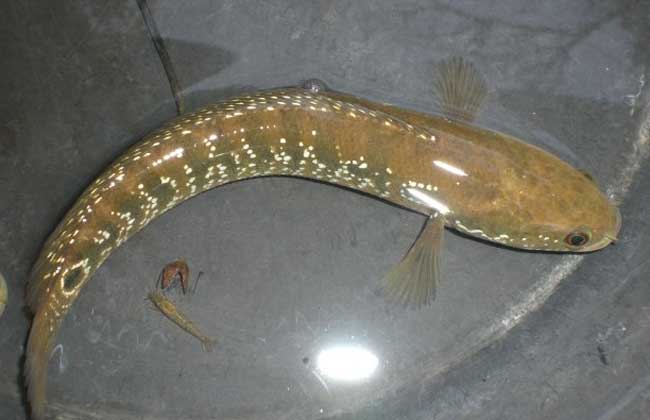
The scientific name of the seven-star fish is Channa asiatica (yue li), a freshwater fish of the genus Channa in the family Channidae, also known as gudai, mountain flower fish, mountain spotted fish, etc. Its morphology resembles that of Channa maculata. Through in-depth research and domestication by scientific and technological workers in Guangxi, Jiangxi, Hubei and other parts of China, it has gradually been transformed into a farmed species with important edible, medicinal and economic value. Let us now take a look at seven-star fish aquaculture techniques!
How much does seven-star fish cost per jin?
The market price of seven-star fish is much higher than that of other fish, usually averaging over 30 yuan per jin. However, there is basically no fixed pricing on the market now, because very few people farm it, and this fish rarely goes on sale, generally being directly ordered by restaurants, clubs and the like. In China, seven-star fish is distributed in the wild across all river systems south of the Yangtze River, and is relatively more common in the upper reaches.
Growth Habits of Seven-star Fish
The seven-star fish is a eurythermal fish with strong adaptability. Its survival water temperature is 1-38°C, feeding water temperature is 12-32°C, growth water temperature is 13-30°C, and optimal growth water temperature is 15-28°C. It has the living habits of preferring darkness, liking to dig holes, living in caves, gathering in groups, and cannibalism. It prefers to inhabit mountain streams, and also lives in rivers, ditches and ponds and other water bodies. It is fierce in nature and quick in movement, and is an animal-based omnivorous fish, feeding on fish, shrimp, aquatic insects, etc. Under artificial domestication conditions, it readily eats compound feed and frozen fresh fish.
Breeding Techniques for Seven-star Fish
The age of first sexual maturity for seven-star fish is 2 winters, and for artificially farmed fish it is 1 winter. The relative fecundity is about 500 eggs. The reproductive period is April to June, with May to July being the peak spawning period, and the breeding water temperature is 18-28°C. It spawns multiple times a year. The yolk contains oil globules, and the eggs are floating eggs. The testis is closely attached to both sides of the ventral surface of the swim bladder, and is brownish-yellow during the breeding season. Male and female parent fish chase each other in courtship, the female releases eggs, and the male releases sperm onto the eggs. The eggs gather into clumps and float on the water surface. The parent fish have the instinct to guard the eggs until the fry hatch. Newly hatched fry have their abdomens facing upward. On the 4th day after hatching, they can swim in groups, and by the 25th day their morphology and living habits are the same as those of adult fish.
Aquaculture Techniques for Seven-star Fish
1. Pond construction: The pond should be built in a place with sufficient water source, good water quality and convenient drainage and irrigation. Ponds, cement tanks, pits, rice fields, lotus fields, cages, etc. can all be used for farming, but ponds are preferable. Since the seven-star fish prefers darkness and fears light, tile pipes or bamboo tubes should be placed at the bottom of the pond for the fish to inhabit. The inlet and outlet should be equipped with fish-blocking facilities, and the pond base should be enclosed with polyethylene netting at least 50 cm high to prevent invasion by predators or escape of the fish.
2. Fry and fingerling stocking: The seven-star fish fry to be stocked should be disease-free, injury-free, robust and uniform in size. Fry with a body length below 5 cm should first be raised in cement tanks with an area below 10 sq m and a water depth of 20-50 cm, with 2000-5000 fry of 2 cm body length per sq m. When the fry grow to a body length above 5 cm, they can be transferred to large ponds for farming, with 20-50 fish per sq m, and up to 100 fish per sq m at the high end.
3. Feed selection: The seven-star fish is a typical carnivorous fish and likes to eat animal-based feed. At the fry stage (body length below 4 cm), mainly water fleas, Artemia, aquatic earthworms are fed, and meat paste, egg yolk, etc. can also be fed. As the fish grows, its feeding habits also change. It can eat both animal and plant feed, but still prefers animal-based feed. Animal-based feed includes earthworms, fly maggots, yellow mealworms, snail and mussel meat, silkworm pupae, fish and shrimp, livestock and poultry meat and internal organs, etc. When animal-based feed is lacking, it also eats plant-based feed, such as cornmeal, peanut and wheat flour, bean dregs, rice, noodles, etc.
4. Feeding and feeding management: At the fry and fingerling stage, the seven-star fish is fed powdered compound feed (preferably feed with strong adhesion that has been crushed by a micro-pulverizer), requiring a crude protein content of 40-45%. After growing to 10 cm, it is switched to formed pellet feed with a crude protein content of 38-42%. Regardless of the type of feed fed, feeding must be done at fixed times, in fixed amounts, with fixed quality and at fixed locations, and feeding platforms should be set up in the pond. The daily feeding amount should be determined according to water temperature, weather changes and the fish's feeding situation, generally 3-10% of the fish's body weight, fed twice a day, once at 8-9 am and once at around 6 pm. Feed should be given in appropriate amounts, with the fish eating their fill as the standard, to prevent leftover feed from polluting the water quality.
5. Water quality management: During the farming period, water quality should be kept clean, and new water should be added regularly. Each water change should replace at most half of the pond water, and dirt and residue should be discharged in a timely manner. Water hyacinth should be planted in the pond, accounting for about one-half of the water surface, and at the same time bamboo poles, wooden strips or ropes should be used to fix the water hyacinth in a certain position. In high-temperature seasons, the pond water should be appropriately deepened. A shade shed or black shade netting is best set up over the surface of cement tanks.
Disease Prevention for Seven-star Fish
1. Pond clearing and disinfection: First clear out the pond silt. 7-8 days before the fingerlings are put into the pond, use 190-120 kg of quicklime per mu of pond for disinfection, or 4-5 days before entering the pond, use 10-15 g of bleaching powder per cubic meter of water for disinfection.
2. Fish body disinfection: Disinfection must be carried out before stocking the fingerlings. They can be soaked in 3% salt water for 3-5 minutes or in 15-20 ppm potassium permanganate for 15-20 minutes. The soaking time should be flexibly controlled according to the fish's tolerance.
3. Tool disinfection: The method is to expose them to sunlight for one day, or to disinfect with drugs, such as soaking in 50 ppm potassium permanganate or 200 ppm bleaching powder or quicklime for 5 minutes before use.
4. Feed disinfection: The live feed to be fed should first be rinsed clean, then soaked and disinfected in 50 ppm potassium permanganate or 100-200 ppm bleaching powder for 5 minutes, or soaked in 20-200 ppm chlorine dioxide solution for 10-20 minutes, or the feed organisms should be cultured in 0.01-0.1 ppm chlorine dioxide solution for 8 hours to 3 days before being fed to the fish.
5. Feeding ground disinfection: During the fish disease epidemic season, every 7-15 days, after the fish have eaten, dissolve 250 g of bleaching powder or 1000 g of quicklime in an appropriate amount of water and splash it near the feeding ground.
6. Water quality management: During the farming process, the water quality should be observed frequently, and water should be replenished and changed in a timely manner, or micro-flowing water should be implemented to maintain good water quality and prevent water quality deterioration.
7. Drug prevention: During seasons when fish diseases occur frequently, use the methods of splashing drugs and feeding medicated bait, combining internal and external prevention, to control the occurrence of fish diseases. Splash chlorine dioxide or quicklime or strong chlorine powder or bleaching powder or a mixture of copper sulfate and ferrous sulfate 1-2 times a month, alternating bactericidal drugs and insecticidal drugs. While splashing drugs, feed medicated bait. The medicated bait is generally made by mixing antibiotics, sulfonamides, and furan drugs with feed and then feeding, for 3-7 consecutive days.
8. Avoid injury: Fish body injuries are prone to infection. Therefore, during catching, transportation and transfer between ponds, operating procedures should be strictly followed, with care and caution, to avoid injuring the fish body as much as possible and prevent bacterial infection.
Pest and Disease Control for Seven-star Fish
1. Dizzy head disease
[Symptoms] In the early stage of the disease, the sick fish stops eating, the body color turns black, and they gather in the corners of the pond. In severe cases, they dart around in the water, struggle violently or swim in circles madly, then sink to the bottom of the pond and die. The pathogen of this disease is not yet clear.
[Harm] Dizzy head disease is mostly seen in fish fry of the current year before they reach 4 cm in body length. The epidemic season is March to July, with a major epidemic in April to May. This disease develops rapidly and spreads quickly, with a morbidity and mortality rate above 90%. It is the most harmful explosive fish disease at the fry and fingerling stage of the seven-star fish.
[Prevention and treatment] There is no treatment method yet. Fish farming facilities and tools must be strictly disinfected. Live bait to be fed must also be disinfected before feeding. Do not transport fish eggs and fry from farms where the disease has occurred. When changing water, the water should not be added too quickly, and the water temperature difference must not exceed plus or minus 2°C. After each water change, promptly splash chlorine dioxide to make the pond water 5 PPM, or splash 0.4 PPM furazolidone over the whole pond, or splash quicklime dissolved in water to make the pond water pH 7-8.
2. Rotten flesh disease
[Symptoms] The body surface shows patchy congestion, scales fall off, and then the dermal tissue becomes ulcerated. The ulcerated areas initially appear red, then necrose and turn white. In severe cases, it can rot down to the muscles or bones, and the tail rots away. It can occur anywhere on the body surface, and in severe cases spreads over the whole body.
[Harm] Rotten flesh disease is mostly seen in fingerlings and adult fish with a body length above 4 cm, and can occur throughout the year. After onset, its self-infectivity is high, and cross-infection is also relatively serious. This disease spreads quickly, and if not treated in time, the mortality rate is above 50%, hence it is called the "red plague." It is easily triggered under adverse conditions such as fish body injury, excessively high farming density, water quality deterioration or large water temperature changes.
[Prevention and treatment] Splash 5-10 PPM chlorine dioxide or 0.3 PPM Baidujing over the whole pond after water purification. If the condition is severe, splash once more after two days. When water quality deteriorates, an additional 10 PPM of water purifying agent can be splashed. Splash furazolidone over the whole pond to make the pond water reach a concentration of 0.5-1 PPM.
3. Trichodiniasis
[Symptoms] After being heavily parasitized by Trichodina, the sick fish stops eating, the body color turns black and it becomes emaciated, mucus increases, and a layer of white film forms on the body surface. It swims alone away from the group in the pond, often spinning, and eventually dies from exhaustion. It is quite harmful to seven-star fish fry. The pathogen is invisible to the naked eye but very obvious under microscopic examination.
[Prevention and treatment] Splash 0.7 PPM copper sulfate over the whole pond. Splash a mixture of 0.5 PPM copper sulfate and 0.2 PPM ferrous sulfate over the whole pond. Splash decocted chinaberry leaf juice to make the pond water reach a concentration of 30-45 PPA.
4. Edwardsiellosis
[Symptoms] The sick fish's body turns black, the abdomen swells, there are no wounds on the body surface, and sometimes the anus is red and swollen. Dissection reveals congestion, swelling and ulceration of the kidney, and pressing the abdomen releases a foul-smelling purulent liquid. Fingerlings in affected ponds tend to gather in the corners of the pond.
[Harm] The epidemic season of this disease is generally May to September, with a disease onset water temperature of 15-40°C and an optimum water temperature of 25-30°C. It is mostly seen at the fry and fingerling stage. The mortality rate of sick fish is 30-60%. Ponds that have been fed aquatic earthworms for a long time are prone to this disease.
[Prevention and treatment] Splash 0.3 PPM Baidujing or 2-5 PPM oxytetracycline or 10-20 PPM chloramphenicol or 0.2-0.5 PPM furazolidone over the whole pond. If the condition is severe, splash for 2 consecutive days. Add 30-50 g of chloramphenicol per kilogram of fish to the bait daily and feed for 5 days. Add 2-3 g of norfloxacin and 20 g of photosynthetic bacteria to each kilogram of bait and feed for 5-7 consecutive days.