How to Treat White Spots on Goldfish? Introduction to Practical Treatment Methods
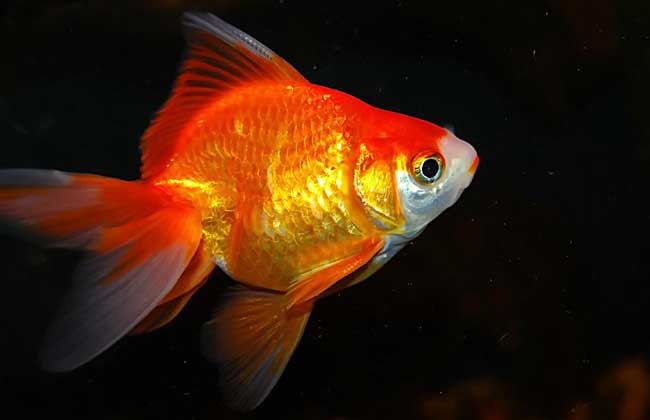
Goldfish are the earliest breed in the history of ornamental fish worldwide and are much loved by people. However, many friends discover during the process of raising goldfish that small white spots appear one by one on the goldfish's body, and before long the goldfish dies. It is a great pity and very saddening. So why do white spots appear on goldfish, and how should they be treated? Let us take a look together below at how to treat white spots on goldfish!
Causes of White Spots on Goldfish
White spots on goldfish are caused by protozoa. The pathogen is called Ichthyophthirius multifiliis (white spot parasite), which penetrates deep into skin cells, reproduces asexually, and forms small white spot-like cysts. A goldfish suffering from this disease is covered all over its body with white spots. Each white spot cyst contains many tiny young white spot parasites. The white spot parasites absorb nutrients from the fish's tissues, growing larger and increasing in number, then burst out of the cyst, swim into the water, and return to the fish's body to invade the skin, forming even more small white spots. In the early stage of the illness, the sick fish will rub its body against hard objects, hoping to remove the troublesome pathogens. If not treated immediately, the sick fish's body will rapidly suffer severe damage and it will die.
How to Treat White Spots on Goldfish?
1. Raise the water temperature to 28°C. After a few days, the Ichthyophthirius cysts will gradually rupture and fall off. At this point, replace with new water and keep the water temperature constant, and the sick fish will basically recover.
2. Choose a 0.05-0.07% concentration merbromin solution and bathe the sick fish for 5-15 minutes, or drip 3-10 drops of merbromin solution into a 100*50*45 cm aquarium, continuing for 2-3 days, with good results.
3. Drip several drops of diluted mercurous nitrate solution into 10 kg of water and bathe the sick fish for 5-10 minutes, or drip mercurous nitrate solution into 125 kg of water for remarkable results. Because mercurous nitrate is relatively strong in medicinal effect, care should be taken to use it only once when medicating. If the medication is repeated, it will cause the fish's fins to rot.
4. Place a soybean-sized amount of nitrofurazone powder into an aquarium containing 50 kg of water, dilute it, and splash it into the water. Medicinal bathing of the sick fish also has a certain effect.
5. Soak a new brick in urine for 24 hours, take it out and let it dry (called a urine brick in ancient times), and place it into the tank of the sick fish. Results will be seen after a few days.
Prevention Methods for Goldfish White Spot Disease
1. When changing water, note that an excessive temperature difference may cause the fish's body to “catch a cold”, allowing pathogens to invade the fish's body when it is weak.
2. Make full use of the weakness that Ichthyophthirius multifiliis dies on its own after 24 hours if it cannot find a host. The water used for raising goldfish should be exposed to sunlight or left standing for 2-3 days before use. This is one of the best methods for preventing white spot disease.
3. Splash the entire pond at a ratio of 0.05-0.1 g of mercurous nitrate per cubic meter of water, or when the water temperature is below 15°C, place 0.01 g of mercurous nitrate into 50 kg of water, bathe the sick fish for about 0.5-1 hour, then rinse with new water of the same temperature, and put it back into a disinfected new pond. Add a little green water and let it rest. However, note that mercurous nitrate is highly toxic and should be used with caution. In particular, small fish have weaker resistance to the medicinal solution than large goldfish, so the concentration of the solution should be appropriately reduced and the soaking time appropriately shortened.
4. Place 0.5-1 ml of merbromin into 10 kg of water and bathe the sick fish for 5-15 minutes. If it is an adult fish, merbromin can be directly applied to rub the affected area or the whole body. Afterwards, rinse with new water, then place it into clean new water for rearing. Alternatively, splash 3-5 ml of merbromin per cubic meter of water to make the pond water concentration 3-5 mg/L. After 2-3 days, depending on the condition, the above bathing method can be used for one treatment, then change to clean new water for rearing. At the same time, extend the sunlight exposure time, appropriately raise the water temperature, stop feeding, and increase oxygen to achieve satisfactory results.
5. Based on the characteristic that Ichthyophthirius multifiliis cannot tolerate high temperatures, place it in the sun and raise the water temperature to 30°C. Apply merbromin once to the whole body of the fish, then after rinsing with new water, scoop it into clean, same-temperature tender green water for rearing. After stopping feeding and exposing to sunlight for 1 week, change to new water and recovery will be seen.
6. Within a water temperature range of 20-26°C, use 0.3 g or 0.4 g of malachite green solution per cubic meter of water to bathe the sick fish for 2 hours, which can kill Ichthyophthirius multifiliis and is also relatively safe for goldfish.
Note: If we find that the time when white spots appear on the goldfish's body is from the end of October to the beginning of February, the goldfish may have contracted carp pox disease, and it can be treated simply by placing a little erythromycin in the tank.