Can Goldfish Be Eaten? A Detailed Explanation of Food Safety
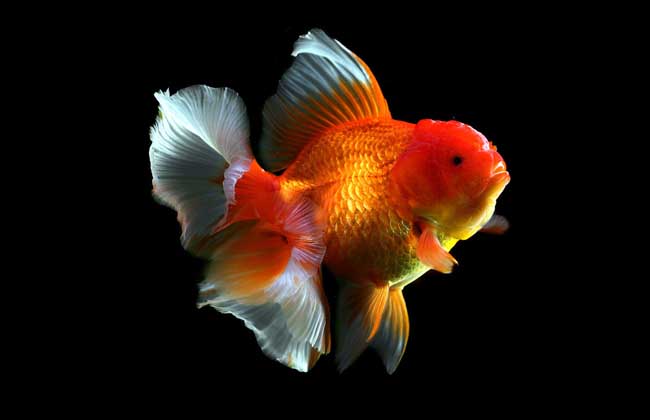
Goldfish have accompanied human life for more than a dozen centuries in the history of Chinese civilization. They are easy to keep, have unusual postures, brilliant colors and graceful forms, and are very much loved by people. Through the efforts of generations of goldfish breeders, Chinese goldfish still perform for the world a legend of beauty between motion and stillness. Let us take a look below at whether goldfish can be eaten!
Can Goldfish Be Eaten?
Goldfish can be eaten, but they do not taste good. Goldfish are ornamental fish evolved from crucian carp, also known as golden crucian carp, meaning that goldfish are ornamental fish improved by humans from wild crucian carp, so they can be eaten, but goldfish do not taste good because what they eat is different from wild fish, and the water space is not as large either. It is just like wild fish and farmed fish: farmed fish do not taste as good as wild fish. Likewise, goldfish do not taste as good as farmed fish, because goldfish are still a level below farmed fish.
How Long Can Goldfish Live?
The lifespan of goldfish is related to its raising conditions and the fish's physique. Most people believe that goldfish live only 6 to 7 years, but some have observed that goldfish can live more than 10 years or even longer under good raising conditions. A goldfish that had just been confirmed in the Guinness World Records as the world's longest-lived goldfish has died. This goldfish was bought in 1956 by a man named Hunter from North Yorkshire, England, for his then 7-year-old son. Forty-three years have passed, Hunter's son has long since started a family, and this roughly 43-year-old goldfish has changed from red copper color to silver.
How Do Goldfish Reproduce?
1. Seed selection: The quality of goldfish stock directly affects the quality of the next generation. Two-year-old goldfish with strong physiques, pure breeds and good traits should be selected as brood fish; such goldfish are already fully mature and full of energy. The sex of goldfish can be identified by observing the “nuptial tubercles”. The “nuptial tubercles” are white raised dots the size of sesame seeds that grow on the gill covers and the tips of the dorsal fins of male fish. During the breeding period of goldfish, the “nuptial tubercles” of male fish are very obvious. Some male fish have no “nuptial tubercles”, indicating that they are not mature enough and are not suitable for selection as brood fish. When female fish mature, their abdomens often become enlarged and male fish follow behind them.
2. Spawning: After the brood fish are selected, they should be gathered in a large tank and carefully fed. Before the female fish spawns, her appetite begins to decline. A bunch of aquatic plants such as hornwort should be placed in the tank, and old palm fiber or hemp fiber can also be used as a substitute. On clear days, stimulated by the chasing of male fish, the female fish will spawn on the aquatic plants at about 6 to 7 in the morning. Two hours later, the female fish that has finished spawning should be taken out and kept separately to prevent her from eating the eggs. The tank with the male fish left in it also needs a complete water change to prevent the secretions left by the female fish from polluting the water quality and causing the fish eggs to die.
3. Hatching: Take the fish eggs out together with the aquatic plants, put them into another tank, and place it in a ventilated, sunny place. When the water temperature is 13 to 20°C, after two or three days the transparency of the fish eggs gradually decreases, and at the same time a black dot appears. After another 3 to 5 days, the black dot expands into a ring, indicating that the young fish have begun to develop. After a few more days, the little goldfish hatch out.
4. Bait: When the small fish first hatch, they are as small as needle tips and black in body. They do not eat or move, and attach to the bottom of the tank, the tank walls or the aquatic plants. At this time, a quiet environment must be ensured, and one must not rush to remove the aquatic plants. After four or five days, a boiled egg yolk can be wrapped in gauze, and the egg yolk water squeezed out to feed the small fish, 2 to 3 times a day, with a smaller amount fed each time.