What causes goldfish to lose their scales?
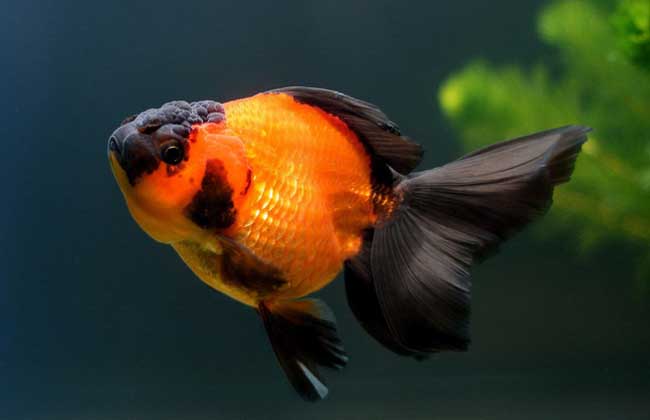
Scale loss in goldfish is a common disease of goldfish, namely scale protrusion disease, also known as erect scale disease, pine scale disease, pinecone disease, etc. It is mainly caused by infection with a bacterium called Pseudomonas punctata, and is more likely to occur in winter when the water temperature is low or when the temperature difference during water changes is too great. If you notice goldfish losing their scales, you must treat it promptly. Let's take a look below at what is going on when goldfish lose their scales!
Symptoms of scale protrusion disease in goldfish
Goldfish suffering from scale protrusion disease mostly show a rough body surface, and most of the scales on the tail area open outward like a pinecone, while the scale sacs at the base of the scales become edematous. Applying slight pressure to the body surface will cause a translucent or blood-containing fluid to flow out. In addition, the goldfish's scales will stand up, and severe cases make breathing difficult and swimming slow. In serious cases, the goldfish will die within 2 to 3 days.
Causes of scale protrusion disease in goldfish
Scale protrusion disease in goldfish is mainly caused by bacteria. The bacteria that cause scale protrusion disease include Pseudomonas punctata, Pseudomonas fluorescens, Aeromonas hydrophila, and others. In seasons with low water temperature, especially fish that have overwintered, the body condition is poor and resistance is weak, making them susceptible to the disease. In addition, after injury, partial scale erection is likely to occur, and the frequency of water changes should not be too high.
What should be done when goldfish lose their scales?
1. Soak the fish body in a concentration of 20 mg/kg of nitrofurazone or furazolidone. When the water temperature is below 20 degrees, soak for 20 to 30 minutes; at 21 to 32 degrees, soak for 10 to 15 minutes. This is used for prevention and early treatment.
2. Sprinkle nitrofurazone or furazolidone over the entire pond at a concentration of 0.2 to 0.3 mg/kg. In severe cases, the concentration can be increased to 0.5 to 1.2 mg/kg. This is used for prevention and early treatment.
3. Soak the fish body in a concentration of 2 to 2.5 mg/kg of erythromycin at a water temperature below 34 degrees for 30 to 50 minutes, once a day for 3 to 5 consecutive days, until the condition improves.
4. Inject streptomycin or kanamycin at 120,000 to 150,000 international units per kilogram of fish body weight. Usually only one injection is given. In severe cases, a second injection can be given on the fifth day.
5. Administer norfloxacin orally at 0.8 to 1.0 g of powder per 10 kg of fish body weight per day, once a day for six consecutive days.
6. Soak in a concentration of 20 mg/kg of rivanol. When the water temperature is 5 to 20 degrees, soak for 15 to 30 minutes; at 21 to 32 degrees, soak for 10 to 15 minutes. The effect is remarkable when used for early treatment.
7. Sprinkling rivanol at a concentration of 0.8 to 1.5 mg/kg has a particularly good effect.
Note: Goldfish fighting with tankmates can also cause scale loss, and collisions and scrapes can also make beautiful goldfish lose their scales, because during transport they inevitably bump into each other, and when netting them, the body surface can also be scratched and injured.