How Often Should You Change the Water for Goldfish? A Detailed Guide to the Correct Water Change Frequency
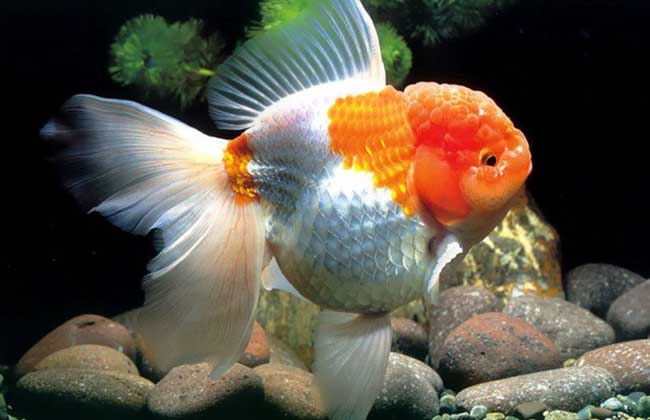
Goldfish are ectothermic (cold-blooded) animals with a fairly strong adaptability to water temperature; their body temperature changes with the water temperature, and they can survive in water ranging from 0-39°C. However, goldfish cannot adapt to drastic temperature changes; a sudden rise or drop of more than 5°C may endanger their lives. Let's take a look below at how often you should change the water for goldfish!
How Often Should You Change the Water for Goldfish?
Changing the water for goldfish needs to be done regularly and in a timely manner, but it does not need to be done too frequently. Generally speaking, in spring and summer you can change the water about once every 10 days, while in winter, because the climate is colder and the water does not spoil as easily, the interval between water changes can be appropriately extended. Of course, this is the case when the water temperature drops below 4°C. Under normal circumstances, owners still need to change the water for goldfish as usual.
What Kind of Water Should Be Used to Keep Goldfish?
1. Tap water: Tap water contains too many chloride ions and cannot be used directly for fishkeeping. Generally, the sun-drying method is used, placing tap water in an open, ventilated area so that, through air circulation and sunlight, the residual chlorine in the water evaporates while the dissolved oxygen content in the water increases. The sun-drying time is more than 24 hours in summer, more than 48 hours in spring and autumn, and even longer in winter. In addition, a chemical treatment method can also be used, namely neutralizing the chlorine in the water with sodium thiosulfate (hypo); generally, 2-3 grams are needed per cubic meter of water, or 5-6 granules per 10 liters of water.
2. Well water: Well water is groundwater; it is relatively hard and has a constant temperature. Before use, it needs to be exposed to the sun for more than 12 hours so that the water temperature balances with the surface water temperature while the dissolved oxygen content in the water increases.
3. River water: River water is natural water; it is soft but relatively turbid. Before use, it must be purified and settled in a reservoir or filtered before use. It contains many natural food organisms, which can make the colors of ornamental fish more natural and vivid.
Water Change Methods for Goldfish
1. General water change: Under normal conditions, every day simply use a rubber hose to gently siphon out 1/10-1/5 of the dirty matter at the bottom of the fish tank together with the old water, remove dust on the water surface and floating feces, and then slowly pour in fresh water of the same temperature along the tank wall to keep the water clean. This water change method is unlikely to injure the fish, is simple and convenient, and is most suitable for home fish tanks.
2. Partial water change: Partial water changes are mainly carried out in two situations.
① In the hot summer and early autumn, when the water in the fish tank has only been changed for a few days but the water color turns green extremely quickly, and the water quality is still clean, in order to prevent goldfish from tail-burning (fin rot caused by high temperatures), you can scoop out all the goldfish from the tank, then stir the water in the tank in a spiral motion, wait for a moment until it settles, siphon off 1/3-1/2 of the dirt and old water from the center of the tank with a rubber hose, then pour in fresh water of the same temperature and the same amount, and put the goldfish back in.
② The other situation is when the water in the tank has only been changed for a few days and the water color is still good, but because too much food was fed that day, the fish surface to gasp for air (floating head); the water change method is the same as described above.
3. Complete water change: A complete water change is often a water change method carried out in combination with breaking down the tank and selecting juvenile or adult fish; it is usually adopted only when the water quality has seriously deteriorated, the green algae has grown too long, or the fish are too crowded.
① When there is no spare tank available, you have no choice but to put all the goldfish into a neighboring tank for temporary holding, adding an air stone to the basin or net cage for aeration. Then, after thoroughly rinsing the tank clean, refill it with fresh water of the same temperature, let it sit for a moment until the water temperatures are equal, and then scoop the fish back into the original tank.
② If there is a spare tank, simply scoop all the goldfish into a basin and handle them separately. With this water change method, special attention must be paid to water temperature; it is best to do it before 9 a.m. on a clear day. However, this method is generally only suitable for adult fish or larger juvenile fish. Before a complete water change, you can first fill a spare tank with aged water, and then it is best to scoop the fish directly into the spare tank. This way, the water temperature changes little, and the fish adapt more easily. This water change method is generally carried out about once every half month in spring and autumn. In summer, when the water temperature reaches above 28°C, and the water color easily becomes very deep and the water quality easily becomes turbid, a complete water change should be done once every 4-7 days. In winter, when the water temperature drops to around 4°C, no complete water change is generally done unless there are special circumstances.
In addition, among goldfish keepers there is also a rearing method called "green water," which controls the amount of phytoplankton and algae in the tank to keep the water at a slightly transparent green-tea color. By eating the phytoplankton in the water, goldfish can develop more vivid body colors, and it can also buffer drastic changes in water quality during water changes. However, if it is not properly managed and the phytoplankton over-multiplies, making the green water too dark, it can instead easily cause disease in goldfish.