How to Tell Male and Female Goldfish Apart? Fast Methods to Identify Male from Female
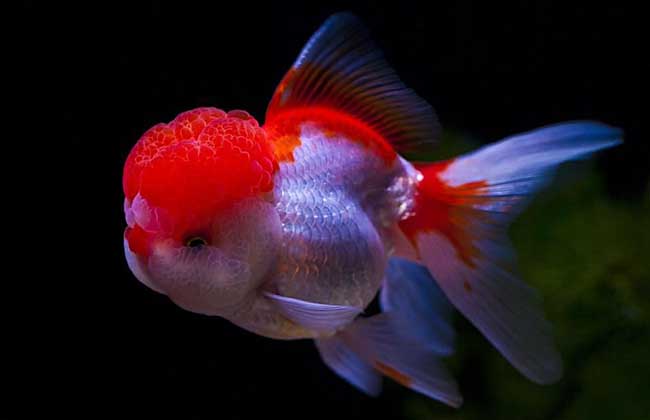
Goldfish are the earliest breed in the history of ornamental fish in the world, having accompanied human life for more than a dozen centuries. They are easy to keep, have unusual shapes and brilliant colors, and can beautify the environment, making them very popular. In Chinese folk tradition, buying two goldfish for the home during Chinese New Year is believed to symbolize an abundance of gold and jade and surplus year after year. Now let's take a look at how to tell male and female goldfish apart!
Identifying by the belly
When identifying the sex of a goldfish, many people's first reaction is to look at its belly. If it is plump and bulging, it means the goldfish is pregnant, so it is a female. However, outside the breeding season this cannot be seen, and you also have to consider whether the goldfish's big belly is caused by illness.
Identifying by body shape
We can also start with the body shape of the goldfish. Adult male goldfish have a slender body like a willow leaf, while female goldfish tend to have a short, plump body. Put a tank of goldfish together for comparison, and you can quickly tell males from females by body shape. This is an important basis.
Identifying by the tail
Observing the tail of a goldfish can also help determine its sex. Generally speaking, male goldfish grow more robustly than females, especially in the tail part. The tail of a male goldfish is relatively wide and flat, clearly different from that of a female, so a careful observer can tell them apart at a glance.
Distinguishing by swimming
You can also tell males from females when goldfish are swimming. Male goldfish swim more nimbly and quickly, while female goldfish are gentler and swim more slowly.
Distinguishing by color
If you carefully observe the appearance of goldfish, the one with brighter colors is the male. In addition, the color of a goldfish is also a sign of whether it is healthy. If the color becomes lighter, it means the fish may be in suboptimal health, and you should change the water or immediately switch to color-enhancing fish food. If handled early, the goldfish can regain its bright true colors in the shortest time.
Observing the vent
Turn the goldfish over and observe the vent on its belly. The vent of a male fish is narrow and long, while the vent of a female fish is larger and round (able to release eggs). This method is the most accurate for determining the sex of goldfish. A reminder: be sure to handle the goldfish gently, as fish are timid and fright can make them sick.
Distinguishing by the fins
The fins of male fish differ from those of females and are relatively thick and strong. If a goldfish's fins are curved and relatively thick, and it also matches the above features, then this fish may be male. The fins of female fish are relatively short. In addition, during the breeding season, looking at the "nuptial tubercles" is also a good method: the one with tubercles (small white spots) is the female.
Alright, that is all for how to tell male and female goldfish apart. You must already know how to distinguish the sex of goldfish! Next, let's take a look at how goldfish breed.
Selecting breeding stock
The quality of goldfish breeding stock directly affects the quality of the next generation. You should choose 2-year-old goldfish with a strong physique, pure breed, and good traits as breeding fish. Such goldfish are already fully mature and full of vitality. The sex of goldfish can be identified by observing the "nuptial tubercles." "Nuptial tubercles" are white raised spots the size of sesame seeds that grow on the gill covers and the tips of the dorsal fins of male fish. During the breeding season of goldfish, the "nuptial tubercles" of male fish are very obvious. Some male fish do not have "nuptial tubercles," indicating that they are not mature enough and are not suitable for selection as breeding stock. When female fish are mature, their abdomens often swell, and male fish follow behind them.
Spawning
After the breeding fish are selected, they should be gathered in a large tank and fed carefully. Before the female fish spawns, its appetite begins to decline. A bunch of aquatic plants such as hornwort should be placed in the tank, and old palm fiber or hemp fiber can also be used as a substitute. On clear days, stimulated by the chasing of the male fish, the female fish will spawn on the aquatic plants at about 6 to 7 in the morning. Two hours later, the female fish that has finished spawning should be scooped out and kept separately to prevent it from eating the eggs. The tank containing the male fish also needs a complete water change to prevent the secretions left by the female fish from polluting the water quality and causing the eggs to die.
Hatching
Scoop out the eggs together with the aquatic plants and put them into another tank, placed in a ventilated, sunny spot. When the water temperature is 13 to 20°C, the transparency of the eggs gradually decreases after two or three days, and at the same time a black dot appears. After another 3 to 5 days, the black dot expands into a circle, indicating that the young fish have begun to develop. After a few more days, the baby goldfish hatch out.
Food
When the fry have just hatched, they are as small as needle tips and black in body. They do not eat or move, and cling to the bottom of the tank, the tank walls, or the aquatic plants. At this time, make sure the environment is quiet, and by no means rush to remove the aquatic plants. After four or five days, you can wrap a boiled egg yolk in gauze, squeeze out the yolk water, and feed it to the fry, feeding 2 to 3 times a day, with a small amount each time.
Changing the water
Within two weeks after the fry hatch, since their bodies are too small, it is generally not advisable to change the water, but the water quality must be kept fresh. If the fry are found gasping at the surface, they should immediately be scooped out and the water changed. The water can be changed once every 3 to 4 days. When changing the water, try to avoid injuring the fry. At the same time, the food can gradually be changed from small water fleas or cooked egg yolk to adult fish feed.