Detailed Explanation of Key Points for Golden Pompano Cage Aquaculture Techniques
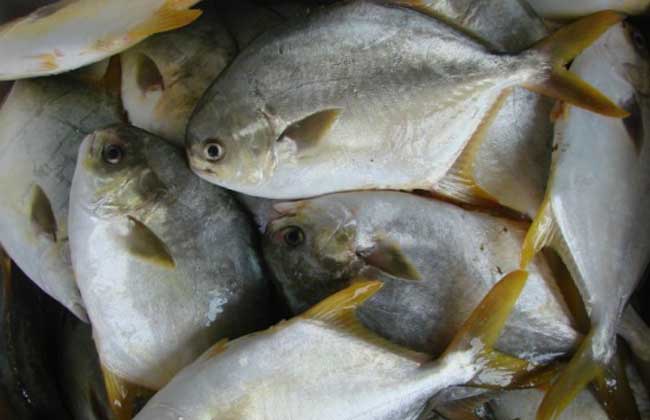
Golden pompano, also known as ovate pompano, yellow-fin pompano, golden pompano, yellow-fin pompano, etc., is one of the precious marine economic fish species along the southern coast belonging to the genus Trachinotus in the family Carangidae. Artificial breeding has been successfully carried out in Taiwan, China and Hainan, with a considerable number sold back to Guangdong and Fujian for cage farming. Artificial farming mainly includes two modes: cage aquaculture and pond aquaculture. Let us now take a look at golden pompano cage aquaculture techniques!
Sea Area Selection
The cages for farming golden pompano should be selected in sea areas with a certain windbreak barrier or relatively small wind and waves, unobstructed water flow, sufficient water exchange, unaffected by inner harbor freshwater and pollution sources, clear water quality, and a relatively stable water quality environment. The water depth is generally required to be 10-15 m (referring to after ebb tide). If deep-water cages are used, they can be set in sea areas with a water depth of over 20 m, and it is generally necessary to ensure that at the lowest tide, the distance from the bottom of the cage to the seabed is at least 2 m or more. To ensure the success of farming, the water quality of the farming sea area should meet the following conditions: salinity 20-30‰, water temperature 18-32°C, pH 7-9, transparency 8-15 m, dissolved oxygen above 5 mg/L.
Cage Preparation
The cages for farming golden pompano are generally made of netting twine woven from polyethylene material, with a mesh size of 2.5-3.0 cm. The cage specifications can be adjusted according to the size of the fry and actual conditions, ranging from 3×3×4 m to 4×4×4 m. With the popularization and application of deep-sea cages, practice has proven that golden pompano is also suitable for this type of cage farming. Therefore, in deep-sea areas, deep-water cages made of high-strength polyethylene (PE) with a diameter of over 20 m can be used for farming. Depending on the size of the cage and the different conditions of tides and wind waves, a single cage can be fixed at a single point, or multiple cages can form a cage row. Cage rows composed of multiple cages should maintain an appropriate spacing, generally required to be over 3 m, to ensure unobstructed water flow.
Fry Stocking
The stocking time for golden pompano is from April to May each year, with a stocking size of 2-3 cm. When the water temperature rises and stabilizes above 18°C, this is the suitable time for releasing the fry. The stocking density of golden pompano should be flexibly controlled according to the water quality and environmental conditions of the sea area, farming techniques and daily management level, feed source conditions, and the required indicators such as yield and specifications. Generally speaking, if early harvest is desired, fry with a body length of about 10 cm can be stocked at 40-50 fish/cubic meter of water; if harvest is not urgent, the stocking density can be appropriately increased. Before stocking, the fry should be disinfected to kill pathogenic bacteria and parasites. After stocking, the early nutrition of the fry should be strengthened to make them strong and enhance their anti-stress ability.
Feeding Management
1. Feed selection: Golden pompano is a carnivorous fish. In the past, minced fresh trash fish was mainly used for feeding, but compound feed can also be fed throughout the entire process with good farming results. In golden pompano cage aquaculture, high-grade marine fish extruded compound feed is commonly used.
2. Feed feeding: Golden pompano has a large appetite and digests quickly. Under artificial feeding conditions, if it stays for only a short time after feeding and is then fed its favorite food again, it will still fiercely compete for it. Therefore, in June, July, and August when the water temperature is suitable for its growth, the daily feeding amount can be controlled at over 20% of the fish body weight, while in other months with lower water temperatures, the feeding amount can be appropriately reduced. Some farmers, in order to make it grow rapidly and shorten its growth cycle, increase the daily feeding amount to 40% of its body weight by increasing the number of feedings during high-temperature seasons.
3. Daily management: The daily management of cage aquaculture should achieve "five diligences and one carefulness," namely diligent observation, diligent inspection, diligent testing, diligent cage cleaning, and diligent disease prevention, patient and meticulous feeding, as well as preventing accidents caused by strong winds, pollution, and human factors. The farmed golden pompano should be patrolled frequently, paying attention to observing the activity of the fish school and conditions such as water color and water quality. Generally, water temperature and air temperature should be measured every morning, noon, and evening; pH should be measured once a week, and transparency should be measured twice. Every 15-20 days or so, samples should be taken to measure the body length and weight of golden pompano, in order to grasp its growth rate and patterns, facilitate determining the feed amount, and at the same time check whether there is any disease occurrence in the golden pompano.
4. Cage management: In cage aquaculture, cleaning and replacing the cages is very important work. A cage system soaked in seawater for a certain period of time will more or less have barnacles, oysters, and various algae attached to it, which to a certain extent hinders unobstructed water flow and water exchange, thereby affecting the growth of golden pompano and increasing the sinking force of the cage system. Therefore, in daily management work, cage replacement and cleaning should be carried out according to the amount of attached organisms on the cage and the fish farming situation. Generally, the cage is replaced once every 3-6 months. When replacing the cage, it must be prevented that the farmed fish are caught in the cage corners and cause abrasions and death, and the operation must be meticulous. Cage cleaning can be carried out by methods such as high-pressure water gun spraying, freshwater soaking, and sun exposure.
5. Safety production: In the process of sea cage aquaculture of golden pompano, the safety of the cages must be checked frequently. A combination of surface and underwater (diving) observation methods should be used to frequently check the attachment situation of the cage system, whether the cages are damaged, whether various cables and ropes are worn, and whether the fixing facilities of the cage system are firm and solid. If problems are found, corresponding measures should be taken promptly to deal with them and prevent trouble before it occurs. Before severe weather occurs, preventive measures should be taken such as adding cover nets, checking and adjusting the tension of anchors and pile ropes, reinforcing the pull ropes and fixing ropes of the cages, checking the firmness of the frame, anchors, and piles, and moving farming personnel and boats to safe harbors.
6. Timely harvesting: Golden pompano fry artificially hatched in the same year are generally released at about 10 cm, and after 4-5 months of farming, they can reach a commercial size of over 400 g. Generally speaking, the market price of golden pompano is better when it is over 600 g/fish, so it is recommended to harvest at this time. In addition, farmers can determine the start time of farming or the size of released fry according to the growth situation of golden pompano and market forecasts, in order to obtain the maximum profit.