How to raise red pomfret? Detailed explanation of key farming techniques
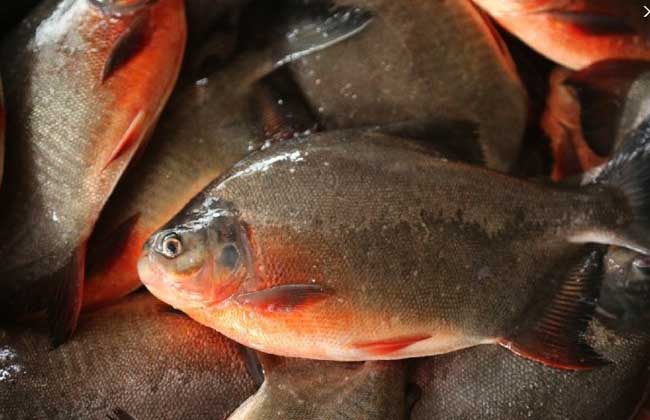
The red pomfret, also known as the freshwater white pomfret, was introduced to Taiwan, China in 1982, after which artificial breeding succeeded and it began to be promoted for farming in freshwater ponds. In 1985 it was introduced from Taiwan, China via Hong Kong, China to Guangdong Province for trial farming, and in 1987 artificial breeding succeeded, after which it gradually spread across the country, becoming one of the famous and special species with the highest annual output. Let us now take a look at red pomfret farming techniques!
Living habits
The red pomfret inhabits the middle and lower water layers and is gregarious, able to tolerate low oxygen of 0.48 mg/L, and adapts to pH 6.2-7.5. It usually begins feeding normally at 16°C, with a growth temperature of 21-32°C and an optimum growth temperature of 28-30°C. The red pomfret is not tolerant of low temperatures; the rearing water temperature for summer-fry fingerlings must be kept above 17°C. At a water temperature of 12°C most adult fish lose their balance, and at 8°C they die. The red pomfret is an omnivorous fish that feeds by nibbling. At the larval stage it mainly feeds on plankton; juveniles also eat organic debris and artificial feed; at the adult stage it feeds on plankton, algae, and various animal and plant feeds such as dead fish, silkworm pupae, fish meal, rice bran, wheat bran, melon rind, vegetables, and so on. It spawns multiple times a year. When the water temperature is 25-30°C, artificial induced spawning and breeding can be carried out.
Artificial breeding
1. Site requirements: Select a broodstock rearing pond with good water quality and convenient drainage and irrigation, and build the pond where there is surplus hot water. The pond should be cleaned and disinfected in advance; an outdoor pond of 1000-1500 sq m is suitable. The water depth should be 1.5-2 m, and the water temperature should be kept above 20°C. An indoor insulated pond is generally 50-200 sq m, with a water depth of 1-1.5 m. Aeration equipment must be installed in the pond, and the water temperature should be kept at 20-26°C according to conditions; during the overwintering period the water temperature must be kept relatively constant.
2. Stocking of brood fish: For still-water ponds, a stocking density of 2-3 kg/cubic meter is suitable; where warm flowing water is available, it can be increased to 5-7 kg/cubic meter. Before stocking, disinfect the fish body with a 2‰ salt solution for 15 minutes. Stock water hyacinth, azolla, and so on in the pond. Change the water weekly according to water quality conditions.
3. Feed feeding: The protein content in the feed must not be lower than 25%, and the daily feeding amount is about 1-3% of the fish body weight. The feed is placed on feeding platforms. Pay attention to preventing and treating fish diseases at ordinary times.
4. Timely induced spawning: The optimum water temperature for induced spawning of the red pomfret is 25-28°C. In the Yangtze River basin, heated induced spawning is generally carried out in May. According to the state of gonadal development, select mature brood fish and inject spawning agent at female:male = 1:1. Injection is generally carried out at night so that the brood fish spawn at dawn. Fertilized eggs are generally hatched in hatching barrels, and the hatched fry are reared for about 1 month or more into summer-fry fingerlings.
Adult fish farming
1. Pond conditions: An area of 5-10 mu is suitable, with a water storage depth of more than 1.5 m. 15 days before stocking the fingerlings, use 30-40 kg/mu of tea seed cake or 60-75 kg/mu of quicklime to splash the whole pond for pond clearing.
2. Stocking density: Stock 1500 summer-fry fingerlings of red pomfret about 3 cm long per mu, together with about 150 silver carp, bighead carp, common carp, crucian carp, and so on.
3. Daily management
(1) Within half a month after the fingerlings are put into the pond, splash-feed each mu daily with slurry made from 1.5-2 kg of soaked and ground soybeans; in the following half month, feed with 2-2.5 kg/mu of soaked peanut cake, etc.; after one month they grow to 12-13 cm and 12-15 g.
(2) After the fingerlings grow to 12-15 g, switch to rapeseed cake, bran cake, or duck feed, fish feed, etc., adopting fixed-point feeding. The feeding amount as a proportion of fish body weight is 6-9% for 10-20 g fingerlings, 5-7% for 20-50 g fingerlings, 4-6% for 50-100 g fingerlings, and 2-4% for those above 100 g.
(3) Timely add fresh water and regulate water quality. Adding fresh water to the pond can increase the oxygen content in the water, maintain good water quality, and accelerate fish growth. Generally, water is added once every half a month; in dry weather, the number of water additions should be increased.
(4) Patrol the pond frequently to understand the fish growth situation in good time. In stuffy, hot, or abruptly changing weather, take care to prevent pond asphyxiation and control the feeding amount.
(5) The red pomfret has low feed requirements; a crude protein content above 25% is sufficient. Each place can choose peanut cake, rapeseed cake, bran cake, distiller's grains, wheat bran according to circumstances, preferably feeding a mixture; livestock and poultry feed or manure, or complete compound feed, may also be used.
Disease prevention and treatment
1. Ichthyophthiriasis: If found before pond entry, soak and wash with 2 ppm mercurous nitrate for 1.5 or 2 hours; if found after pond entry, splash the whole pond with 0.1-0.15 ppm mercurous nitrate. Once a day for three consecutive days. Alternatively, boil dried chili powder and splash the whole pond, once a day for 3 consecutive days. Note that cuprous sulfate and ferrous sulfate combined agent must not be used, as it will worsen the condition.
2. White skin disease: Caused by injury to the fish body. Splash the whole pond with 1 ppm bleaching powder (containing more than 20% chlorine), once a day for three consecutive days. Or soak in 12.5 ppm chlortetracycline or 25 ppm oxytetracycline for 30 minutes.
3. Bacterial gill rot disease: Hang bags of bleaching powder regularly, and splash the whole pond with 1 ppm bleaching powder once every half a month, as prevention. After onset, splash the whole pond with 0.025 ppm furazolidone, once every other day for two consecutive times.
4. Saprolegniasis: Splash the whole pond with 0.1 ppm methylene blue, once a day for two consecutive days, or soak in 3-4% salt water for [missing duration] minutes.
5. Trichodiniasis and Chilodonelliasis: Splash the whole pond with 1.2-1.5 ppm of copper sulfate and ferrous sulfate (5:2) combined agent.