What bait is effective for chumming when fishing for grass carp?
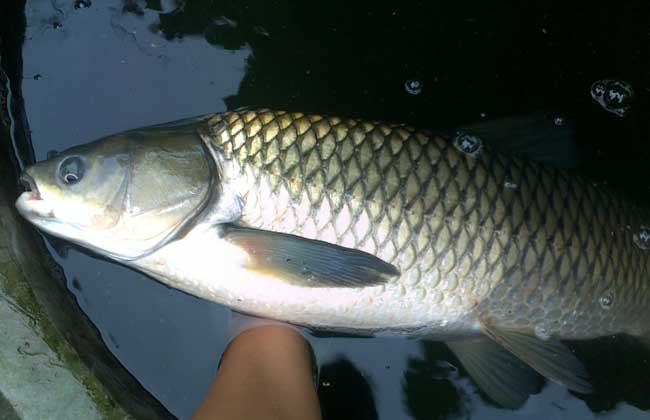
Grass carp is a mid-water fish. Before fishing, if you find the water color of the fishing spot takes on a greenish-yellow hue, it means there are quite a lot of grass carp living in that stretch of water. This is because herbivorous fish prefer to live in pale greenish-yellow water bodies with relatively high transparency, fairly fertile bottom soil, and conditions favorable for the growth of aquatic plants. Now let us take a look at what is good for chumming when fishing for grass carp!
Floating grass nest for fishing grass carp
In some places where people often fish, the fish in the water have already become wary, and the shadow of the rod or the sound of people will make the fish flee far away. So in such an environment, anglers can use the "floating grass to lure fish" fishing method. You can pull up some relatively tender fresh grass and scatter it along the downwind water's edge, letting these tender grasses drift downwind on the water surface. Use a sea rod with a float, set the float at about one chi, fish shallow, cast the hook bait beside the floating grass, open the reel, and let the float carry the hook bait drifting along with the floating grass. The person can then quietly watch the float, and after a while you can see the swirls raised on the water surface when the fish are eating the grass, the underwater grass blades being dragged so they appear and disappear, the long stems being pulled this way and that, and the fish below bumping the floating grass so it sways chaotically.
Sinking bottom grass nest for fishing grass carp
In some fish ponds where there are especially many anglers, the fish often sink to the bottom and do not show themselves, nor will they swim up to eat floating grass. So when fishing in such circumstances, you have to tie grass bundles to make a bottom nest. The specific method of making the nest is to cut some tender grass, clamp a stone or brick at the root of the grass, then bind it into a grass bundle, and sink this grass bundle to the bottom of the water at the fishing spot. You can try making several, for example 2 to 3 nests, and afterward pay attention to observing the movement at each nest. Once bubbles or broken grass float up to the surface at the grass nest, it means the fish have already entered the nest to feed. At this time cast the hook bait beside the grass nest, and it is best to use the float-tuning method to make the bait stop at the tip of the grass. But note that after a fish is hooked you must immediately drag it elsewhere to land it; you absolutely must not play the fish at the grass nest, first so as not to spook the nest, and second to prevent the line from getting tangled around the grass bundle and causing the fish to escape. After catching one or two fish per nest, change nests and take turns casting hooks.
What fishing methods are there for grass carp?
1. Bottom nest fishing method: In most cases, when setting a bottom nest to fish for grass carp you need to make a large nest. If the fish are especially thick and especially numerous, you can make a large nest of five jin or ten jin, and when necessary you should also add nest material and replenish the nest. When setting a bottom nest you need to consider using both soft and hard, that is, use soft bait to feed and hard bait to maintain the nest. Soft bait should mainly be oil bran, wheat bran, etc., with an appropriate amount of powdered bait such as ash flour mixed in. For hard bait you can choose bran cake pieces, bean cake pieces, pellet feed, and the like.
2. Grass nest fishing method: Fishing a grass nest for grass carp is the proper method, and is the fishing method that can best catch grass carp. There are two ways to fish a grass nest: one is fishing a sinking bottom grass nest, and the other is fishing a floating surface grass nest. The methods for fishing a bottom grass nest and fishing a floating grass nest are different. Fishing a bottom grass nest is mainly done with a hand rod, and fishing a floating grass nest is mainly done with a sea rod. The bait for fishing a bottom grass nest is mainly the tips of green grass, and you can also use grain sprouts, tender tree leaves, pumpkin flowers, and the like. For fishing a floating grass nest it is mainly grass tips. When using grass tips as bait, you can directly thread and hang them on the hook, or you can tie them into small bundles with rubber band line; generally it is best to take 6 to 10 grass tips and bundle them. When using a hand rod to fish a sinking bottom grass nest, the bait cannot sink to the bottom, but should be in front, behind, to the left, or to the right of the grass nest, or above the grass nest.
3. Suspension fishing method: The suspension fishing method refers to a bait-jigging fishing method without making a nest. It can be done with a hand rod or a sea rod, and mainly uses a single hook to fish for grass carp. The suspension fishing method with a hand rod has more advantages than with a sea rod when fishing for grass carp. The sinker used in hand rod fishing is lighter than the sinker used in sea rod fishing, and when gathering and casting the hook bait it can reduce the degree of spooking the fish. The suspension fishing method mostly uses long rods of 6 m, 7 m, or more; the radius for lifting the rod to land a fish is large and the elasticity is good, which can raise the fish-catching rate. When using the suspension fishing method to fish for grass carp, you should cast downwind or with a side downwind.
4. Bottom fishing method: The bottom fishing method is mainly used to fish for large grass carp (it can also catch large black carp). If the fish in the water body are relatively dense, usually no nest is made, and it mainly relies on the bait to lure and fish. Use a 6 m or 7 m rock fishing rod or hand rod, equipped with a gear reel that pays out and takes up line flexibly, wind on over a hundred meters of long line, and directly tie a large hook to the main line. The length of the leader from the hook tail to the sinker is 80 to 120 mm, and the sinker weight is about 2 to 5 grams; for long casts it can also be made heavier. Use large bran cake grains of 10×20 mm or more, and large pellets with a diameter of 10 mm and a length of 20 mm or more as bait.
5. String hook fishing method: Using string hooks to keep bottom grass carp can fish still water and can also fish flowing water. For still water you can use hard bait, softer bait, insect bait, etc., and for flowing water you mainly use grass bait. Sometimes string hooks fail to catch grass carp, which is mostly related to the sinker being too light and the main line not being tightened. But the hook bait of the bomb hook is open outside the sinker; when a fish bites the hook it first drags the sinker and then takes the line, and even if the main line is slightly slack it will not affect landing the fish.
6. Bomb hook method: Previously the bomb hook had only one fishing method, the soft bait fishing method. Now the bomb hook has one more fishing method, the hard bait fishing method, which can likewise catch grass carp. The soft bait fishing method can fish a nest to lure, while the hard bait fishing method cannot do this. Using the bomb hook with hard bait to fish for grass carp will not scatter the school of fish. The large bran cake grains and large pellet feed hung on the hook, no matter where they are cast, cannot form a nest, nor can they leave behind more bait. Adopting the hard bait jigging fishing method makes the bomb hook fishing method more free and more convenient.