Detailed Explanation of Key Technical Points for Grass Carp Farming in Ponds
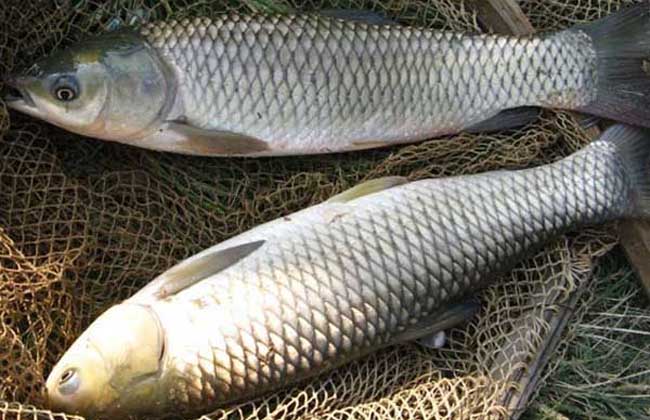
Grass carp is one of the four major Chinese carps in freshwater aquaculture in China. Farming grass carp in ponds has the advantages of low cost, low labor input, fast growth and easy management, and the fresh and firm flesh of grass carp has gradually become a consumption hotspot. Therefore, using ponds for grass carp farming is a feasible path to improve economic returns. Let us take a look at grass carp farming technology in ponds together below!
Pond Conditions for Grass Carp
1. Pond conditions: The pond is required to be far from pollution sources, with an area of 5-10 mu, a flat bottom, preferably loam soil, with slight seepage being better, bottom mud of 10-20 cm, and a water depth of about 2 m. Each pond should be equipped with one 3 kW impeller-type aerator and one 4-inch water pump to allow timely water exchange and aeration.
2. Cleaning and disinfection: Grass carp itself has many diseases, and ponds are even more prone to outbreaks of epidemics. At the same time, eliminating miscellaneous fish is an important measure to ensure normal feeding of grass carp and save feed. The specific method is, under dry pond conditions (with 5-10 cm of standing water), apply 100 kg of quicklime per mu, slake it into slurry and splash it over the whole pond, or apply 10 kg of bleaching powder per mu, dissolve it in warm water and splash it over the whole pond, ensuring no dead corners or missed areas, and thoroughly killing pathogenic bacteria.
3. Water quality requirements: Pond water quality requires a pH value of 7.5-8.5. During the peak farming period (June to September), the pond water transparency should be maintained at about 30 cm, and the organic matter oxygen consumption should be 18-20 mg/L.
Fry and Fingerling Stocking of Grass Carp
1. Fry and fingerling selection: Grass carp fingerlings should be selected with a golden body color, no external injuries, lively and robust, and weighing about 100 g each. At the same time, because the two major diseases of grass carp, hemorrhage and enteritis, easily infect fingerlings of the current year, it is better to choose 2-year-old fingerlings when selecting fry and fingerlings.
2. Fingerling stocking: Grass carp fingerlings are generally stocked at 800-1,000 fish per mu, together with 100 silver carp fingerlings with individual specifications of 250 g to 500 g. Do not stock carp, or stock only a small number, to avoid competing with grass carp for food. In addition, before the fingerlings are put into the pond, attention should be paid to disinfecting the body surface.
Feed Formulation for Grass Carp
1. Rice straw 50%, rice bran 25%, soybean cake 25%. For every 100 kg of the above mixed feed, add another 10 kg of flour processing by-product as a binder. The crude protein content of the feed is 23.35%, the feed coefficient is 2.8, and the feeding specification is about 0.05 kg per fish.
2. Rice straw 50%, rice bran 22.5%, wheat bran 5%, soybean cake 15%, fishmeal 5%, bone meal 1%, salt 0.5%, vitamin additive 1%. The crude protein content of the feed is 18.78%, and the feed coefficient is 2.4.
3. Flour 30%, rice bran 8%, wheat bran 38%, soybean cake 10%, fishmeal 10%, yeast powder 2%, premix 2%. The feed coefficient is 1.9. If green feed is additionally fed, the feed coefficient is 2.2.
4. Flour 30%, fishmeal 10%, soybean cake powder 15%, wheat bran 25%, rice bran 20%. On the premise that the total amount of the basic diet remains unchanged, according to actual conditions, another 12% sweet potato powder, 0.5% salt, 2% growth hormone and 2% calcium hydrogen phosphate may be added. The feed coefficient is 4.8.
Feeding Management of Grass Carp
1. Feed feeding: Mainly feed pellet feed, with a feed protein content of 28-32%, supplemented with green feed. Feed feeding follows the principles of "coarse first, fine later" and "four fixed points and four observations." Generally, feed twice a day, with the best result being that the feed is finished within 2 hours and the grass carp is 80% full. After continuously feeding pellet feed for a period, pellet feed should be stopped for 1 week, and during the interval, raw grain feed should be fed. Usually, pay attention to appropriately adding vitamins and other drugs to the feed to avoid diseases such as hepatobiliary syndrome in grass carp that cause large numbers of deaths.
2. Water quality management: Use the aerator correctly. From June to October, on sunny and windless days, turn on the machine for aeration for 2 hours every day from 1:00 to 3:00 p.m., and aerate at appropriate times in the early morning. Aeration should be started earlier on consecutive cloudy days. Add new water to the pond at appropriate times, and adopt the method of "small discharge and small intake, multiple water exchanges" to gradually regulate water quality. From June to September, add new water once every 3-5 days, adding about 10 cm each time, and every 15-20 days, apply 10-20 kg of quicklime per mu of water surface at 1 m water depth, slake it into slurry and splash it over the whole pond once.
3. Disease control: Adopt the feeding method of "coarse first, fine later, combining fine feed with green feed" to control the occurrence of hepatobiliary syndrome in grass carp. Common diseases of grass carp include red skin disease, gill rot disease and enteritis disease. Generally, a treatment method combining oral administration and external splashing is adopted. External splashing mainly uses disinfectants such as bleaching powder and chlorine dioxide, continuously for 3 days. For oral administration, "Sanhuang powder" medicated bait has a relatively good effect. For every 50 kg of fish body weight, use 0.3 kg of Sanhuang powder (50% rhubarb, 30% phellodendron, 20% scutellaria, ground into powder and stirred evenly), mix it evenly with flour paste, then mix it into the feed and feed it, continuously for 3-5 days.
4. Timely harvesting: Timely harvesting large-sized adult fish for market is an important measure for high-yield grass carp farming. The main purpose is to reduce the fish carrying capacity of the pond water body and promote rapid growth of the pond fish in the later period. Generally, harvest once at the end of July, and harvest in the early morning when the water temperature is lower.