How do clownfish reproduce? The method is simple enough for beginners to learn
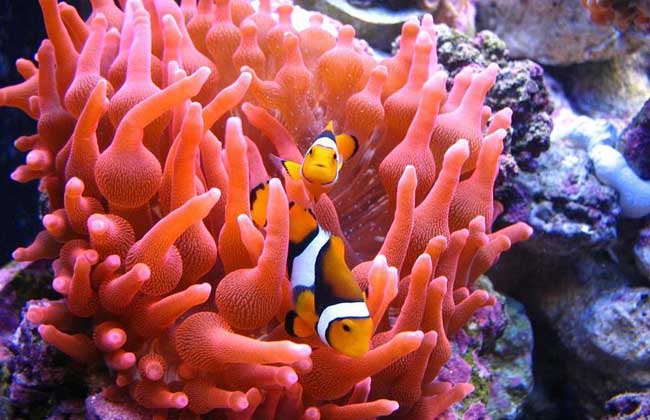
Clownfish is the common name for fish of the subfamily Amphiprioninae in the family Pomacentridae, native to the warmer waters of the Indian Ocean and Pacific Ocean. They get their name because they have one or two white stripes on their faces, resembling the clown role in Peking opera. They reach a maximum body length of 11 cm. Because of their cute appearance, ease of keeping and easy breeding, they are accepted by a wide range of fish keepers. Let's take a look together below at how clownfish reproduce!
Clownfish breeding characteristics
Each clownfish population has one dominant female and several adult males, the latter being hermaphroditic during their juvenile stage. If the dominant female dies, one of the adult males will undergo hormonal changes and transform into the new female of the population. During the spawning period, the male and female fish exhibit territorial behavior of guarding the nest and eggs. One end of each egg has a fine filament that anchors it to the rocks, and it hatches in about a week. After the fry float in the water column for a period of time, they then settle onto symbiotic organisms such as sea anemones.
How do clownfish reproduce?
1. Spawning management: Clownfish need enough space and a sense of concealment when spawning. Clownfish in the mating period become very aggressive, so once clownfish reach the spawning period, move all other fish away, leaving only the clownfish and the sea anemone. After 1 to 2 months they will spawn, and afterward they will spawn once every 15 days. If you do not want them to continue spawning, you can isolate them.
2. Signs of spawning: The first sign that the clownfish spawning period has arrived is that the male fish, when swimming forward, will jump up and down. After that, they begin to prepare a place to spawn. Sometimes they will use their mouths to nudge the rocks under the sea anemone for several days in a row, and sometimes they will spawn on the aquarium glass.
3. Egg hatching: The eggs just laid by clownfish are the same bright yellow color as the adult fish's fins. Soon the eggs turn orange-red, and on the sixth day they turn grayish-red. Then a black dot grows at one end of the egg, which is the prototype of the eye. On the day the eggs hatch, or the day before, these black dots turn silvery-gray. At this point the eggs are about to hatch, and the small fry are about to break out of the eggs.
4. Fry management: When catching and releasing clownfish fry, be gentle to prevent them from being injured. When putting the fry into the rearing tank, carefully immerse the container holding the fry into the water, then slowly rotate the container out. Never pour the fry into the tank, as that will hurt them. Keeping it dark when transferring clownfish helps them adapt to the new environment. The next day there is no need to turn on the light or feed them.
How are clownfish kept?
1. Rearing environment: To keep clownfish, you first need to create a comfortable and cozy environment for them. Find a few pieces of live rock and build a small cave with a natural barrier for them, keeping appropriate water flow inside the cave. It is best to place an oval pebble inside the cave, with the pebble touching the outside of the cave opening. Since clownfish live symbiotically with sea anemones, it is best to find a relatively large sea anemone and place it at the cave opening to protect the clownfish.
2. Quarantine before entering the tank: When keeping multiple clownfish, try to put them into the tank at the same time. When you buy clownfish, quarantine them first, and once you confirm there are no problems, they can go into the tank. Note that the water temperature suitable for clownfish survival is 26 to 27°C, seawater specific gravity 1.022 to 1.023, seawater pH between 8.0 and 8.5, and water hardness 7 to 9 degrees. Try to adjust the water quality and water temperature within this range.
3. Acclimation and feeding: After clownfish arrive in a new environment, they may need an acclimation stage of 2 to 3 days. During these days there is no need to feed them. After the acclimation period, get the clownfish to start eating. First feed them brine shrimp, then gradually switch to flake food. Once they have fully settled down, pellet food, crushed shrimp meat or other omnivorous bait are all fine.
4. Light control: If you keep clownfish in a bare tank, you must reduce the water flow at night, so as not to disturb the clownfish's rest and thereby affect their development. Also, before they grow into adults, you must give them sufficient light. At this time the fish grow relatively fast, and insufficient light can easily affect their development.