How long do clownfish, as ornamental fish, generally live?
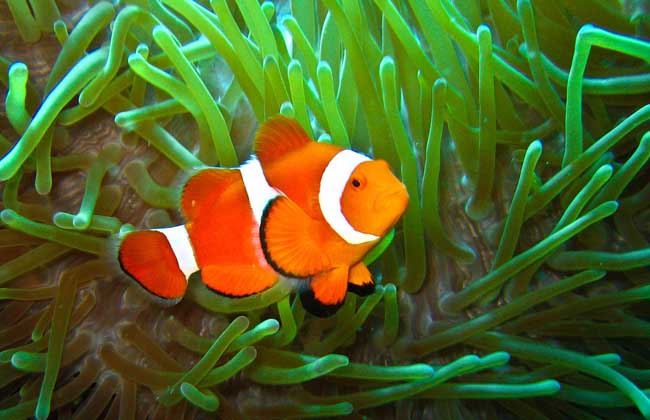
The clownfish is a tropical marine fish, and it is not ugly as its name suggests; on the contrary, it has a body length of about 11 cm and lives in an inseparable symbiotic relationship with sea anemones, because the stinging sea anemones protect the clownfish, and the clownfish eat the digested leftovers of the sea anemones and nourish the sea anemones. Let us take a look below at how long clownfish can live!
How long can clownfish live?
The lifespan of clownfish is not very long; on average they can live to 10 to 12 years. Clownfish live in the ocean and have many spots that allow them to camouflage themselves, so they choose to live in coral reefs, and they often eat some coral polyps and small fish and shrimp to sustain themselves. Clownfish are oviparous, and generally after 7 to 8 months they can become juveniles; newly born clownfish can only eat coral polyps.
Clownfish farming environment
The clownfish is a tropical fish and is very tolerant of high temperatures; generally anything between 18-35°C is fine, but 26-27°C is best, and for seawater specific gravity, 1.022-1.023 is fine, while a pH between 8.0-8.5 is no problem. The breeding of clownfish has a very great relationship with temperature; if the temperature is too low or too high, they cannot breed. As for changing the water, it should be changed often, and it cannot all be changed at once; it is best to change one third or one quarter, and the new water should not be poured directly at the fish, as this may injure the fish.
How do clownfish reproduce?
Clownfish are not the only hermaphroditic animals, but they are one of the few species in which males can become females while females cannot become males. Each clownfish population has one dominant female and several adult males, the latter being hermaphroditic during their youth. If the dominant female dies, one of the adult males will undergo hormonal changes and transform into the new female in that population. During the spawning period, the male and female fish show territorial behavior in guarding the nest and eggs; one end of each egg has a fine filament that fastens it to a rock, and it hatches in about one week; after the fry float in the water layer for a period of time, they then settle on symbiotic organisms such as sea anemones.