What food do clownfish eat? A detailed guide to feeding methods
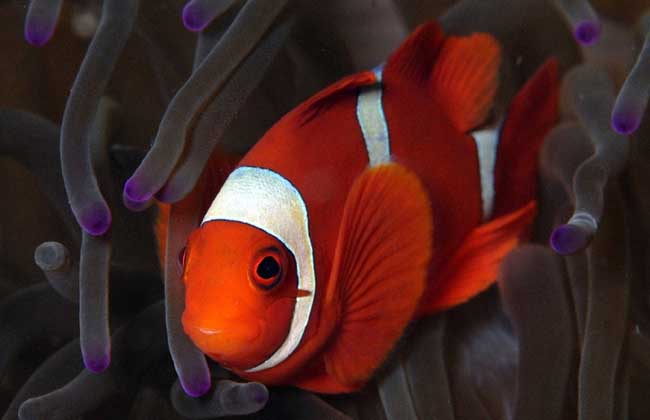
Clownfish is the common name for fish of the subfamily Amphiprioninae in the family Pomacentridae, a type of tropical saltwater fish. It gets its name because it has one or two white stripes on its face, resembling the clown role in Peking opera. It inhabits coral reefs and rocky reefs, and juveniles often live in symbiosis with large sea anemones, sea urchins or the tops of small corals, which is why it is also called the anemonefish. Let's take a look below at what food clownfish eat!
What food do clownfish eat?
Clownfish are omnivorous fish. Captive-bred clownfish have relatively simple food needs: pellet feed, chopped shrimp meat or other omnivorous bait will all do, but during the first two months some natural astaxanthin and spirulina powder should be added to the food to make the fish's colors more vivid. Because the domestication time at breeding farms is relatively short, it is even better if some brine shrimp are added after feeding.
Growth and reproduction of clownfish
Clownfish are not the only hermaphroditic animals, but they are one of the few species in which a male can turn into a female while a female cannot turn into a male. Each clownfish colony has one dominant female and several adult males, the latter being hermaphroditic during their youth. If the dominant female dies, one of the adult males will undergo hormonal changes and transform into the new female of the colony. During the spawning period, the male and female fish display territorial behavior in guarding the nest and the eggs. One end of each egg is attached to a rock by a thin filament, and it hatches in about a week. After floating in the water layer for a period, the fry settle on symbiotic organisms such as sea anemones.
Common varieties of clownfish
1. Ocellaris clownfish: The ocellaris clownfish is distributed in the reef waters of the South China Sea, the Philippines and the western Pacific. Its body length is 10-12 cm, and it is oval in shape. The body color is orange-red, with three silvery-white bands on the sides of the body, located respectively behind the eyes, at the center of the dorsal fin, and at the caudal peduncle. The white band at the center of the dorsal fin forms a triangle on the side of the body, and each fin is orange-red with black edges. Bait includes brine shrimp, seaweed, chopped fish meat, pellet feed, etc.
2. Black two-band clownfish: The black two-band clownfish is distributed in the coral reef waters of the Indian Ocean. Its body length is 10-15 cm, and it is oval in shape. The whole body is purple-black, with three silvery-white vertical bands on the sides of the body behind the eyes, in the middle of the dorsal fin, and at the caudal peduncle. The mouth is silvery-white, with a black band running through the eye. The water quality must be clear. Bait includes brine shrimp, fish worms, chopped fish and shrimp meat, saltwater fish pellet feed, etc.
3. Tomato clownfish: The tomato clownfish is distributed in the coral reef waters of the Indian Ocean and the Pacific Ocean. Its body length is 10-15 cm, and it is oval in shape. The whole body is purple-black, each fin is purplish-red, and there are three silvery-white bands on the sides of the body behind the eyes, in the middle of the dorsal fin, and at the caudal peduncle, making it very beautiful. Bait includes algae in seawater, animal plankton, saltwater fish pellet feed, etc.
4. Red two-band clownfish: The red two-band clownfish is distributed in the coral reef waters of the Indian Ocean and the Pacific Ocean, as well as in Taiwan, China, the South China Sea and the Philippines. Its body length is 10-12 cm, and it is oval in shape. The whole body is bright red, with two silvery-white bands on the sides of the body behind the eyes and in the middle of the dorsal fin. The body color of the two-band clownfish is variable, including bright red, purplish-red, purple-black, etc. Bait includes saltwater fish pellet feed, chopped fish meat, seaweed, etc. The water quality must be clear.
5. Cinnamon clownfish: The cinnamon clownfish is distributed in the coral reef waters of the Philippines, Taiwan, China and the Pacific Ocean. Its body length is 5-8 cm, and it is oval in shape. The whole body is light brown, with a white band behind the eyes, like a silver ring around the neck. The mouth is silvery-white, and from the mouth along the back to the caudal peduncle, together with the dorsal fin, it is all silvery-white. Bait includes algae, fish worms, brine shrimp, saltwater fish pellet feed, etc.
6. Three-band Pacific clownfish: The three-band Pacific clownfish is distributed only in the waters around the Marshall Islands. The front half of the adult fish's body is brownish-yellow and the rear half is black, with 3 white vertical bands on the sides of the body, respectively behind the eyes, at the center of the body side, and on the caudal peduncle. The body color varies depending on the different species of symbiotic sea anemones. It mainly feeds on plankton, copepods, invertebrates and various seaweeds.
7. Great Barrier Reef two-band clownfish: The Great Barrier Reef two-band clownfish is distributed in the coral reef waters of the western Pacific. Its distribution range includes the waters of eastern Australia, New Caledonia and the Loyalty Islands. The adult fish's body is brown, the area in front of the eyes is grayish-red, and there is a broad white band edged in black behind the eyes, with another black-edged white band between the middle section of the dorsal fin and the anus. It mainly feeds on plankton and invertebrates.