What fish are suitable for a planted aquarium? Recommendations for common ornamental fish species
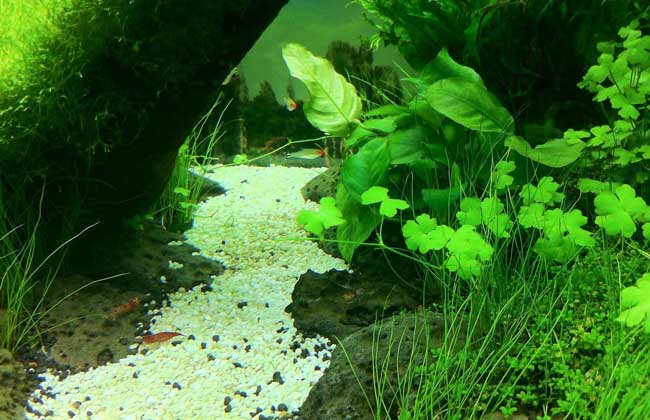
A planted aquarium is an aquarium themed around aquatic plants, generally focused on tropical freshwater, with emphasis on aquascaping, and it is greatly related to the choice of aquatic plants. Most popular now is natural-style aquascaping, which usually requires special attention to lighting, fertilizers, carbon dioxide, water quality, and the maintenance of all conditions for aquatic plant growth. Let's take a look below at what fish are suitable for a planted aquarium!
Tetras (Characidae)
"Lantern fish" is a general term for some small freshwater fish with ornamental value, such as the cardinal tetra, black neon tetra, rummy-nose tetra, marbled hatchetfish, and serpae tetra. These are the most beloved group in planted aquariums, and most can be kept in planted tanks. The pH should be neutral to slightly acidic, with soft water. They love to breed among aquatic plants, and breeding generally occurs mostly during seasonal transitions. Their eggs are mostly adhesive, and laying eggs is not difficult, but the fry are very small and not easy to raise.
Rainbowfish (Melanotaeniidae)
Planted aquariums are suitable for keeping rainbowfish, such as the Boeseman's rainbowfish, red rainbowfish, and neon rainbowfish, as well as the threadfin rainbowfish and the neon blue-eye. This series of fish is distributed in Australia, is gentle in temperament, active and fast-moving, prefers neutral water quality, and is an egg-laying fish. They are a group of beautiful and easy-to-keep fish.
Cyprinids (Cyprinidae)
Planted aquariums are suitable for keeping cyprinids, such as the harlequin rasbora, cherry barb, white cloud mountain minnow, and zebrafish. This series of fish is extremely widely distributed, but varieties from Southeast Asia are more popular. Just like tetras, most can be kept in planted aquariums, and the issues of water quality and disease are roughly the same. They are suited to neutral to slightly acidic soft water, except that they are more prone to pepper spot disease. Simply paying more attention to the frequency of water changes can keep it well under control.
Corydoras and plecos
Planted aquariums are suitable for keeping corydoras and plecos, such as the otocinclus, albino cory, gold laser cory, red-headed cory, and panda pleco. This is a very important group in planted aquariums, but also the most unappreciated, because many people call them "garbage fish." When observed carefully, you can discover their charm, especially their nimble eyes, often actively searching for leftover food in the tank, or looking for algae and moss in the planted tank. They are good helpers for cleaning in a planted aquarium, mostly preferring clean, neutral, fresh water, though there are some exceptions among the plecos. They are essential fish in a planted aquarium.
South American dwarf cichlids
Planted aquariums are suitable for keeping South American dwarf cichlids, such as the German blue ram, Bolivian ram, Apistogramma agassizii, cockatoo dwarf cichlid, and blue ram. This generally refers to cichlids under 10 cm, and not all of them are suitable for keeping in a planted aquarium, so please confirm clearly before keeping them in a planted tank. They are all a group of the best parents, so breeding is mostly not difficult. Spawning can be divided into cave-spawning and open-spawning types, and some fish also lay eggs on the underside or surface of the leaves of large aquatic plants. Most prefer neutral to slightly acidic water quality. They are a group of fascinating sprites in a planted aquarium, and can also be used to intimidate tetras and make them school together.
Anabantoids (Osphronemidae)
Planted aquariums are suitable for keeping anabantoid fish, such as the Betta splendens, dwarf gourami, and pearl gourami. Most of these fish live in streams of Southeast Asia and are suited to neutral to slightly acidic soft water. Among them, two male Betta splendens cannot be kept together, otherwise they will fight to the death, and they should not be kept with overly docile fish either. Because they have particularly large and flowing long fins, do not keep them with fin-nipping tiger barbs. Anabantoids have an accessory breathing organ on the first gill arch, with a rich network of blood vessels distributed on it. When oxygen in the water is insufficient, the fish will swim to the surface and breathe oxygen directly from the air. Therefore, these fish will not die from suffocation due to lack of oxygen in the aquarium during keeping. One more point: the three-spot gourami is especially easy to keep, suitable for beginners and for cycling a tank, but it is not easy to kill, and it is somewhat aggressive, liking to bully other fish.
Cichlids
Planted aquariums are suitable for keeping cichlids, such as angelfish and discus. Apart from dwarf cichlids, only gentle cichlids can be chosen. Angelfish are best not kept with small tetras, because large angelfish will eat the tetras when hungry. Angelfish and discus need acidic soft water. Discus in particular have very high requirements for water quality, water temperature, and food, and are a relatively difficult species to keep, but they are also extremely gorgeous fish.
Killifish (Cyprinodontidae)
Planted aquariums are suitable for keeping killifish, such as the blue-eye lamp and golden killifish. Note that some varieties have large mouths and will swallow small tetras. Livebearers (Poeciliidae) can also be put into a planted tank for mixed keeping, but it is not recommended. Although they can be kept in acidic water with most fish suited to acidic soft water, they should be allowed to live as comfortably as possible, surviving in the slightly alkaline water they like. If you really like them, you can set up a dedicated aquarium for them and plant aquatic plants such as Anubias that adapt to slightly alkaline water.