Can sardines actually be artificially farmed?
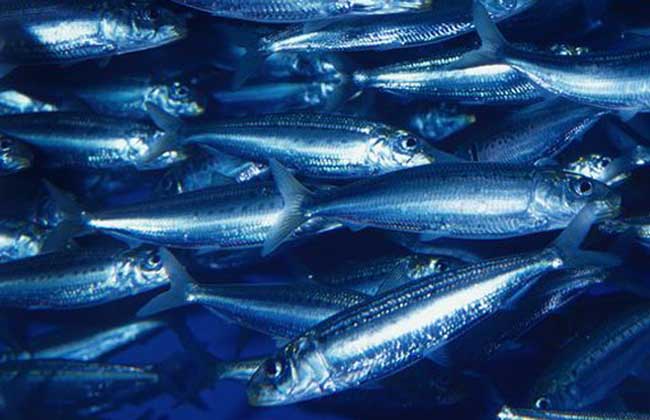
Sardines are the collective name for the genus Sardina, the genus Sardinella and the genus Sardinops of the family Clupeidae, order Clupeiformes, class Osteichthyes, as well as certain edible fish of the family Clupeidae; the term also refers to the common herring (Clupea harengus) used to make oil-packed canned fish and other small herring or herring-like fish. The small ones are two cun long and the large ones about one chi, and they are an important marine commercial fish worldwide. Let us take a look below at whether sardines can be artificially farmed!
Can sardines be artificially farmed?
Sardines are very difficult to raise and are generally not artificially farmed. Sardines are warm-water fish of coastal waters, very difficult to raise, lazy by nature, often crowding together and remaining motionless, with a very high mortality rate. They usually live in dense schools, migrate along the coast, feed on large amounts of plankton, and mainly spawn in spring; the eggs and the larvae that hatch a few days later drift with the water until they metamorphose into free-swimming fish. The suitable temperature for most sardines is around 20-30°C, and only a few species have a lower suitable temperature, such as the Pacific sardine (Sardinops sagax), whose suitable temperature is 8-19°C. Fishing generally uses light purse seines, drift gill nets, large haul seines and set nets, among others.
Are sardines deep-sea fish?
Sardines are deep-sea fish. Sardines usually inhabit the middle and upper layers; in addition to feeding on planktonic crustacean larvae, the young fish also eat diatoms and dinoflagellates. In autumn and winter, adult fish live in deep water beyond 70-80 m, and in spring, as coastal water temperatures rise, the schools make a spawning migration toward the shore. After hatching, the larvae and young fish grow while feeding along the coast, and in summer they gradually migrate north with the warm current of the South China Sea; in autumn, as the surface water temperature drops, they migrate south. After October, when the fish have grown to more than 150 mm, they gradually move to deeper sea areas as the coastal water temperature falls.
Which fish cannot be artificially farmed?
1. Ribbonfish: Ribbonfish, also called hairtail or cutlassfish, is a migratory fish and is extremely difficult to keep alive in small ponds or small sea areas; without migration it cannot reproduce smoothly, so ribbonfish are still not artificially farmed and are mainly caught in coastal waters.
2. Spanish mackerel: Spanish mackerel, also called ma jiao, is a bony fish with many species. It grows in the Yellow Sea and Bohai Sea of China, is a warm-water upper-layer fish, feeds on small fish in the middle and upper layers, and migrates in schools in summer and autumn. It is also a migratory fish and cannot be artificially farmed.
3. Small yellow croaker: Small yellow croaker, also known as big-eye, huase, small cucumber, ancient fish, yellow croaker, etc., resembles the large yellow croaker in body shape, but has a longer head, smaller eyes and larger scales, with a body length of about 20-odd cm. It is a schooling migratory fish of the coastal bottom layer and cannot be artificially farmed.
4. Large yellow croaker: Large yellow croaker, also known as yellow fish, king fish, da xian, large yellow croaker, golden dragon, golden yellow dragon, etc., is a warm-temperate coastal schooling migratory fish and cannot be artificially farmed.
5. Flatfish: Flatfish, namely the flounder, lives buried on the seabed as an adult, mostly feeding on starfish and other small animals, and is not suitable for artificial farming.
6. Pomfret: Pomfret, also called ping yu, is a migratory fish and is very difficult to artificially farm.
7. Sardine: Sardine, also called sa ding yu, is a warm-water fish of coastal waters, one of the schooling migratory fish, and is extremely difficult to artificially farm.