How to Cultivate a Chinese Pine Bonsai: Management Methods Are the Key Factor
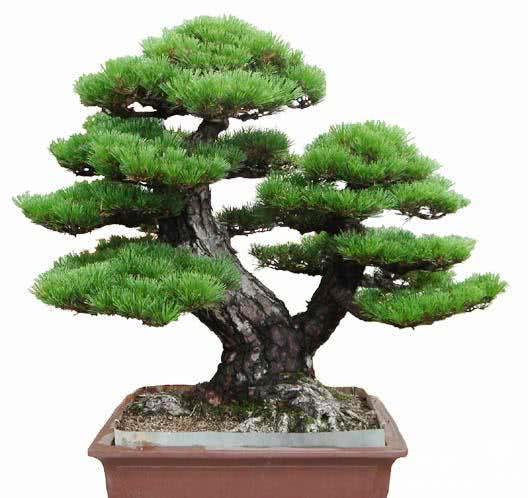
The Chinese pine (Pinus tabuliformis) is a pine species endemic to China. Its needles stay green all year round, while the trunk is usually grayish brown, with bark arranged in scaly plates, giving the whole tree a vigorous and sturdy look. Below we bring you the cultivation and management techniques for Chinese pine bonsai.
Soil management: The Chinese pine can survive in soil that is not particularly fertile, but it cannot survive in salinized soil. Therefore, the soil used for Chinese pine bonsai should be neutral or acidic, and throughout the entire cultivation process, care must be taken not to let the soil become salinized. Normally, you can apply some oxalic acid to neutralize salinized soil. In addition, after planting for a period of time, the soil should be replaced with new soil; generally, the soil in the pot is changed once every 3 to 5 years.
Light management: The Chinese pine loves light. Apart from the period right after potting, when it needs to be kept in a shady place for a while, it needs sufficient light at all other times, especially during its growing season. Seedlings 1 to 2 years old can survive for a period of time in a relatively shady place, but for a fully formed Chinese pine bonsai, if there is not enough light during the growing season, its growth will be very poor, and it may even wither and die outright.
Temperature management: The Chinese pine likes a dry, cold climate and is not very afraid of severe cold weather; it can survive at low temperatures of minus 30°C. For an adult Chinese pine, if it is in the south, it can be placed outdoors directly in winter and can overwinter without any warming measures, though care must be taken to shield it from wind so it is not buffeted by strong winds. In the north it can also be placed outdoors, but certain warming measures must be taken. Because winters in the north bring snow and freezing, which may freeze and damage the tree, the pot needs to be buried for protection, and the trunk is best wrapped with plastic film. As for summer, care must be taken to provide appropriate shade, and some water should be sprayed to lower the temperature around the bonsai. And if it is a seedling, then summer requires even more cooling treatment, and winter also requires certain warming measures.
Water and fertilizer management: During the cultivation of Chinese pine bonsai, not much watering is needed. At the very beginning of potting, water once. If it is grown outdoors, water once in late autumn with freezing water, and once in early spring with thawing water; at other times no watering is needed, and receiving rainwater directly is enough. If there is heavy rain, care must also be taken to promptly drain any water accumulated in the pot. Of course, if the year is relatively dry with little rain, then manual watering is needed. If it is grown indoors, then it needs to be watered regularly according to how dry or moist the potting soil is. Chinese pine bonsai can do without topdressing, but with topdressing the Chinese pine will grow better. Generally, during the growing season, apply an appropriate amount of nitrogen, phosphorus, and potassium fertilizer, and then in late autumn, when watering with freezing water, you can apply some cow and horse manure.
Pest and disease management: The Chinese pine has few diseases, mainly a type of damping-off disease, but it has relatively many insect pests, more than 30 kinds. Therefore, during cultivation, care must be taken to guard against them, and the corresponding pesticide solution should be sprayed according to the different types of pests and diseases.