How do you save an orchid with root rot? I've brought several pots back to life this way
Lately many readers have been asking Haoshe Farmer: how do you save an orchid with root rot? It may be because of the recent spell of rainy days, but there have been a particularly large number of cases of orchid root rot, and of course most of them are novice orchid growers, since the veterans already have their own experience of caring for orchids during the plum rain season.
To grow orchids you must first grow good roots; the same goes for any plant. Once the root system is healthy, the leaves and shoots will always grow well, and the consequence of orchid root rot is often the loss of the whole plant. Before rescuing an orchid with root rot, we first need to understand why orchids get root rot, and which planting methods or habits cause it.
Orchids have fleshy aerial roots, and the environment their roots need is loose, breathable and free-draining. The most common cause of root rot is the potting medium: if the medium is too fine and not breathable, it tends to hold water after watering, so the orchid roots live in an environment with no air circulation and will certainly rot. Another cause is viral infection, which can also lead to orchid root rot.
If you find that an orchid has root rot, Haoshe Farmer suggests first cutting away the already rotted roots, since these roots have become contaminated with pathogens through decay. Then leave it in the sun for three hours, turning it over while it dries so that different parts of the rotted roots are exposed to the sterilising sunlight. As for the method circulating online of soaking in potassium permanganate solution, Haoshe Farmer does not recommend it, because the chemical itself is corrosive and, for an already very weakened orchid plant, it is no less than causing harm a second time.
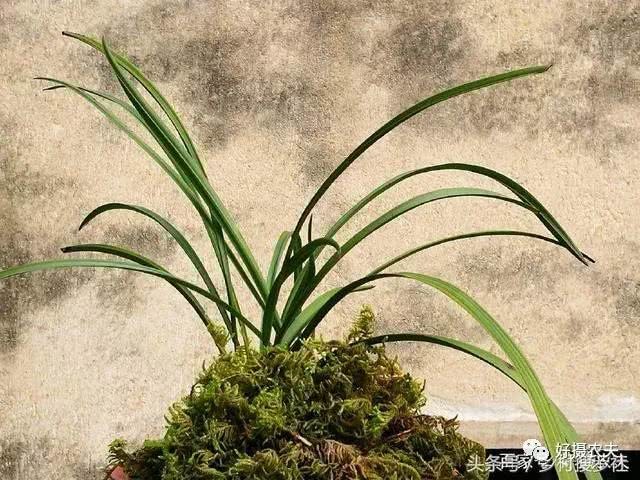
Once the orchid plant is dry, prepare to pot it up, but do not use the previous potting medium. The method I use is actually very simple, and doesn't even need a flower pot. Wrap the roots of the orchid plant in moss, without tying it tightly. Then just place it on a piece of thick cardboard to support it, use a spray bottle to mist the moss until wet, and leave it in a cool, ventilated place to rest and recover. Both the damp moss and the cardboard absorb water, and as they evaporate they provide the humidity the orchid plant needs, so generally misting once a week is enough.
After resting like this for about a month, you can see the orchid roots putting out crystal tips like those in the picture above. At this point you can move it back into a flower pot; the potting medium must be clean and mild, and after potting it is still best to water sparingly. Give it an appropriate amount of indirect sunlight to strengthen the plant's resistance.
Haoshe Farmer has used this method to bring several pots of root-rotted orchids back to life, and readers can give it a try.