How to Tell Male and Female Angelfish Apart? A Detailed Guide to Identification Methods
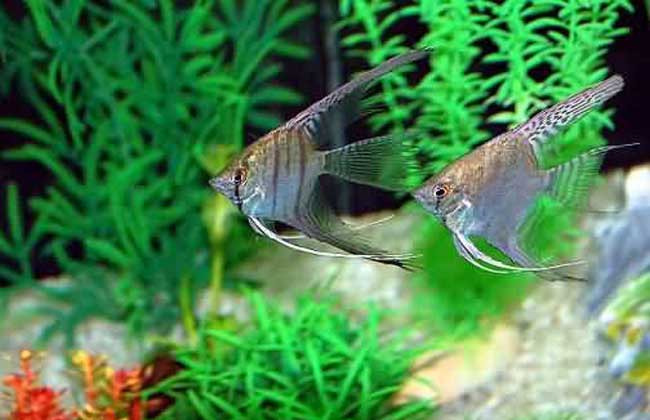
The angelfish, also known as the freshwater angelfish, angel, little angelfish, and small-finned sailfish, is almost synonymous with tropical fish. Whenever tropical fish are mentioned, the first thing people often think of is this beautiful, refined fish gliding leisurely through aquatic plants. Its popularity among aquarium enthusiasts is unmatched by any other tropical fish. Let's take a look below at how to tell male and female angelfish apart!
How to Tell Male and Female Angelfish Apart?
Sexing angelfish is relatively difficult during the juvenile stage, but once the fish reach sexual maturity after 8 to 10 months, the male and female characteristics become very obvious. The male's forehead is more developed than the female's, appearing full and prominent, and its belly is not as swollen as the female's. The male's sperm duct is thin and pointed, while the female's ovipositor is thick and round. Angelfish are tropical fish that prefer to pair up naturally, and successfully paired angelfish often leave the group to swim and feed together as a couple, living an independent life envied even by mandarin ducks.
What Is the Lifespan of Angelfish?
The theoretical lifespan of angelfish is 5 to 6 years, and wild angelfish can live around ten years. However, the actual lifespan of most angelfish is 4 to 5 years. Due to factors such as inbreeding, captive-bred angelfish have even shorter lifespans, generally beginning to show obvious signs of aging at around 3 years. This may be related to abundant food and a fast metabolism. So it is better to raise fish from a young age, as it brings both a sense of accomplishment and slows down the replacement rate, though probably not many people can raise a fish to old age.
What Food Do Angelfish Eat?
Angelfish foods include fish worms, tubifex worms, ciliates, yellow mealworms, small live fish, and pellet feed, among others. Different varieties of angelfish also have different food preferences. For angelfish with a body length of 3 to 12 cm, the diet is mainly turtle worms, supplemented by tubifex worms, bloodworms, and yellow mealworms. For angelfish over 12 cm in body length, turtle worms are too small and have poor palatability, so slightly larger foods should be chosen, mainly bloodworms, tubifex worms, yellow mealworms, and small live fish. Most are mainly fed animal-based foods, and small varieties can also be trained to accept pellet feed as their main diet, while very few are mainly fed plant-based foods.