How to keep angelfish? Master the correct breeding methods
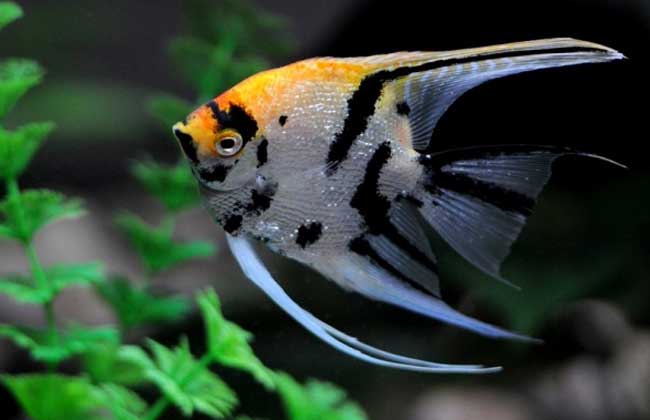
Angelfish, also known as freshwater angelfish, pterophyllum, and scalare, are practically synonymous with tropical fish. Whenever tropical fish are mentioned, people's first association is often this fish that glides gracefully among aquatic plants, so beautiful and refined. Its popularity among aquarium enthusiasts is unmatched by any other tropical fish. Let's take a look below at how to keep angelfish!
Angelfish keeping environment
Angelfish are very gentle in temperament and have no special requirements for water quality. They can be kept mixed with the vast majority of fish in weakly acidic water. The keeping water temperature is generally controlled between 24 and 28°C. Within this temperature range, they have a strong appetite and grow rapidly, unaffected by outside temperature changes, always maintained in a relatively stable state. They can be kept together with other tropical fish. The only thing to note is the tiger barb of the Cyprinidae family. These mischievous and lively little fish often like to nip at the anal and caudal fins of angelfish. Although it is not a fatal attack, in order to maintain the beautiful appearance of angelfish, it is still best to avoid keeping angelfish mixed with them.
Angelfish feeding management
1. Feeding habits: Angelfish bait includes fish worms, tubifex, ciliates, yellow mealworms, small live fish, pellet feed, etc. For angelfish with a body length of 3 to 12 cm, their bait is mainly turtle worms, supplemented by tubifex, bloodworms, and yellow mealworms. For angelfish with a body length above 12 cm, turtle worms are too small and have poor palatability, so slightly larger bait should be chosen, mainly bloodworms, tubifex, yellow mealworms, small live fish, etc.
2. Feeding: The feeding amount for angelfish should be determined according to the size and number of the fish. For household angelfish keeping, generally only 1 to 2 feedings per day are needed, and the feeding amount should be eaten within 5 to 10 minutes. When keeping angelfish in large quantities, 2 to 3 feedings per day are needed. For brood fish during the breeding period, generally 3 to 4 feedings per day. Since angelfish are relatively small in size and have a limited food intake, each feeding should be about 70 to 80 percent full. Increasing the number of feedings can promote rapid fish growth.
Angelfish water quality management
1. Partial water change: Partial water change refers to replacing part of the water, which is a simple and effective method often used in angelfish keeping. Before the partial water change, first turn off the power to the heater, air pump, circulation filter pump and other electrical appliances in the aquarium, then use gauze to wipe clean the algae attached to the glass on all four sides of the aquarium or on the decorations. After letting the water stand for 15 minutes, all suspended matter in the water will sink to the bottom of the tank. Use a rubber tube to gently siphon out the debris at the bottom. Generally, the amount of water siphoned out is about 1/4 to 1/3 of the total water volume, then slowly pour the prepared new water of the same temperature along the tank wall.
2. Full water change: Full water change refers to replacing all the aquarium water, and it is the simplest and most effective way to change water quality, but the workload of a full water change is relatively large, especially when the aquarium is small and has decorations, making the process complicated and tedious. Before the water change, cut off the power to all electrical appliances in the aquarium, take out all the fish and decorations, and drain the water. After rinsing the aquarium clean, put all the decorations back and add new water for later use.
Angelfish disease and pest control
1. Anchor worm: After the anchor worm deeply pierces into the fish's body tissue, it firmly attaches itself to the fish. Adult worms can be removed one by one, but this is a long process and potentially harmful to the fish. Short-term soaking in a 3% salt solution can also remove the worms from fish one by one. Repeated use of antiprotozoal treatment agents in ponds can kill the larvae. Trichlorfon can also be used to kill adult worms.
2. Black spot disease: Small black or brown spots, up to 2 mm wide, appear on the body and fins, and sometimes also on the eyes and mouth. New antiparasitic treatment agents can kill the parasites, but once the black spots have formed, they will leave marks. The most effective preventive measure is to break the parasite's growth cycle by ensuring that water birds do not come near the pond or aquarium, and that no snails parasitized by the parasite appear.
3. Blood flagellates: Fish infected with Cryptobia become listless and swim abnormally. The fish become thin, the eyes sunken, and the gills pale. Severely affected fish die. Currently, no chemical treatment agent has been found that can effectively prevent and control blood flagellates on ornamental fish. Since only fish infested by leeches become infected, it is only necessary to remove the infected fish and remove the leeches. However, doing this in an aquarium is quite easy, while solving this problem in an infected pond is much more difficult.
4. Chilodonella: Affected fish rub against hard objects, clamp their fins, and the skin is covered with a whitish-blue opaque substance, especially between the anal region and the dorsal fin. If the gills are affected, the breathing rate increases significantly. In the late stage of infection, the skin surface swells and then sloughs off. If the fish is relatively strong, the best treatment for freshwater fish is to soak it in a 3% salt solution, let the fish stay in it until it curls up, then quickly return it to its own aquarium. Alternatively, a new antiparasitic treatment agent can be used.
5. Cloudy eye: One or both of the fish's eyes become covered with a cloudy appearance and take on a whitish look. The fish may show signs of stress, and the body color may be abnormal, or they may behave just like normal fish. If it is a parasitic infection, use the corresponding treatment method. If the root cause is bacteria, then use treatment agents containing antibacterial compounds such as phenoxyethanol or furanace for treatment. Maintaining a good environment, especially using clean water, can minimize the incidence of cloudy eye, because dirty water can be a triggering factor. Therefore, adding a small amount of table salt to the water helps prevent it.
6. Water mold: The obvious sign of infection is cottony growths, usually white, but sometimes grayish black to green. They usually start from the trunk, but may also originate from a site with some injury, and can spread to affect the fins, mouth, eyes, and gills. Saltwater baths are a traditional treatment method for freshwater fish diseases, but they can cause undue irritation, require frequent changes of method, and are not particularly effective when used alone. Methylene blue is effective for mild cases, but the prescribed dosage will color the water, making it difficult to continuously check the progression of the disease.