How to keep discus fish? A detailed guide to raising methods and precautions
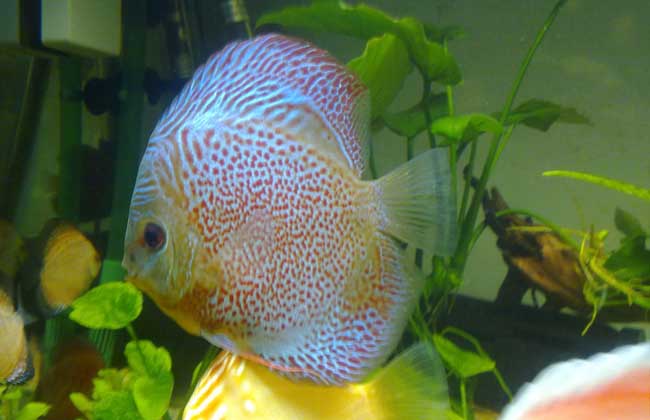
Although the discus fish is called "shenxian yu" (angelfish) in Chinese, its relationship to the angelfish is actually very distant. The angelfish is the collective name for Pterophyllum scalare, Pterophyllum leopoldi and Pterophyllum altum under the genus Pterophyllum, while the discus fish is the collective name for Symphysodon aequifasciatus, Symphysodon discus and Symphysodon tarzoo under the genus Symphysodon. Let us take a look below at how to keep discus fish!
To keep discus fish you need a tank with a large viewing surface. For tanks for juveniles or adults, a specification of 120 cm, 50 cm and 45 cm in length, width and height respectively is recommended; for breeding tanks for brood fish, a specification of 50 cm, 59 cm and 45 cm in length, width and height respectively is recommended. Tanks of these specifications are suitable for keeping them, allow rational use of space and are easy to manage.
Water quality conditions for discus fish
Discus fish have extremely strict requirements for water quality, and keeping them is somewhat difficult. For daily keeping, the pH of the water is 6.5-6.8, which is weakly acidic soft water, and the water temperature is 26-30°C, with 28°C being the most ideal. In northern regions, a heating rod must be used to keep discus fish. Their oxygen demand is relatively large, so it is very important to ensure there is sufficient dissolved oxygen in the water.
Feeding discus fish ⟧8⟧1. Hamburger: This is a homemade discus fish food. Every household's homemade hamburger is different, each with its own recipe. The ingredients are mainly beef heart, shrimp meat, fish meat, squid, chicken, etc., plus an appropriate amount of vegetables such as spinach, carrots and tomatoes, and some yeast tablets, spirulina powder, multivitamins, etc. After being stirred and crushed, it is placed in the refrigerator to freeze so it can be taken out to feed the fish at any time.
1. Beef heart mix: This is a homemade feed for discus fish. Homemade beef heart mix differs from household to household, each with its own recipe. Its ingredients mainly consist of beef heart, shrimp meat, fish meat, squid, chicken, and so on, plus an appropriate amount of vegetables such as spinach, carrots, tomatoes, and some yeast tablets, spirulina powder, multivitamins, etc. After being blended and chopped, it is frozen in the refrigerator so it can be taken out to feed the fish at any time.
2. Bloodworms: Discus fish like this kind of food the most, but live food carries the risk of causing disease, so it is best to freeze it in a freezer before feeding, which is safer. Note, however, that bloodworms must not be frozen for too long. If the time is too long, bloodworms will turn black due to oxidation and sometimes rot. Therefore, it is best to choose some high-quality bloodworms and freeze them. If feeding some live bloodworms, they must undergo sterilization treatment before use.
3. Small earthworms: Small earthworms are worms that grow in sludge. Discus fish like to eat this food, but this food has very low nutritional value and has a direct effect on the coloration of discus fish, so it is recommended to use it in small amounts.
4. Color enhancers: Color enhancers have become a fixed part of discus food. There is no need to criticize this unfair practice, because even wild discus in the Amazon River basin can find natural color enhancers, and there are all kinds of color enhancers on the market. They are already formulated into feed pellets or used as pure raw materials, and can be mixed into foods such as hamburger for feeding. Such color enhancers can be extracted from nature, such as spirulina, astaxanthin, etc.
Stage-based management of discus fish
1. Fry: For discus fish fry (0-5 cm), feeding food is very important. They need to be fed once every 2-3 hours, and the feeding amount is based on the principle that they finish eating within 3 minutes. When feeding, do not give too much at first; if they do not have enough, you can add a little more, but do not feed them until they are completely full. The food includes frozen brine shrimp or microworms. During this period the fry are fed frequently, and water quality must be handled well. You can change the water 2 times a day, with each water change above 50%, and the water temperature controlled at 28-30°C.
2. Juveniles: The main food of juvenile discus fish (4-12 cm) is artificial hamburger, supplemented by brine shrimp and bloodworms. The number of feedings per day can be reduced to 3 times. Since the colors on the juveniles' bodies gradually spread, they should be given a relatively large space. For water changes, changing 1/2 or 1/3 of the water daily is sufficient.
4. Adults: The colors on the body of discus fish will only formally show in the adult stage above 12 cm. At this time discus fish begin to pair up, the body color becomes more brilliant, the outline of the black halos on the upper and lower fins deepens, and there is behavior of occupying territory. Adults are fed 2 times a day, mainly with artificial hamburger. For water changes, changing 1/3 of the water daily is sufficient.
5. Brood fish: Since they are called "brood fish", it means these fish have begun to reproduce. One thing that must be kept in mind is that the parent fish caring for the fry consumes a great deal of energy, so a small amount of bloodworms or hamburger should be fed to replenish their energy and reduce pollution.