Can you eat plecos? Read this and you will understand
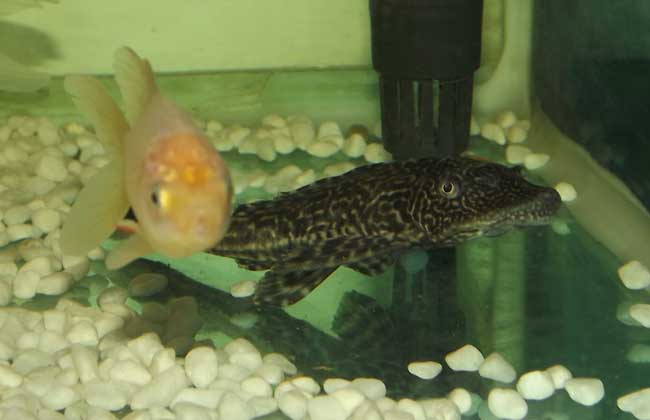
Pleco is the common trade name for Pterygoplichthys multiradiatus and Hypostomus plecostomus of the subfamily Hypostominae in the family Loricariidae, also known as sucker fish, garbage fish, etc. It is native to South America, and its body is covered in intricate patterns. After being introduced into our country, it is generally kept as an ornamental fish. For food lovers, the ornamental value of the pleco is not of much concern; rather, the question is whether the pleco can be eaten. Let us take a look together below!
Can you eat plecos?
Plecos can be eaten. Plecos are native to Latin America, where they can grow very large, and locally they were originally an edible fish. However, because it is an exoskeleton fish, it has more bones than meat, its nutritional value is not high, and its belly contains many bacteria and it has a fishy, foul smell, so it is not recommended for everyone to eat.
What do plecos eat?
Plecos are omnivorous fish that suck on algae, benthic animals and debris in the water, and can also swallow large amounts of fish eggs and fry. In aquariums they often attach to rocks and glass to steady themselves and suck on algae, and they also search for benthic animals (such as tubifex worms). For small pellet feed floating on the surface, they will suck it up by pressing their belly against the water surface upside down, their mouth like a vacuum cleaner, sucking fish feces and green plants all into their belly. They also hold a bubble in their mouth, and this bubble contains oxygen, allowing them to stay underwater for a long time.
How do you keep plecos?
1. Water quality: Artificially keeping tropical fish requires soft water or low-hardness water, with a pH that is preferably weakly acidic or neutral. If it is strongly acidic, tropical fish have difficulty breathing and grow slowly; if it is strongly alkaline, the gill tissue of tropical fish will be corroded.
2. Water changes: Partial water changes involve using a siphon hose to suck out feces, leftover bait and other debris from the bottom of the fish tank. The amount of water siphoned out should preferably be 1/4 of the water volume in the tank, then add the same amount of new water at the same temperature that has been sun-dried or chemically dechlorinated. The frequency of water changes should preferably be 2 times per week in autumn and winter, and 3 times per week in spring and summer. For a full water change, remove all equipment from the fish tank, scoop out the aquatic plants and fish and place them in another container at the same temperature as the original water, wipe the tank walls and bottom clean with a sponge, and change the water once every 3 to 4 months.
3. Water temperature: Tropical fish are extremely sensitive to temperature, and if the temperature is unsuitable they will soon die. Different species of tropical fish have different water temperature requirements. For most tropical fish, the water temperature should preferably be 20 to 24°C, and during the breeding period the water temperature should preferably be 25 to 28°C. The temperature difference between day and night must not exceed 4°C.
4. Oxygen: A certain number of aquatic plants should be planted in the fish tank, because aquatic plants produce oxygen during photosynthesis, increasing the oxygen content in the water. At the same time, promptly removing debris and changing the water frequently can also increase the dissolved oxygen in the water.
5. Light: If the fish tank is placed in a room with sunlight, it is best to give it about 1 hour of sunlight in the early morning and in the evening when the sunlight is insufficient. If the fish tank is placed in a room without sunlight, artificial light should be used to illuminate the aquatic plants, using a 60-watt incandescent bulb or a 40-watt fluorescent lamp for 6 hours a day. Light can make tropical fish grow faster and make their bodies more colorful.
6. Stocking: The stocking density of tropical fish in a tank depends on the size of the tank. For first-time fish keepers, the smaller the density the better, and an air pump needs to be added. Quiet fish cannot be kept together with aggressive fish, and large fish cannot be kept together with small fish. There are many choices of feed for tropical fish, such as fish worms, bloodworms, or packaged feed suitable for different species of tropical fish, etc. Raw bait and live bait must all be washed clean to control sources of disease.