How Big Can a Pleco Grow? A Detailed Guide to Its Adult Size
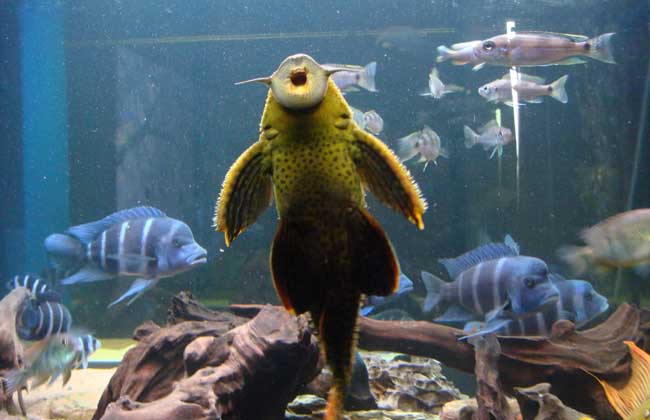
The pleco is a common species in mixed community aquariums and is known as the cleaner of the fish tank, because it mainly feeds on bottom debris, algae and so on. Through their processing, they can purify the water quality and provide a healthier and cleaner living environment for other aquarium fish. Let us take a look below at how big a pleco can grow!
How big can a pleco grow?
Under suitable conditions, the pleco can reach a body length of 250 mm, and after reaching adulthood its appetite is enormous. Besides eating algae such as moss, it often feeds on the eggs of other fish. It can eat 3000 to 5000 eggs a day and can also swallow large numbers of fry. At the same time, because it is an introduced species, it currently has no natural enemies in China. It can easily reproduce in large numbers in rivers, which threatens the survival of native fish and disrupts the ecological chain.
How long do plecos live?
The lifespan of a pleco varies; it is not necessarily a fixed number of years. It can be as short as 1 to 2 years, as long as 6 years, or even longer or shorter, but it cannot survive without an aquatic environment. Many records of pleco deaths list starvation as the cause, especially since adult plecos have a greatly increased appetite, but deaths from freezing also occur. For a pleco, the environment is the most lethal factor.
How to keep a pleco
1. Water quality: When keeping tropical fish in captivity, the water should be soft or low in hardness, and the pH should preferably be weakly acidic or neutral. If it is too acidic, tropical fish have difficulty breathing and grow slowly; if it is too alkaline, the gill tissue of tropical fish will be corroded.
2. Water changes: A partial water change means using a siphon to remove feces, leftover food and other debris from the bottom of the tank. The amount of water siphoned out should preferably be 1/4 of the tank water volume. Then add the same amount of new water at the same temperature that has been left to sit in the sun or chemically dechlorinated. In autumn and winter, changing the water twice a week is preferable; in spring and summer, three times a week is preferable. For a full water change, remove all equipment from the tank, take out the aquatic plants and fish, and place them in another container at the same temperature as the original water. Use a sponge to wipe the tank walls and bottom clean, and change the water once every 3 to 4 months.
3. Water temperature: Tropical fish are extremely sensitive to temperature. If the temperature is unsuitable, they will soon die. Different species of tropical fish have different water temperature requirements. For most tropical fish, the water temperature should preferably be 20 to 24°C, and during the breeding period, the water temperature should preferably be 25 to 28°C. The temperature difference between day and night must not exceed 4°C.
4. Oxygen: A certain number of aquatic plants should be planted in the tank, because aquatic plants produce oxygen during photosynthesis, increasing the oxygen content in the water. At the same time, removing debris promptly and changing the water frequently can also increase the dissolved oxygen in the water.
5. Light: If the tank is placed in a room with sunlight, it is best to give it about 1 hour of sunlight in the morning and evening when the sunlight is weak. If the tank is placed in a room without sunlight, artificial light should be used to illuminate the aquatic plants, using a 60-watt incandescent bulb or a 40-watt fluorescent lamp for 6 hours a day. Light can make tropical fish grow faster and make their bodies more colorful.
6. Stocking: The stocking density of tropical fish in a tank depends on the size of the tank. For beginners, the smaller the density, the better, and an air pump should be added. Peaceful fish cannot be kept with aggressive fish, and large fish cannot be kept with small fish. There are many choices of food for tropical fish, such as fish worms, bloodworms or packaged food suitable for different species of tropical fish. Both raw bait and live bait must be washed clean to control sources of disease.