How Do Plecos Reproduce? A Detailed Guide to Breeding Methods and Techniques
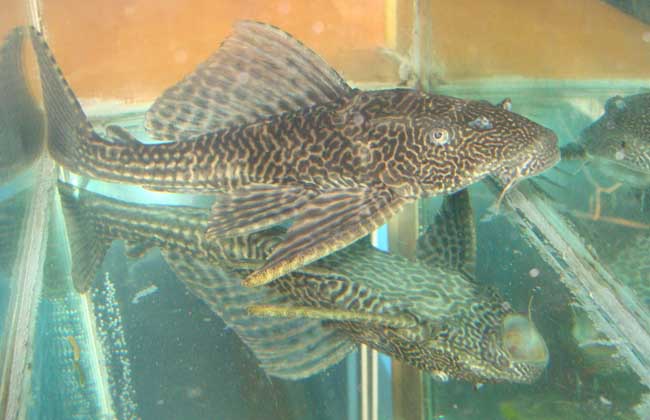
The pleco is the common commercial name for the multiradiate armoured catfish and the suckermouth catfish of the subfamily Hypostominae within the family Loricariidae. Artificial breeding is not difficult, but in home aquariums reproduction can hardly ever be completed. In fish farms it is said that breeding is achieved by simulating the hydrological conditions of a natural stream with a strong water current. Let us take a look below at how plecos reproduce!
Stocking Conditions for the Broodstock Pond
The pleco breeding method combines natural spawning of broodstock with artificial incubation, so the requirements for the broodstock pond are relatively high. The pond area is 6 to 8 mu, the pond bank slope is 1:2 to 2.5, the pond depth is 2 m, and the water depth is 1.8 m. A soil pond is best, as it helps the pleco dig holes and produce spherical capsules. There should be a small amount of sludge at the bottom of the pond, convenient water inlet and drainage, clear water quality, and abundant water sources. About ten days before stocking the broodstock, disinfect the whole pond with about 150 kg of quicklime per mu of water surface or about 5 of bleaching powder to kill enemies in the water body. After the toxicity of the medicine disappears, add new water, filter the water inlet with 60-mesh silk gauze, and keep the water level at 1 m.
Stocking Pleco Broodstock
Every year in mid-to-late April, when the water temperature stabilizes above 18°C, select pleco broodstock from the greenhouse and put them into the broodstock cultivation pond. Stock 200 to 250 groups of broodstock per pond, with a female-to-male ratio of 3:2. The broodstock should preferably be 3 years old, at least fully 2 years old, with relatively good gonadal development, a body weight of more than 0.5 kg, a body length of about 30 cm, a robust constitution, normal body shape, and no deformities. Add or change water 1 to 2 times per week, 10 cm to 20 cm each time. At the same time, every day put an appropriate amount of pellet feed, soaked cooked with boiling water, kneaded into balls by hand, and place it on one side of the pond.
Collecting Pleco Eggs
Starting in early June, collect pleco eggs by artificial methods. Pleco spawning differs from that of other fish: what is laid is a spherical capsule, and the capsule is full of fish eggs. When the spherical capsule appears turmeric yellow, take the spherical capsule out of the hole and put it into an incubation tank for incubation. When the spherical capsule has not yet reached turmeric yellow, put the spherical capsule back into the hole to develop. In this way, the fry hatching rate is relatively high.
Pleco Incubation Techniques
Pleco incubation uses incubation tanks. There are two kinds of incubation tanks. One is a cylindrical incubation tank, 0.5 m high and 0.3 to 0.4 m in diameter. The square incubation tank is 1.5 m long, 0.5 m wide, and 0.5 m high, and is also equipped with an aeration tube to increase the dissolved oxygen content in the water. Put the spherical capsules into the cylindrical tanks for incubation, with one spherical capsule per tank, and keep the water level at 0.3 to 0.4 m, changing the water once a day. After the spherical capsules disperse, change the water 2 to 3 times a day. After 2 days, put the fry into square tanks for incubation. The density is calculated by spherical capsule: put 2 to 3 spherical capsules in each square tank, that is, for larger spherical capsules put 2 spherical capsules, and for smaller spherical capsules put 3. After another 2 days, the fry can emerge.