What fish are suitable for mixing with the pleco?
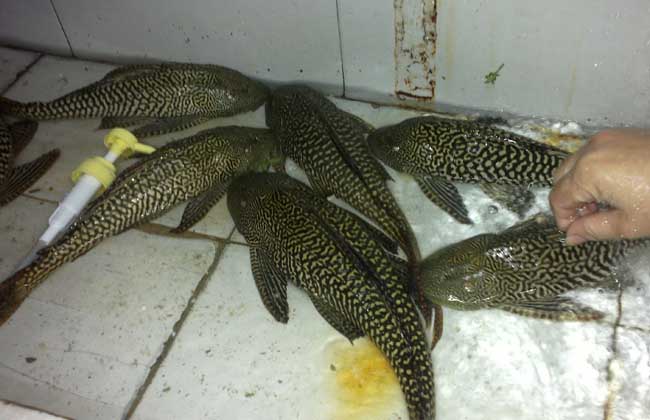
The pleco is the common trade name for the sailfin pleco and the suckermouth catfish of the subfamily Hypostominae within the family Loricariidae. As the "cleaner" of the aquarium, it is often kept together with other fish. The usual standard for mixing is that quiet fish cannot be kept with aggressive fish, and large fish cannot be kept with small fish. Let's take a look below at what can be kept with the pleco!
Rose fish
The rose fish is distributed in the coral reef waters of the Indian Ocean to the Pacific Ocean. It is carnivorous and can be fed animal bait as well as artificial feed. It is suitable for an invertebrate aquarium with a water temperature of 26 degrees, a seawater specific gravity of 1.022, and a water volume of more than 100 liters. Its maximum body length can reach 10 cm. Once it adapts to life in the aquarium, it will accept most live bait and dried feed, but it will not eat flake feed. Do not keep it together with agile, greedy fish, otherwise the rose fish will not be able to grab food. Feeding time is best in the evening, which matches its nocturnal lifestyle and also helps it accept new food.
White cloud mountain minnow
The white cloud mountain minnow is also called the Baiyunshan fish, Baiyun golden barb, red-tailed fish, Tang fish, etc. When alive, its body color is bright and colorful, making it a famous ornamental fish. Generally, its back is brown, its belly is silvery white, and along the middle of the side there is 1 golden or silvery-blue longitudinal stripe, with several dark brown lines above and below the stripe. At the base of the caudal peduncle there is 1 red round spot, the iris is golden yellow, the base of the dorsal fin is red, and the other fins are yellow-green with transparent edges. Because this fish was first discovered in a stream of Baiyun Mountain on the outskirts of Guangzhou, China, its English translated name is Baiyunshan fish.
Zebrafish
Zebrafish is also called the blue-striped fish, striped fish, blue zebrafish, Indian fish, Indian zebrafish, etc. Its body is elongated and slightly spindle-shaped, with a small and somewhat pointed head, a relatively short snout, and the whole body covered with multiple dark blue longitudinal stripes like a zebra, arranged alternately with silvery-white or golden-yellow longitudinal stripes. When swimming in groups in an aquarium, it looks like a herd of zebras galloping across the African savanna, hence the elegant name zebrafish. Zebrafish has 87% high homology with human genes, and its advantages as a model organism are very prominent. This means that in most cases its experimental results are applicable to humans. It can often be used for monitoring water quality environments, and it is also a relatively easy fish to keep.
Tiger barb
The tiger barb, scientific name four-banded barb, is also called the four-striped fish, four-striped barb, etc. Its place of origin is inland waters such as Malaysia and Sumatra Island and Kalimantan Island in Indonesia. Its body is tall, somewhat diamond-shaped, laterally compressed, 5-6 cm long, with a body color base of light yellow, marked with red patches and small spots, and 4 vertical black stripes from head to tail, colorful like tiger skin. The dorsal fin is tall and located in the middle of the back, the caudal peduncle is short, and the caudal fin is deeply forked. It likes to live in groups, swims agilely and lively, and adult fish will attack other fish, especially loving to bite filamentous fin rays. It is not suitable to be kept with fish that have filamentous fin rays (such as angelfish), and it is best kept in groups of the same species.
Note: The pleco has the habit of attaching to other fish, so the pleco is only suitable for being kept together with fish that swim relatively quickly, so that there is no fear that it will latch onto the fish. Therefore, it is not suitable to be kept with slow-swimming fish such as goldfish.