What fish are suitable for mixing with kissing gourami?
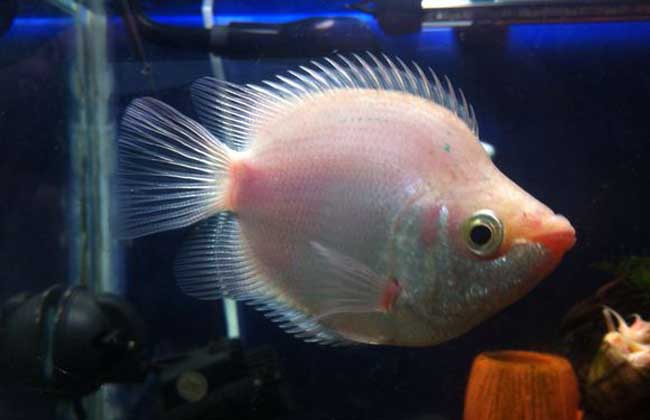
The kissing gourami is one of the small ornamental fish, gentle in temperament and lively, easy to keep in community tanks, and can be mixed with many tropical fish. Mixed keeping greatly increases the ornamental value in appearance, but the water quality must be kept sufficiently clear. Common fish kept together with kissing gourami include red swordtail, angelfish, black molly, guppy, and so on. Let's take a look below at what fish are best kept together with kissing gourami!
Red swordtail
The red swordtail is a beautiful ornamental fish species native to South America. In its place of origin this fish generally grows to 7-8 cm, while under artificial keeping conditions the body is larger, generally around 12 cm. It is gentle in temperament and can be kept with other tropical fish of similar size. A few individuals are aggressive toward small tropical fish and like to peck at their tails. It is normally lively and active. When frightened, when the water current is strong, or when fighting, the male fish likes to jump.
Angelfish
The angelfish has an elegant bearing and graceful swimming posture. Although it lacks brilliant colors, its popularity among aquarium hobbyists is unmatched by any other tropical fish. It seems there has never been a case of an enthusiast who has kept tropical fish for many years without having kept angelfish. It is almost synonymous with tropical fish; whenever tropical fish are mentioned, the first thing people tend to think of is this fish that glides leisurely among the aquatic plants, beautiful and refined beyond the dust.
Black molly
The black molly is omnivorous and can scrape algae and aquatic plants off the tank walls, so it enjoys the reputation of the aquarium's “cleaner”. It is gentle in temperament and easy to keep in community tanks. Because the black molly likes weakly alkaline hard water, it is not suitable for keeping together with tropical fish of the Characidae family. The fry can be fed small live foods such as small daphnia. It reaches sexual maturity at 5 months, and the breeding cycle is about 35 days.
Guppy
The guppy is an omnivorous small fish species with very strong adaptability to the environment. It is distributed and reproduces in the lower reaches of rivers, lakes, marshes and ditches in some tropical regions. Its wild habitats are diverse, mainly inhabiting freshwater basins and lakes and marshes. It can tolerate polluted waters and is gregarious. It was introduced as an ornamental fish into Singapore, Japan and China. It is gentle in temperament and can be kept with gentle small and medium-sized tropical fish. It is normally lively and active and has a relatively short lifespan. Artificial breeding has produced several strains, such as tuxedo, mosaic, grass tail, swordtail, metal, and snakeskin, among others.
Tetra
Tetras were originally a group of small characin fish native to the Amazon River basin in South America. Because of aquascapes simulating the “tropical rainforest”, they became popular all the way from the Netherlands in Western Europe to the mainland. As important protagonists of planted tanks, they swim in schools among the aquatic plants, and their body colors are brilliant and colorful. In particular, the red, blue or green light on their bodies can reflect shimmering rays, earning them the title of “swimming gemstones”.
Gourami
The gourami is a small tropical ornamental fish of the genus Trichogaster in the family Osphronemidae. It is an omnivorous fish that can accept various live foods such as mosquito larvae, tubifex worms, aquatic earthworms and daphnia, and also eats artificial food, and even eats live small fry; it will even consume shrimp and crab eggs, but it will not chase small fish it cannot swallow. Still, the gourami likes food floating on the water surface best. It can be kept with other gentle tropical fish of similar size.
Summary: Kissing gourami are best not kept together with parrot fish. Parrot fish grow longer than kissing gourami, like to go to the surface to breathe, have a large range of activity, like to move around in all water layers, and swim slowly but are lively. The kissing gourami grows with a relatively large head, so choosing a dedicated aquarium for community keeping can be appropriately larger, which better helps the kissing gourami grow.