How to keep kissing gourami properly? A detailed guide to practical breeding methods
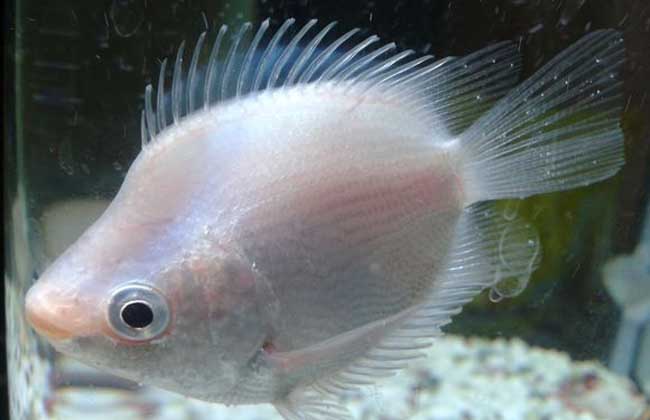
The kissing gourami is famous for the way the fish seem to “kiss” each other. As the name suggests, when two fish meet they press their mouths together for a long time. In fact, this is a gentle form of combat: the two fish bump mouths to defend their territory, but because it looks like kissing, they got this name. Now let us take a look at how to keep kissing gourami properly!
Tank size
Adult kissing gourami can reach 20-30 cm in body length, and smaller ones can still exceed 10 cm. Calculating by a tank-to-fish body length ratio of 3:1, the tank must be at least 90 cm. However, most kissing gourami that people buy are around 10 cm, so a tank 40-60 cm long is enough. They are not demanding about water quality, their schooling behaviour is not very pronounced, and they swim very slowly.
Water temperature control
Kissing gourami can live in water temperatures of 18-30 degrees Celsius, with above 22 degrees generally being suitable. If you keep them in winter, and your home has heating, you do not need to install a heater, but you should at least install a thermometer so you can check the water temperature at any time. If the water temperature cannot be kept at around 25 degrees Celsius, you need to buy a thermostat.
Feed selection
Kissing gourami are omnivorous. Although they are a large species, they are generally not interested in large water fleas, and often they must hold their mouths wide open for a long time to “drink” small water fleas in order to eat their fill. This is also a special feeding method of tropical fish. When kept in captivity they also like to use their thick lips to suck algae off the tank walls and aquatic plants, so when keeping fish, people often put one kissing gourami in each tank as a “cleaner”. Feed can include mealworms, chopped earthworms, artificial feed, and so on.
Tankmate pairing
Kissing gourami swim relatively slowly, and are usually extremely docile and lively, so they are not suitable for mixed keeping with quiet-loving tropical fish, nor with aggressive species such as piranhas, flowerhorn cichlids, tiger barbs, and so on. It is best to keep some peaceful species that are smaller than the kissing gourami.
Distinguishing male from female
Male and female kissing gourami are not easy to tell apart; juveniles are almost impossible to sex. In adults, the male's anal fin is generally broad and long, and the body appears somewhat slender, while the female's anal fin is narrow, the body is broad and thick, and the abdomen is slightly bulging. After the female reaches sexual maturity, the abdomen swells because it is full of eggs, which is very obvious when viewed from the top of the tank looking down.
Breeding management
1. Kissing gourami are egg-laying fish with external fertilization. Generally, broodstock should be over 20 cm in body length. Use a larger aquarium of over 80×40×40 cm for breeding, with 5-7 day old water, a water temperature between 25-27°C, a pH of 6.8-7.4, and a hardness of 9-11. Place a layer of floating aquatic plants on the water surface in the tank.
2. The male kissing gourami keeps swimming around the female. When he reaches the right position, he wraps around the female in a “U” shape and squeezes and embraces her. After the female lays eggs, the male immediately releases sperm. The female can lay 500-10,000 eggs each time, averaging 3,000. The eggs are buoyant eggs, floating in the upper layer of the water like oil, and the floating aquatic plants can protect them from being accidentally swallowed by the parent fish.
3. After the kissing gourami finish laying eggs, the parent fish can be removed and the eggs hatched artificially. The fry hatch in 20-24 hours. When the fry can swim after 2-3 days, they must be fed large amounts of infusoria, otherwise they will starve to death. After another 2-3 days, feed them small red worms for 3-4 days, then they can be fed larger worms. At 15-20 days, the rapidly growing fry should be divided into two or three tanks to ensure a higher survival rate. Sometimes one batch of fry can yield over 9,000 survivors.