Can yellow croaker be farmed artificially? A detailed look at the current state of farming
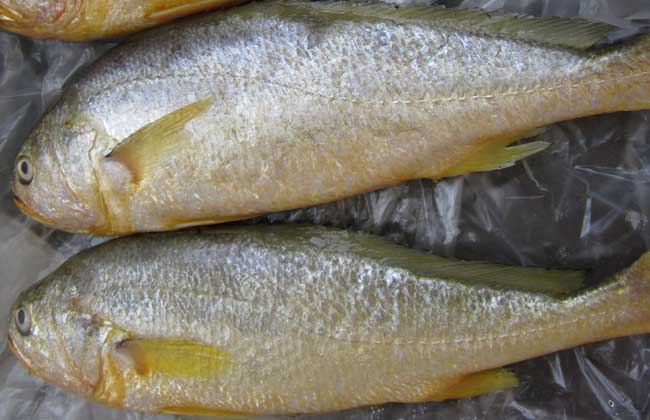
Yellow croaker is a collective term for about 160 species of fish in the family Sciaenidae, order Perciformes. They are generally benthic carnivorous fish, mostly distributed in warm seas or tropical coastal waters, with a few living in temperate or freshwater waters. They are nutritious, rich in protein, trace elements and vitamins, and have the effects of regulating the five internal organs and promoting fitness and beauty. Let us take a look below at whether yellow croaker can be farmed artificially!
Can yellow croaker be farmed artificially?
Yellow croaker can be farmed artificially. After many years of research on yellow croaker, large-scale seedling rearing began in 1990, and commercial fish farming has continuously expanded in scale since 1992, with output increasing year by year. The farming provinces started with Fujian and then spread to Zhejiang, Guangdong, Hainan and other provinces, and farming methods expanded from cage culture to pond culture.
How to farm yellow croaker artificially
The fry stocked for yellow croaker must be uniform in size. If the plan is to reach a commercial size of more than 400 grams within the same year, the stocked fry should be about 100 grams. The feed during the grow-out stage is generally mainly frozen upper-layer fish, supplemented by powdered compound feed. During the grow-out period, feed is generally given once each morning and evening. Compared with red sea bream, bass and others, large yellow croaker has characteristics such as slow feeding and small amounts, so feeding should be slow. Growth is fastest during high temperatures. To maintain the natural golden-yellow body color of commercial fish, shade material needs to be added over the cages during the later stage of farming to control light. The optimal growth water temperature is 22-26°C, salinity 1.8%-2.5%, dissolved oxygen above 5 ml/L, and pH 8.0.
Marine fish that cannot be farmed artificially
1. Hairtail: Hairtail is also called ribbonfish, cutlass fish, etc. It is a migratory fish and is extremely difficult to keep alive in small ponds or small sea areas. Hairtail cannot reproduce smoothly without migration, so there is still no artificial farming of hairtail; it is mainly caught offshore.
2. Spanish mackerel: Spanish mackerel is also called ma jiao, Japanese Spanish mackerel, and has many species. It grows in China's Yellow Sea and Bohai Sea, is a warm-water upper-layer fish, feeds on small and medium-sized upper-layer fish, and migrates in groups in summer and autumn. It is also a migratory fish and cannot be farmed artificially.
3. Flatfish: Flatfish, namely flounder, lives hidden on the seabed as an adult, mostly feeding on starfish and other small animals, and is not suitable for artificial farming.
4. Pomfret: Pomfret is also called butterfish. It is a migratory fish and is very difficult to farm artificially.
5. Sardine: Sardine, also known as pilchard, is a warm-water fish of coastal waters and one of the schooling migratory fish, and is extremely difficult to farm artificially.