Can the red wolf-tooth goby be eaten? Let's learn about this small fish
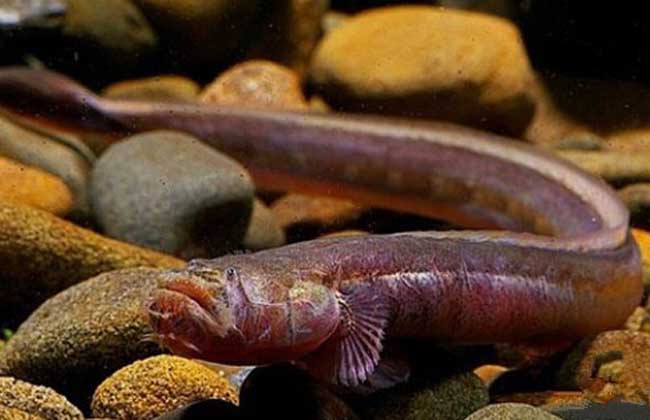
The red wolf-tooth goby, also known as red bright fish, hemp-skin head, chlnai, thin strip and so on, is a fish of the genus Odontamblyopus in the family Taenioididae. Its body is ribbon-shaped, with a body length of 9 to 20 cm and a body weight of 20 to 35 g. It lives in shallow sea areas with a substrate of sand-mud or mud and a water depth of 2 to 20 m, as well as burrowing in mud layers 20 to 30 m deep. Now let's take a look together at whether the red wolf-tooth goby can be eaten!
Is the red wolf-tooth goby poisonous?
The red wolf-tooth goby is not poisonous. The red wolf-tooth goby is a warm-water eel-shaped false goby, inhabiting shallow seas and areas near estuaries, often burrowing in sand and mud, and belongs to nearshore warm-temperate fishes. This fish can survive in both coastal waters and freshwater, and lurks in burrows along riverbanks. It is fierce in nature and feeds on small fish or small shrimp. It lives in ponds, lakes, shallow waters of small rivers, and mountain streams with a substrate of sandy soil and gravel, clear water quality, and rich oxygen content. It usually lives scattered in rock crevices, clinging to stone walls with its powerful sucker-like pelvic fins, and only comes out from the crevices when foraging. Adults like to jump, sometimes jumping out of the water, and sometimes jumping from one stone to another.
Can the red wolf-tooth goby be eaten?
The red wolf-tooth goby can be eaten. The comb goby with commercial value refers to young fish 1-2 cm long. Because Shahe in Jiujiang County, Jiangxi, is located at the foot of Mount Lu, the comb goby produced there is famous together with Mount Lu for its special shape and delicious taste, and is therefore named "Mount Lu stone fish". The comb goby from the Fushui River in Yangxin County, Hubei, is called "spring fish" because its fishing season is in late spring and early summer when hundreds of flowers are in full bloom. In the Zhangxi area of Dongzhi County, Anhui, it is called "wheat fish" because it is caught during the wheat harvest season and resembles wheat. According to legend in Jing County, Anhui: as far back as the Jin Dynasty, a hermit named "Qin Gao" came to the jagged Lion Stone Cave to make pills of immortality, and the residue was thrown into the stream, turning into small fish with "tiger head and snake tail". Since then, every midnight, a clanging sound of the qin has appeared amid the gurgling water. Later, people named this stream "Qin Stream", and the small fish in the stream were also named "qin fish". Since ancient times, stone fish, spring fish, wheat fish, and qin fish have all been listed as tribute, so they are also collectively called "tribute fish".
How is the red wolf-tooth goby eaten?
In addition to being eaten fresh, red wolf-tooth gobies sold as commercial products are all dried products. After washing the fish and drying them in the air, put them into a pot, dry them over low heat, and stir-fry them with a small amount of cooking oil. When they turn golden yellow, take them out, sun-dry them for another day, and then bag them for the market. Every 5 kg of fresh fish can be processed into 1 kg of dried fish. Dried fish is mostly cooked by soaking until rehydrated and then scrambling with eggs, steaming with eggs, blanching in soup, or lightly boiling and then mixing with sesame oil and soy sauce into a cold dish, and has always been regarded as a rare delicacy at banquets. In the Qin Stream area of Anhui, it is also a precious tea-drinking delicacy. Around Qingming every year, local people blanch the small fish they catch in boiling salt water (with fennel, tea leaves, sugar, and other seasonings), dry them over charcoal fire, and after making dried fish, they still keep a lifelike appearance, with the wide mouth slightly open, the small eyes round and wide, the fins spread, and the tail curved. When qin fish is used to make tea, it is like living fish swimming around in the cup, and the taste is fresh and mellow, with a special charm.