How to keep piranhas? Breeding methods and precautions
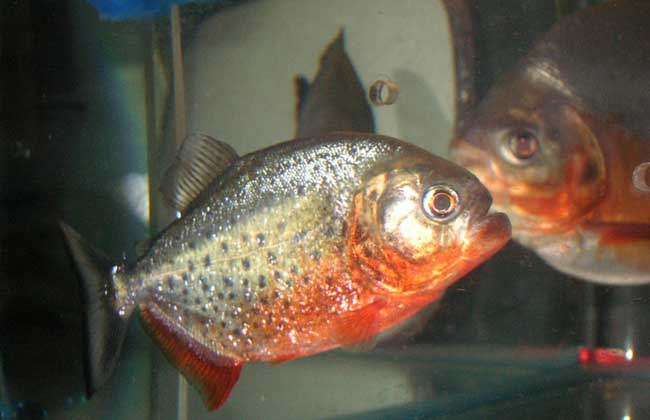
The piranha is also known as the man-eating fish, man-eating piranha, etc. It is famous for its ferocity and is commonly known as the "wolf of the water." It feeds on fish and animals that fall into the water, and there are also records of it attacking people, but some closely related species (such as the red-finned pacu) eat only fruit and seeds. It is extremely intelligent, and when hunting it first attacks the tail and eyes of its prey. Now let us take a look at how to keep piranhas!
What food do piranhas eat?
Piranhas live in main streams and larger tributaries, in places where the river is very wide and the current is relatively rapid. Adult fish mainly forage at dawn and dusk, feeding mainly on insects, worms, and fish, but some closely related species eat only fruit and seeds. They are active mainly during the day, and at noon they go to sheltered places to rest. When solitary, they forage for relatively small fish; when in groups, they hunt any creature that enters the water, including humans, and will also actively attack anything moving in the water. They are especially sensitive to the smell of blood, and any trace of blood will provoke a large group of "piranhas" into a frenzied attack.
Piranha breeding methods
During the breeding season, the parent piranhas lay their eggs on tree roots in the water, about 1000 or more eggs, which hatch in 9 to 10 days. The parent fish guard the eggs, and river flooding can affect the hatching success rate. Man-eating piranhas kept in aquariums are quite difficult to breed, which is also the reason their price remains high, unlike the red-finned pacu which is so inexpensive. They reach sexual maturity at 18 months, and the males are somewhat more brightly colored.
Piranha breeding methods
1. Preparation for keeping: Friends who want to start keeping piranhas must make the following preparations before keeping them. First, you need to know the piranha's own characteristics and varieties, then decide whether to keep the P genus piranha or the S genus piranha, and then decide whether to use bottom sand. Of course, the P genus is suitable for group keeping, while the S genus is suitable for keeping alone. This must be chosen according to personal preference and market conditions. Those keeping them in groups need to be mentally prepared for internal strife; in terms of internal strife, the red-bellied piranha has the least internal strife, while those kept alone are not easy to show their best condition, which requires the fish keeper to put in extra care.
2. Purchasing method: All fish keepers should know that choosing a good fish to start with is a very important step, and how to select a piranha is also a issue many fish keepers care about. You can choose based on personal preference, price, health condition, and other aspects.
3. Fish tank selection: When choosing a piranha tank, you need to decide the size based on whether you plan to keep the P genus piranha or the S genus piranha. The most important thing in choosing a tank is still to test it, to see whether the filtration system is strong, whether there is any water leakage, whether there are scratches, and whether the equipment is complete.
4. Water quality management: Everyone who has kept fish will pay great attention to the issue of water quality, and piranha keeping is certainly no exception. Since many piranhas grow in the murky waters of the Amazon, piranhas have strong adaptability and generally can grow well in soft water from weakly acidic to neutral. Then there is temperature; it is recommended that it generally not be lower than 20 degrees, and it is best to keep it above 24 to 26 degrees all year round.
5. Fish food selection: The main foods of piranhas are frozen bloodworms, small mud carp, loach, or the internal organs of some food fish, pork, or some pellet feed. As far as eating is concerned, the P genus generally is not very picky; small fish, pieces of meat, and so on are all fine. In addition, feeding a variety of foods will greatly help the piranha's health and body color.
6. Disease prevention and treatment: Piranhas are a very easy variety to keep, but they can still get sick. You must do preventive work before these troubles reach the piranhas. If prevention does not achieve the desired effect, then you need to learn how to treat them.