What do Neon Tetras eat? A detailed guide to feeding methods
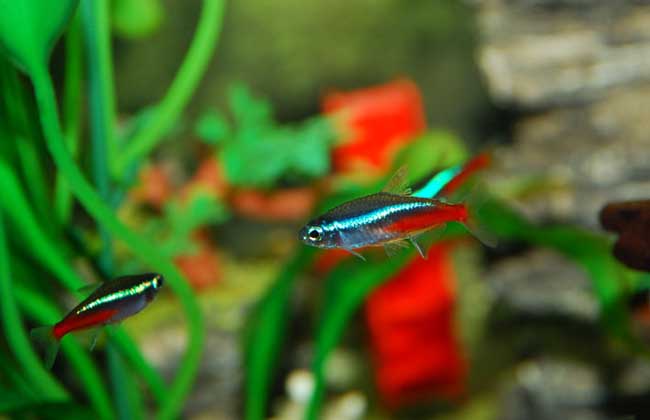
The Neon Tetra is also known as the Red Neon Tetra, Neon Light Tetra, Red-Green Neon Tetra, Red Light Fish, and so on. Under different lighting or in different environments, the color of its stripe varies from deep to light. Because its body color is extremely brilliant, the Neon Tetra (Paracheirodon innesi) has the reputation of being the "queen" among tropical fish, and it is a much-loved ornamental fish. Let's take a look below at what Neon Tetras eat!
What do Neon Tetras eat?
Neon Tetras like to move about near the bottom, and they are omnivorous. In the wild they eat some small insects and plant debris. In captivity they can be fed artificial food, water fleas (Daphnia), bloodworms, and other foods. They also like to swim in schools, so when keeping them it is better to keep a whole school swimming in the tank.
How long is the lifespan of a Neon Tetra?
The normal lifespan of a Neon Tetra is 1 to 2 years, so when keeping Neon Tetras, what to feed them so that they stay healthy has become a question many fish keepers care about. In fact, when keeping Neon Tetras, besides paying attention to the choice of food, the keeping environment and other issues also require special attention.
How do you keep Neon Tetras well?
1. Keeping environment: In the wild, Neon Tetras mainly inhabit the blackwater and clearwater areas of the Solimoes River in South America. Their habitat has a typical tropical rainforest climate, hot and rainy all year round, with a temperature between 20 and 26°C, a pH between 5.0 and 7.0 (slightly acidic), and a GH between 1 and 2. It is best to keep them in soft water, but after many generations of breeding they can also accept the hardness of tap water.
2. Distinguishing male from female: The main way to distinguish male from female Neon Tetras is that the male's body is more slender than the female's, the end of the anal fin is pointed, and the color is darker. During the reproductive period the female's body is plumper, the anal fin is fan-shaped, and the body color is lighter.
3. Breeding method: Neon Tetras reach sexual maturity at 6 months of age, and 8 to 10 months of age is the best breeding period. When the female's abdomen becomes swollen, first separate her from the males for a few days, feed them fully, then pair them up and put them in the tank. Breeding water quality requires a pH of 5.6 to 6.8, a GH of 1 to 3.5°, and a water temperature of 25°C, with an artificial spawning nest placed inside. The breeding tank must be shaded from light and kept quiet. One female can lay about 150 eggs. After spawning, remove the parent fish to avoid them swallowing the eggs, and the fry hatch in 24 hours.
4. Rearing management: Neon Tetra fry are tiny and move about very little, so they can only feed once the food reaches their mouths. For the first food, sift egg-yolk water through a 200-mesh net, then feed it drop by drop with a dropper. After some time, when the fry are swimming normally, switch to egg-yolk water strained through a 150-mesh net. The fry grow slowly, and the period during which they eat egg-yolk water is longer than for other small varieties. In addition, the water in which the fry hatch is extremely soft, and the water temperature is completely different from the usual keeping water temperature. When the fry grow to 5 mm, they must be moved into a large tank to be kept, taking care to let the fry go through a process of adapting to the water quality.