What fish are suitable for keeping together with tetras in a community tank?
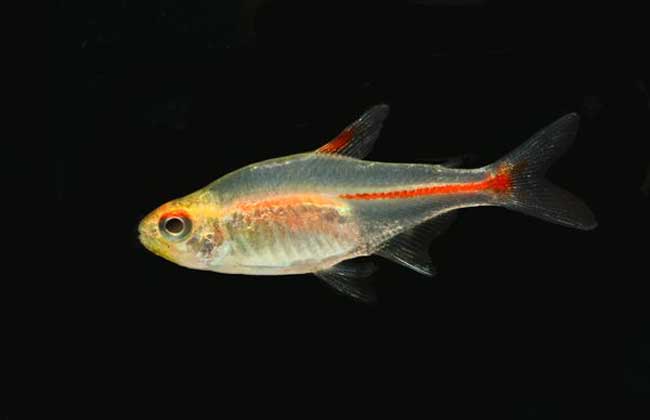
There are many species of tetras, and many people keep them. They are currently one of the aquarium ornamental fish we can often see. Keeping tetras requires skill, and of course, keeping them in a community tank is even more of a skilled job. Every species of tetra has its own unique personality: some are timid, even a bit cowardly; some are very lively, even jumping out of the tank for fun now and then; some are very aggressive, taking pleasure in nibbling on other fish. So when keeping them in a community tank, you must pay attention to the various personality traits of the tetras being mixed.
Betta fish
Betta fish like to live in water at 22 to 24 degrees, but it must not be lower than 20 degrees. They are not demanding about the acidity, alkalinity or hardness of the water. They like to eat mosquito larvae and are famous for being aggressive. When two males meet, there will definitely be a duel. When fighting, they flare their gill covers and quiver all their fins. Therefore, when keeping them, you must not put more than 2 adult males in the same tank, but they do not fight with other tropical fish, and female bettas do not fight each other either.
White Cloud Mountain minnow
The White Cloud Mountain minnow is a small fish of the Cyprinidae family. It grows only in the small streams of the mountainous area around Baiyun Mountain in Guangzhou, China. Its wild population is now extinct, and it is a national Class II protected wild animal of China. Artificial keeping is fairly common in Southeast Asia, Hong Kong, China and other places. On the ornamental fish market there are artificially bred and kept individuals, which are also exported to all parts of the world.
Red-tailed black shark
Germans call the red-tailed black shark the “firetail fish”, because the red-tailed black shark is entirely pitch black, with only the caudal fin looking like a blazing fire. When the red-tailed black shark is young, all its fins are black. When it grows to about 8 cm, the caudal fin turns golden yellow. When it grows to 10 cm, that is, when it reaches sexual maturity, the caudal fin will turn bright red. When the water temperature is too low, the color of the caudal fin will fade to orange-yellow or even become pure black. The keeping tank can be laid with dark-colored gravel and sand, which will make the red-tailed black shark's caudal fin become even redder. Many aquatic plants should be planted in the tank. This fish is timid, so flower pots can be placed in the tank for them to hide in. Do not place it in a place with too strong light. The red-tailed black shark likes to swim in the lower layer of the water, but you can often see them swimming up and down in the water, chasing and playing. It is not strict about water quality.
Angelfish
Angelfish have a very gentle temperament and do not have any special requirements for water quality. In a weakly acidic water environment they can be kept together with the vast majority of fish. The only thing to watch out for is the tiger barb of the Cyprinidae family. These naughty and lively little fish often like to nibble on the angelfish's anal fin and caudal fin. Although it is not a fatal attack, in order to maintain the angelfish's beautiful appearance, it is still best to avoid keeping angelfish together with them.
Bolivian ram
Keeping Bolivian rams should be said to be relatively simple. They are gentle in temperament and relatively able to coexist peacefully, but for the sake of breeding it is still better not to keep too many together. It is best to keep them in a planted tank. They can be kept in a small aquarium, and basically this species is not a picky eater and can adapt to artificial feed.
Checkerboard cichlid
The checkerboard cichlid gets its name from the checkerboard-like black squares on its flanks. Most of those sold on the market are wild specimens introduced from the upper Nile. When young, males and females are hard to distinguish; only after the male develops its lyre-shaped tail is it easy to tell them apart, so it often happens that even at 5 or 6 cm they still cannot be sexed. In addition, the red dots on the male's caudal fin are distributed in a radiating fan shape. They are open spawners, not easy to breed, and extremely sensitive to water quality, hence they are known as an aquarium indicator fish.
Corydoras
The bronze corydoras is the most popular among the Corydoras catfish and one of the most famous varieties. Its body color is a slightly green coffee-brown, hence the common name “coffee cory”, and it has a black band along its flank, so it is also called “side-banded armored catfish”. It has a gentle disposition, can be kept together with other fish, and has a strong constitution. It is one of the famous “scavenger fish”. To tell male from female: the male has long, thick spines on the dorsal and anal fins, and the female's belly bulges during the reproductive period, which can be used to distinguish them.
Peppered cory
The peppered cory has a gentle disposition and is easy to keep. It is suitable for keeping together with other varieties of tropical fish. It likes weakly alkaline water quality. It usually likes to move about in the bottom layer of the water, but sometimes it will suddenly float up to the surface to breathe air, then quickly sink back to the bottom. It is an egg-laying fish and relatively easy to breed. The main difference between male and female is that the male is smaller in body size, while the female's belly is more swollen when sexually mature. The breeding water temperature is best around 22 degrees Celsius.
Sterba's cory
The Sterba's cory is a kind of freshwater tropical fish and is another name for the gold-shouldered pearl cory. Its most notable appearance features are a short head, a short snout, and dotted markings. There are 7 to 8 horizontal stripes made up of spots on both sides of the body. The dotted mesh pattern extends onto the dorsal, caudal and anal fins. The orange fin spines on the pectoral fins and the spines on the pelvic fins are the greatest features of this species.
Peacock gudgeon
In water containing tannic acid or peat soil, the peacock gudgeon's body color will reach its peak. In addition, there are many regional color variations, making the colors even more diverse. In nature, its food includes insects, worms, small crustaceans, and the larvae of aquatic insects, etc. When keeping it, you can feed it flake food and small, suitably sized pellet food. If you want to try breeding them, you must supplement with live food or frozen live food such as brine shrimp, mosquito larvae or tubifex worms to keep the broodstock in the best condition. Given a suitable environment (20°C to 26°C, pH 6.8 to pH 7.8, hardness higher than 150 ppm), they can breed all year round.
Note: When keeping tetras in a community tank, you must also pay attention to their feeding habits. Some tetras are prone to bloating and external parasites after eating meaty food, but some tetras seem to be interested only in meat. So when mixing them, you must also pay attention to this point. Choosing fish with more similar feeding habits to keep together with the tetras will give a higher success rate.