How to Keep Neon Tetras? Detailed Guide to Breeding Methods and Precautions
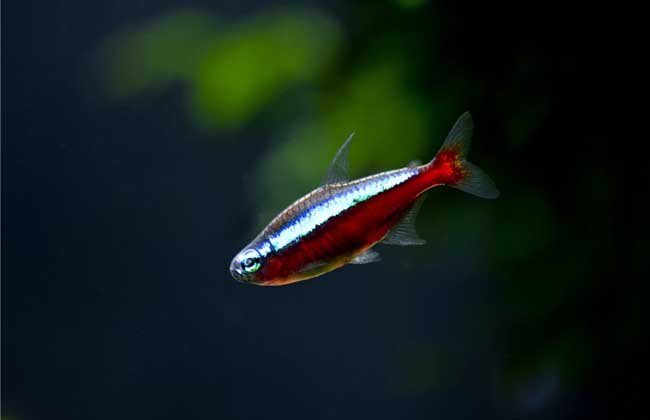
The neon tetra, scientifically named Paracheirodon axelrodi (Axelrod's neon tetra), originates from the middle and lower reaches of the Amazon River. Its population distribution mainly includes slow-flowing rivers in Brazil, Colombia, and Venezuela. It is a treasure among tropical fish, particularly beautiful when swimming, mild-tempered, best kept in groups, and has a lively and cheerful swimming style. Let's take a look below at how to keep neon tetras!
Morphological Characteristics of Neon Tetras
Adult neon tetras have a body length of 4-5 cm. The body is spindle-shaped, laterally compressed, with a relatively wide head and caudal peduncle, and a rounded blunt snout. The mouth and eyes are slightly large, the anal fin is elongated, and the caudal fin is forked. The body color is gorgeous, with a yellow-green back and a milky white belly. The most striking feature is a relatively wide, bright blue longitudinal band running along the side of the body from the rear edge of the eye to the caudal peduncle, with a red patch on the lower rear abdomen below the band, very eye-catching.
How Do Neon Tetras Reproduce?
1. Breeding environment: The breeding water temperature for neon tetras is 26°C, and the water should be weakly acidic. A layer of Myriophyllum should be laid on the bottom of the breeding tank. Place the tank in a dimly lit place, or block the light with newspaper etc., leaving only a faint light. Then add a small amount of table salt to the water and add 1/3 distilled water to stimulate the parent fish to become sexually active.
2. Introducing parent fish: At dusk, place selected parent fish into the spawning tank at night at a male-to-female ratio of 1:1. The next morning the parent fish begin to become sexually active. After a period of chasing, the female fish lays eggs on the Myriophyllum, and the male fish simultaneously releases sperm over the eggs to fertilize them. Spawning takes several hours, and each female fish can lay about 250 eggs.
3. Incubation management: After the neon tetras finish spawning, the parent fish should be removed to prevent them from eating the eggs. The fertilized eggs hatch into fry after about 36 hours, and the fry begin to swim and forage after another 36 hours. At this time, they should be fed "infusoria", and a small amount of table salt should also be added for disinfection. The young fish can gradually be exposed to light. After 15 days, switch to feeding small live fish food, and then gradually enter normal management.
How to Keep Neon Tetras?
1. Before purchasing neon tetras, you should first determine a suitable location in your home and the size of the aquarium, and buy a suitable aquarium. At the same time, related aquarium auxiliary equipment such as a heater, thermometer, water pump, and filter should also be fully prepared. After the aquarium is set up, bring the neon tetras home to keep.
2. Keeping neon tetras is somewhat difficult. They have strict requirements for water temperature, are suitable for living in a water environment of 22-26°C, and prefer slightly acidic water quality. Therefore, before introducing the fish, the water quality environment should be adjusted to within the standard range suitable for the fish to live in. This avoids other unexpected situations arising because the fish cannot quickly adapt to the water environment.
3. During the keeping process, the keeper should pay attention to observing the fish's living conditions and monitoring changes in the water quality environment. The water environment should be kept stable and clean to provide a good living environment for the neon tetras. Neon tetras like to be active in the lower layer, and the water does not need to be changed daily; changing it once every 3-5 days is sufficient. However, be careful that the water temperature does not fluctuate greatly. It is advisable to plant aquatic plants in the keeping tank, as this can provide shading. If the fish are found to have abnormal behavior or appearance, attention must be paid, and diagnosis and treatment should be carried out to prevent the fish from dying.
4. When keeping them, you should also feed them regularly and in fixed amounts every day. The bait should be some small live food, which can make the fish's body color more gorgeous. However, to avoid the hidden risks of disease and parasite hazards caused by unclean live bait, it is recommended to use high-quality artificial bait products.