How to keep neon tetras? Care methods and precautions
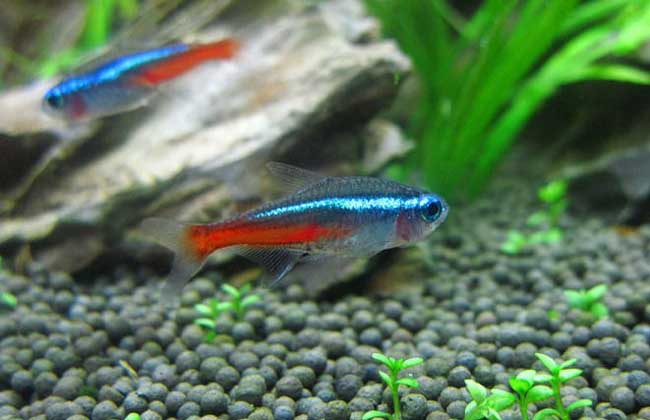
The neon tetra is covered all over with a cyan-green glow, with a bright blue-green band running from head to tail, and below the blue-green band on the rear half of the body there is another red band; the belly is blue-white, and the red and blue bands run through the whole body, dazzling and eye-catching. It has the laudatory title of "queen" among tropical fish and is one of the most popular tropical fish species. Let us take a look below at how to keep neon tetras!
The keeping environment for neon tetras
In the wild, neon tetras mainly inhabit the blackwater and clearwater areas of the Solimoes River in South America. Their habitat has a typical tropical rainforest climate, hot and rainy all year round, with temperatures between 20 and 26°C, a pH between 5.0 and 7.0 (on the acidic side), and a GH between 1 and 2. It is best to keep them in soft water, but after many generations of breeding they can also tolerate the hardness of tap water.
Breeding methods for neon tetras
Neon tetras reach sexual maturity at 6 months of age, and 8 to 10 months of age is the best breeding period. When the female's belly becomes swollen, separate her from the males for a few days first, feed her fully, and then pair them up and put them in the tank. The breeding water requires a pH of 5.6 to 6.8, a GH of 1 to 3.5°, and a water temperature of 25°C, and an artificial spawning medium should be placed inside; the breeding tank must be shielded from light and kept quiet. One female can lay about 150 eggs. After spawning, remove the parent fish to prevent them from swallowing the eggs, and the fry hatch in 24 hours.
Management of neon tetra fry
Neon tetra fry are tiny and swim only a little, so they can only eat when the food reaches their mouths. For the first food, sieve egg yolk water through a 200-mesh net and feed it drop by drop with a pipette; after some time, when the fry are swimming normally, switch to egg yolk powder water sieved through a 150-mesh net. The fry grow slowly, and the period during which they take egg yolk powder water is longer than for other small species. In addition, the water in which the fry hatch is extremely soft, and the water temperature is completely different from the usual keeping temperature. When the fry grow to 5 mm, they must be moved to a large tank for keeping, and care must be taken to let the fry go through a process of adapting to the water quality.
Prevention and treatment of white spot disease in neon tetras
1. Raise the water temperature above 28 degrees, and Ichthyophthirius multifiliis stops reproducing; if this continues for more than three days, the Ichthyophthirius multifiliis will die on its own. This method is very effective and is recommended as the first choice.
2. Soak in a 2 ppm mercurous acetate or mercurous nitrate solution. At water temperatures below 15 degrees, soak for 3 to 4 hours; at water temperatures of 15 to 20 degrees, soak for 2 to 3 hours. After each soak, rinse the fish gently with water for 0.5 to 1 hour to wash off the parasites attached to the fish and improve the efficacy. For mild cases, soak twice (once a day); for severe cases, add one to two more treatments. This method has a relatively high cure rate but is rather troublesome.
3. Treat with a mixture of 0.05 ppm malachite green and 25 ppm formaldehyde solution, twice a day, which can have a certain effect.
4. Soaking the sick fish in 1% salt water for several days also has a certain effect.
Note: The chemicals used to treat fish diseases are all highly toxic, so safety and protection must be attended to when using them.