How to Best Keep Red Arowana? Detailed Guide to Keeping Methods and Techniques
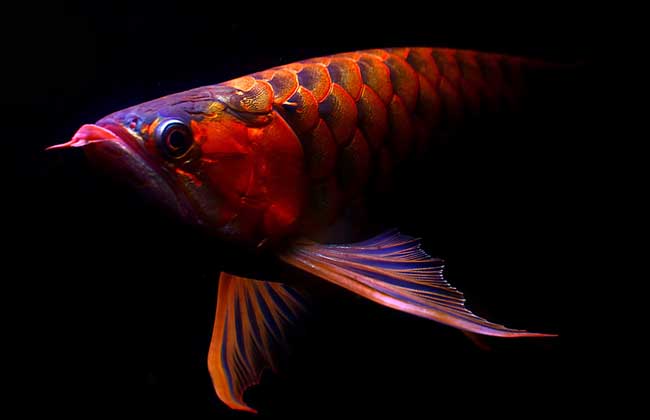
The red arowana is a freshwater fish of the genus Scleropages in the family Osteoglossidae, with the Chinese scientific name beautiful bony-tongued fish (Scleropages formosus). Due to the influence of Chinese dragon culture, the arowana has become an embodiment of good fortune, symbolizing the attraction of luck and wealth, and is thus elegantly called the feng shui fish. In Hong Kong, China, Macao, China and Taiwan, China, a red arowana can cost over a million yuan, and it is regarded as a symbol of family wealth and social status. Let us take a look below at how to best keep the red arowana!
How Long Do Red Arowanas Live?
The red arowana has a relatively large body and can generally grow to 40-50 cm, and some can grow to 70 cm. Some red arowanas can live more than ten years, while others can live to 40-50 years. However, the lifespan of the red arowana is not absolute; it is closely related to the water quality environment in which it lives and the keeper's methods and habits. Just as the lifespan of a person or other pets is never absolute, it is affected by its own physical condition and many external factors.
What Food Do Red Arowanas Eat?
The red arowana is a carnivorous fish. When feeding, it is best to give small fish and small shrimp. Small fish can provide balanced nutrition, and the red pigment in small shrimp helps the red arowana's coloration. Barley worms, loaches and insects can be fed, but not in large amounts, because barley worms have too high a fat content, and long-term consumption can also cause the arowana's eyes to droop. Feeding too many insect-type baits can cause the arowana to become a picky eater, so it is recommended to feed them sparingly. Feeding centipedes can increase the brightness of the arowana's scales.
The Keeping Environment for Red Arowanas
The red arowana's tank must be large, at least 1.5*0.6*0.6 m in size. If the activity space is too small, it will hinder the development of its body shape. Red arowanas are mostly kept in darker environments. You can choose to apply a darker-colored background to three sides of the tank, leaving only one side for viewing. The water temperature and PH value of the tank must be stable and must not fluctuate greatly. A water temperature of 28 or 29 degrees Celsius is best, and the PH should be between 6.5 and 7.5. Do not change the water too frequently. In addition to the environment inside the tank, also pay attention to the decorations around the tank each week. Try not to change them at will, otherwise the red arowana will show abnormalities due to changes in the environment.
Keeping Methods for Red Arowanas
1. Keeping the red arowana should start from the juvenile fish. First prepare a sufficiently large aquarium. The air pump in the aquarium should run for at least 24 hours to completely eliminate the chlorine in the water. Stabilize the water's PH value at 6-7 and the water temperature at 25 degrees Celsius, then put in the red arowana and begin keeping it.
2. During the initial stage of keeping the red arowana, at least 20-30% of the water should be changed each week. When changing the water, the standards for the new and old water should be the same. The new water injected should also be poured slowly along the tank wall, and must not directly wash over the red arowana's body.
3. To provide the red arowana with a very good living environment, in addition to changing the water, you should also regularly disinfect and sterilize. This is the best way to ensure the red arowana avoids harm from bacteria and viruses. For example, using a professional aquarium disinfectant or using an appropriate amount of salt water will both work.
Common Varieties of Red Arowanas
1. No. 1 Red Arowana: The No. 1 Red Arowana is mainly red, and includes two types, the chili red arowana and the blood red arowana. The chili red arowana has relatively low output, so its price is rather high. It has bright red gill cover markings and scale rims, and its fins and snout are also red. Its scales are relatively large, with deep red scale rims, a blue scale base color, and deep red gill cover markings, but its color develops slowly, with a price starting at about 20,000 per fish. The blood red arowana has a more slender body than the chili red arowana, develops color faster, has smaller fins and eyes, and all its fins are red. Its output is relatively large and its price is more moderate.
2. No. 2 Red Arowana: The No. 2 Red Arowana is mainly orange-red, namely the orange-red arowana. The adult fish's gill covers are orange-red or pale orange, and its fins have no obvious red color or are pale orange-red. Its fins and tail fin are red or pale orange. Its color is not as good as that of the chili red arowana and blood red arowana, so its price is the lowest, but it can develop a suitable body color through later keeping.
How to Transfer Red Arowanas to a New Tank
1. When you have just bought a red arowana, the air pump in the tank should run for at least 24 hours to completely eliminate the chlorine in the water.
2. If a biological filter is used continuously, then it is best to let the water reach a pH value of 6-7 and a water temperature of 25 degrees Celsius.
3. Add a little salt to the tank to reduce the risk of fungal attack, keep the fish healthy and increase its appetite.
4. If conditions permit, it is best to take water from the original tank of the new fish back to your own tank, and taking back 1/3 is best, in order to help the new fish with adverse reactions to the sudden environmental change.
Daily Management of Red Arowanas
1. Change at least 20-30% of the water each week. The ammonia content should not exceed 0.1 parts per million (mg/L). Do not let the temperature or PH value change suddenly, as sudden changes can cause the sudden death of the red arowana.
2. Test the PH value and the content of other toxic substances each week to guard against mishaps. When changing the water, you must be careful and cautious, and avoid startling the red arowana.
3. When keeping the red arowana, be sure to avoid completely replacing the water with new water, otherwise it will harm the fish.
4. If you see the red arowana's fins and scales falling off, it is caused by changing too much water. You can pause water changes and they will naturally recover.
5. The amount of water changed must not be too small either. Too little will make the fish's fins become opaque and the eyeballs cloudy, and in serious cases cause the gill covers to turn over.
The Color Development Process of Red Arowanas
1. Regardless of when the red arowana develops color, generally during the process of keeping the red arowana, the first part to develop color is the gill cover. At this time, the color development is generally ideally orange-red or pink. If the color quality at this time can be orange-red or pink, it is very ideal. The richer, deeper and heavier the color, the better. Generally speaking, better red arowanas develop color when they are still very small. This is related to quality and color-inducing keeping, and there is also the possibility of restricted growth, so attention must be paid to distinguish this. The color development of the gill cover will continue continuously.
2. Under normal circumstances, not long after the red arowana's gill cover begins to develop color, the scales begin to develop color too. This generally happens when the body length reaches 30 cm. At first, the first scale rim of the scales on the front half of the body begins to develop color, generally in rows 2-4. Therefore, regarding the question of how the red arowana develops color, you still need to wait patiently.
3. After the gill cover and scales have developed color to a certain degree, the performance of color development will not be too obvious. At this time we may feel that color development has stopped, but actually it has not. Generally after more than a year of keeping, the gill cover will begin to develop color over a large area. At this time the red arowana's body length is around 35 to 40 cm, the red color of the first scale rim is even thicker, and at the same time the second scale rim on the front half of the body begins to develop color. As time goes on, the color development will become even heavier!
4. When the red arowana's body length reaches 50 cm, color development enters a stage-by-stage progression. Not only does the area increase, but the color also deepens and thickens, and the scale rims begin to merge. This stage will last a very long time. It should be said that the red arowana's color development is ceaseless and unending. With increasing age, color development will continue forever. Along with the arowana's maturity, its color development can only be basically completed after 5-8 years, and afterward it will still change slightly with the growth of time.