This flower is beautiful and easy to grow; just toss it in the soil and it will survive, growing vigorously and blooming brilliantly.
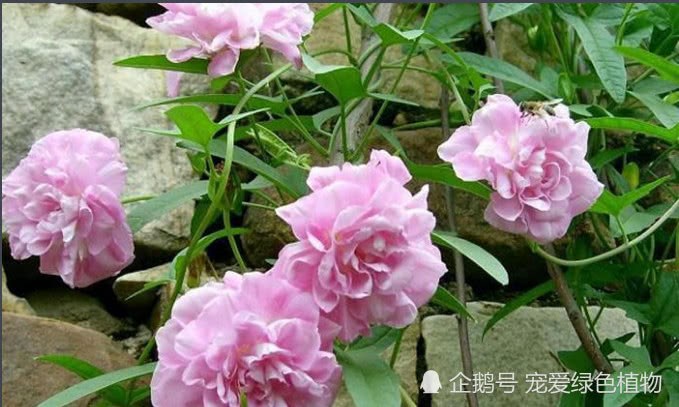
I wonder if you have noticed that after summer arrives, some flowers do not grow or bloom, and even develop yellow leaves, while others grow like crazy, surviving whether tossed in water or in soil, with extremely tenacious vitality and no small ornamental value. This flower is the "double-flowered Japanese bindweed" (Calystegia pubescens).
The double-flowered Japanese bindweed is a climbing vine flower plant, extremely cold-resistant; it can even bloom at a temperature of minus 40 degrees, and in summer's hot, dry weather of 38-40 degrees, its growth and blooming are unaffected. So we say it has tenacious vitality and strong adaptability, unaffected by freezing cold, growing vigorously and blooming even more brilliantly!
The flowers of the double-flowered Japanese bindweed are pink, carrying the meaning of endless life. At peak bloom, it opens nearly a hundred flowers a day, and each flower has more than 50 petals, like a colorful tapestry, magnificent and beautiful; when a breeze stirs, it is like butterflies fluttering, charming in form and shadow. Because its flowers look very similar to peonies, but compared with peonies the flowers are not very large, it is called double-flowered Japanese bindweed.
The vitality rating of the double-flowered Japanese bindweed can reach five stars. Because it is a very tough plant with especially strong adaptability to the environment, it can be planted in ordinary garden soil. Because its root system is overly developed and it is a perennial with persistent roots, it is somewhat invasive. It is recommended to plant it in flower pots and try not to cultivate it in gardens, to avoid it spreading wildly in the garden and causing inconvenience for future cleanup, because its growth really is hard to control and can get out of hand.
The double-flowered Japanese bindweed is the most fertilizer- and water-loving plant. When caring for it, we can water it frequently to keep its soil in a constantly moist state, but only a moist state. If too much water is given and water accumulates in the pot, it will cause root rot, because the double-flowered Japanese bindweed's root system is fairly developed and twines together like a mass of white worms, so water must never be allowed to accumulate in the pot.