What food does the light-vented bulbul eat? A detailed explanation of its main diet
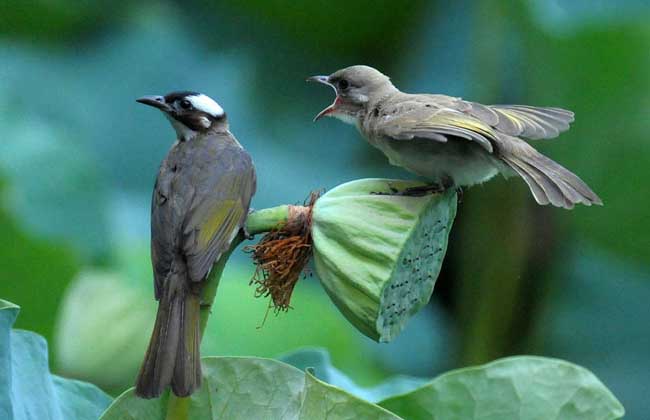
The light-vented bulbul, also known as the Chinese bulbul, White-headed Bulbul, and White-headed Shell Bird, is a small bird of the genus Pycnonotus in the family Pycnonotidae, order Passeriformes. It is a songbird. In winter, northern birds migrate south and it becomes a migratory bird, while the Taiwan subspecies is a resident bird in Taiwan, China. Its average lifespan is about 10 to 15 years. The light-vented bulbul eats large numbers of agricultural and forestry pests and is one of the beneficial birds of agriculture and forestry, very much worth protecting. Let us take a look below at what food the light-vented bulbul eats!
What food does the light-vented bulbul eat?
The light-vented bulbul is an omnivorous bird, eating both animal-based food and plant-based food. Its animal-based food mainly includes scarab beetles, ground beetles, flower beetles, snout beetles, noctuid moths, ladybugs, locusts, snakes, bees, flies, mosquitoes, ants, long-horned fireflies, cicadas, and other insects and larvae of the orders Coleoptera, Lepidoptera, Orthoptera, Hemiptera, and so on, as well as invertebrates such as spiders and ticks. Its plant-based food mainly includes the fruits and seeds of plants such as wild hawthorn, wild rose, huckleberry, euonymus, mulberry, photinia, privet, chinaberry, cherry, neem, grape, Chinese tallow tree, cabbage, indigo, wild jujube, camphor, and catalpa.
The living habits of the light-vented bulbul
The light-vented bulbul likes to build its nest in acacia or banyan trees. In cities, it is commonly seen building bowl-shaped nests from dry grass or silvergrass spikes in balcony flowers and potted plants among tree clumps. Every year from March to May is the breeding season of the light-vented bulbul. During the breeding season, each pair of light-vented bulbuls establishes its territory, and the range is small. The nest is usually built in mixed woods or bushes not far above the ground. The female and male birds raise the chicks together, usually breeding 1 to 2 times per season, with 3 to 4 eggs per clutch. During the breeding season, they feed almost entirely on insects. The young birds need about two weeks of incubation before hatching, and after about two more weeks of feeding, they can leave the nest.
The population status of the light-vented bulbul
The light-vented bulbul is a bird endemic to China and a common bird in the Yangtze River basin of China and the vast areas to its south. The distribution range of this species is very large and does not approach the threshold criteria for a vulnerable or endangered species (distribution area or fluctuation range less than 20,000 square kilometers, habitat quality, population size, fragmentation of distribution area). The population trend is stable, so it is evaluated as a species with no survival crisis. It has been listed in the "List of Terrestrial Wild Animals under State Protection that Are Beneficial or of Important Economic or Scientific Research Value," issued by China's State Forestry Administration on August 1, 2000.
Artificial breeding and selection of the light-vented bulbul
1. Bird selection: Generally, light-vented bulbuls are kept for listening to their pleasant calls, so males are mostly chosen, but males and females have similar plumage colors and are relatively difficult to distinguish. Experienced people can identify them by characteristics such as the male's chest being darker gray while the female's is lighter, and the male's white nape being clear while the female's is slightly dull. Young birds have grayish-brown heads, olive-brown backs, and grayish-white abdomens and undertail coverts, making them easy to distinguish from adults. Because adult birds captured in the wild are timid and not easy to tame, chicks with growing feather quills or young birds about to leave the nest are usually taken for rearing.
2. Characteristics of the cage: The light-vented bulbul eats insects and fruit, and its droppings are plentiful, thin, and soft. It likes water baths, so the bottom of the birdcage should be a bright bottom with a droppings tray below, making it easy for droppings to fall through and for cleaning. A bamboo cage can be made at home, either round (26 cm in diameter, 30 cm high) or square (26×26×30 cm). In the north, a redstart cage can also be used for keeping it.
3. Feeding method: For keeping the light-vented bulbul, one kind of powdered feed can be used as a regular staple food, for example, mixing cornmeal, peanut meal, and cooked egg yolk in a ratio of 5:2:3 and feeding it, or feeding redstart powder (mung bean meal, cornmeal, cooked egg yolk, freshwater fish meal, or silkworm pupa meal mixed in a ratio of 5:2:2:1), often supplemented with some fruit and insect larvae and pupae.
4. Management and training: Under artificial keeping, the light-vented bulbul is a soft-food bird. The water in the water jar is easily polluted, so it needs to be scrubbed and replaced with fresh drinking water every day. Any fruit fed that is not finished on the same day should be taken out. Provide bath water every day (in summer) or every other day (in spring and early autumn), and let it bathe on its own. Scrub the birdcage once a week. The light-vented bulbul is not cold-tolerant, so when kept in the north, it must be moved indoors in winter, and taking it out for walks should be stopped.
5. Feeding requirements: The light-vented bulbul is suited to eating some soft, tender food. The water jar used is easily polluted, so it must be cleaned every day, and it must always be ensured that it drinks clean water. Any water not finished on the same day must be replaced. In summer, provide a water trough for the light-vented bulbul to bathe in; it is also needed in spring and autumn, and it will groom itself. The birdcage must be kept clean at all times and thoroughly cleaned once a week.