A detailed guide to tadpole farming techniques, master scientific breeding methods
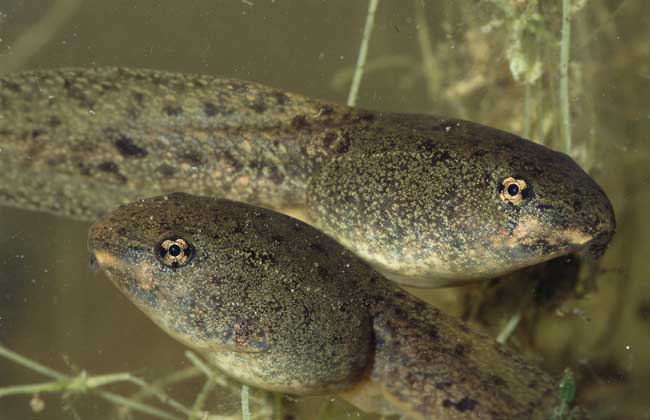
Tadpoles are the larvae of amphibians such as frogs, toads, newts and giant salamanders, and represent an early stage in the individual development of amphibians. Most tadpoles use rows of horny teeth in their mouths to scrape and eat algae, but if there happen to be small animal carcasses such as earthworms or beetles in the water, they will also gather in groups to gnaw on them. Let's take a look at tadpole farming techniques together below!
Management in the Early Growth Stage
1. Tadpoles do not forage within three days of hatching and rely on the nutrition carried over from the egg yolk to sustain life; feeding them too early will instead cause their death. After three days, the tadpoles' activity level increases noticeably, and they begin to forage once the two gill covers are fully formed. Feed them at fixed times at the standard of one egg yolk per 10,000 tadpoles, and appropriately add some natural plankton from the water, such as water fleas and algae.
2. Newly hatched tadpoles are small and weak, and are sensitive to the external environment, especially water temperature, water quality and light. When the water temperature is below 20°C or above 30°C, when dissolved oxygen in the water is insufficient, or when the pH is above 8 or below 6, the growth of the small tadpoles will be affected, and death may even result. Therefore, water quality management requires: a gentle constant flow, fresh and pollution-free, with the water temperature kept at 20-29°C and the pH at 6-8.
3. Adjust the water depth promptly as the outside temperature changes, generally 10-15 cm is good, and change the pond water once a day. For light, indoor natural light or diffused light under an outdoor shade awning is sufficient; direct sunlight should be avoided. After 10 days of growth and development, the small tadpoles can reach a body length of 1-1.5 cm.
Management in the Early Growth Stage
1. After 10 days, the small tadpoles' food intake increases and their growth and development speed up; the tadpoles begin to look for new food, but their digestive function is still not strong. How well they are raised at this point directly affects the survival rate of the tadpoles. Therefore, in terms of feeding, bait must be supplemented to meet the needs of their growth and development, mainly nutrient-rich paste-type bait such as egg yolk, corn flour and No. 4 flour, supplemented with tender algae and plants. The bait can be put in during the day or at night, once a day, but at fixed times. The feeding amount is generally one egg yolk per 1,500 tadpoles per day.
2. With careful rearing, by 20 days of age the tadpoles can reach a body length of 2 cm, their body color turns light brown, there are milky white markings on the back, and there is a distinct black V-shaped marking where the body meets the tail. For tadpoles aged 10-20 days, management requires keeping the pond water clean to prevent poisoning, changing the pond water once a day, with a water depth of 10-20 cm being suitable, and the pond water should avoid direct sunlight.
Management in the Mid Growth Stage
1. The digestive function of tadpoles in the mid growth stage continuously strengthens. To promote the rapid development of the tadpoles' digestive tract and adapt to the biological characteristic of "herbivory" during a particular tadpole period of amphibians, after 20 days of age, in addition to feeding paste-type bait, plant-based feed and algae such as duckweed should be fed.
2. The rearing management of tadpoles in the mid growth stage is relatively simple. They start with plant-based bait as the main food and animal-based bait as a supplement, then gradually transition to animal-based bait as the main food. Increasing animal-based bait will accelerate the tadpoles' metamorphosis, while plant-based bait can promote their individual growth, so they should normally be fed a mixture of both.
3. In terms of management, care should be taken to ensure the pond water is clean and free of pollution, and to remove bait residue from the pond every day. The rearing density is suitably 300-500 tadpoles per sq m; in this way the tadpoles can grow and develop normally, and by 50 days of age some tadpoles grow hind legs. By this period the tadpole survival rate can reach 95%. If the water temperature is on the low side, this period will last longer.
Management in the Late Growth Stage
1. The late growth stage is the key period when tadpoles transform into young frogs. During this period the tadpoles must grow hind limbs and forelimbs and change from aquatic to amphibious. At around 50 days of age, when the body length reaches more than 4 cm, the hind limbs grow; about 2 weeks after the hind limbs appear (65 days of age), the forelimbs begin to grow. After the forelimbs grow out, the tail begins to be absorbed, and at this point the stone frog tadpoles stop foraging and enter the metamorphosis stage.
2. In the late growth stage, in addition to feeding enough feed, a small amount of animal-based live bait feed should also be added. In terms of management, achieve graded rearing, shallow and clear water (the water level in the shallow area is only about 3 cm), half water and half land, easy access to land, dim light and a quiet environment. It takes about 10 days for tadpoles to go from entering the metamorphosis stage to completing metamorphosis, and the metamorphosis rate of tadpoles entering the metamorphosis stage can reach about 95%.
Notes on Tadpole Management
1. Tadpoles should be reared in grades. Tadpoles of the same age should be graded according to differences in individual size, once a month, to facilitate unified feeding management. Reasonably grasp the rearing density, and during the grading process carry out grouping and combining, so as to rear them in separate ponds at an appropriate density for individuals of the same grade.
2. The feed should be varied in type and of high quality, and a reasonable feeding amount should be correctly grasped: neither too little nor too much. Feed at a fixed time once a day, with a balanced amount each time, gradually and appropriately increasing as age increases. During the tadpoles' peak feeding season, or around metamorphosis, feeding management should be carried out even more strictly to prevent the occurrence of various diseases or unnecessary losses caused by unsuitable environmental conditions.
3. Tadpoles hatched early should be given enhanced rearing to promote metamorphosis in the same year. Tadpoles hatched late should have their feeding amount reasonably controlled so that they do not metamorphose in the same year, allowing the tadpoles to overwinter in order to reduce the mortality rate. Usually, tadpoles from eggs laid and hatched from May to July can metamorphose during the three months of July to September, while tadpoles bred and hatched after August to September must overwinter and can only metamorphose into young frogs after April of the following year.