What Are the Natural Enemies of Pythons? A Look at the Animals That Prey on Pythons in Nature
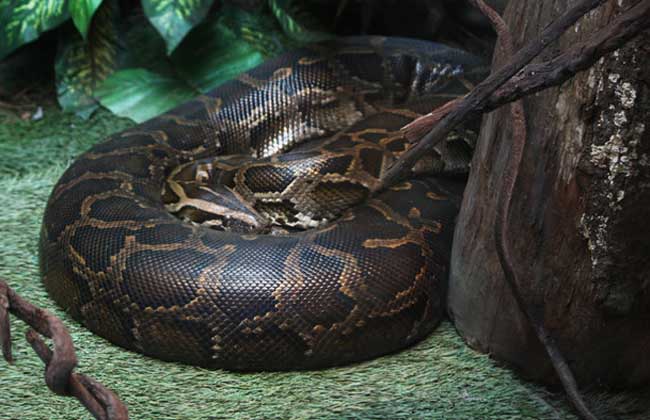
The python is one of the more primitive snake species in the world today, and it has many natural enemies in nature, because some pythons are relatively small, such as tree pythons. For small pythons, many carnivorous animals, including slightly larger snake "relatives," are their natural enemies. Let's take a look below at what the natural enemies of pythons are!
Caiman
Caiman is the collective name for animals in the genus Caiman of the family Alligatoridae. They are small to medium-sized crocodilians and are related to alligators. Hatchlings and young caimans mainly feed on invertebrates, especially beetles, which are their main food, and they also eat snails, shrimp, and crabs. Subadults and adults mainly feed on vertebrates, including aquatic and terrestrial vertebrates. Their hunting strategies include lying still in ambush to surprise terrestrial vertebrates passing by, lying in the water to ambush fish and other aquatic vertebrates that swim near, and sometimes using their bodies and tails to drive fish into shallow water or to drive fish in open water toward narrow banks before preying on them.
Cougar
The cougar, also known as the mountain lion, American golden cat, and puma, is similar in size to the leopard, but has no markings in appearance and a relatively smaller skull. It inhabits various environments except tropical rainforests, is good at climbing and jumping, and can be active all day. It is solitary and carnivorous, often killing various vertebrates by ambush, mainly feeding on wild animals such as rabbits, sheep, and deer, and when hungry it will also steal domestic livestock and poultry.
Eagles
Eagle broadly refers to small to medium-sized diurnal birds of the falconiform type. They have a majestic posture and a fierce temperament, and in zoology they are called birds of prey. They catch mice, snakes, hares, or small birds. Large birds of the eagle family (eagles) can catch goats, sheep, and small deer. They often inhabit canyons, woodlands, forests, and other places, and during the breeding season they often soar in the air while making loud calls.
Lynx
The lynx, also known as the lynx cat, horse lynx, wildcat, and wild civet, is similar in shape to a cat but far larger than a cat. It lives in forest shrub areas and is more commonly seen in dense forests and on mountain rocks. It is solitary, good at climbing and swimming, and highly resistant to hunger. It can lie still in one place for several days and is not afraid of severe cold. It feeds on rodents, hares, and other animals, and also preys on small wild boars and small deer. Its den is mostly built in rock crevices, stone caves, or tree holes.
Summary: What is described above is basically the natural enemies of pythons during their juvenile period. For an adult anaconda, the only wild animals capable of posing a threat to its life are the cougar and the caiman. However, under normal circumstances, the cougar avoids the anaconda whenever it sees one, and the caiman occasionally becomes food for the anaconda. Therefore, apart from humans, the adult anaconda basically has no natural enemies.