Are pythons viviparous or oviparous? A detailed explanation of python reproduction
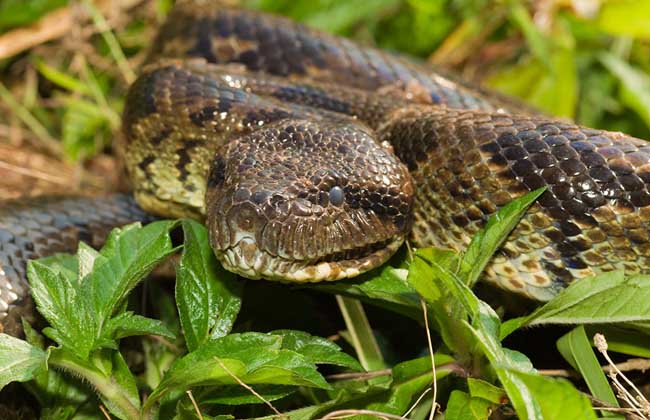
The python is one of the more primitive snake species in the world today, and is the largest of the world's more primitive snakes. It belongs to arboreal or aquatic snake species, lives in tropical rainforests and humid subtropical forests, and often feeds on small muntjacs, small wild boars, rabbits, squirrels and poultry. It can swallow an animal equal to or greater than its own body weight in one meal. Let's take a look below at whether pythons are viviparous or oviparous animals!
Are pythons viviparous or oviparous?
Pythons are oviparous animals. The python's breeding season is short, with the peak breeding rate from late April to late May. The female lays 12 to 50 eggs each time; the eggs are white and weigh about 30 grams. The female python has the habit of coiling up on the pile of eggs. At this time she does not eat, her body generates heat, and her body temperature rises by several degrees compared with usual, which is favorable for the incubation of the eggs.
Are boas viviparous or oviparous?
Most boas are ovoviviparous. Ovoviviparity is a reproductive mode between oviparity and viviparity, referring to a reproductive mode in which the animal's eggs develop into new individuals inside the mother's body before being produced from the mother's body, but the nutrition needed during development still depends on the yolk stored in the egg itself, with no material exchange relationship with the mother, or only gas exchange with the mother and very little nutritional connection in the later stages of embryonic development.
What is the difference between a python and a boa?
1. Python: The python is the largest of the world's more primitive snakes. It has traces of a pelvic girdle and hind limbs. Near the cloaca of the male snake there are obvious horny spurs from degenerated hind limbs, but in the female snake these are more degenerated and easily overlooked. It often feeds on small muntjacs, small wild boars, rabbits, squirrels and poultry, and can swallow an animal equal to or greater than its own body weight in one meal. It has strong digestive power and can digest everything except the hair of its prey, but after a full meal it can go without food for several months. It has constricting ability, often climbing and coiling around tree trunks with the rear part of its body, and is also good at swimming. It is oviparous.
2. Boa: Boas are a type of huge snake, mainly distributed in the Americas, with a few distributed on the island of Madagascar and the island of New Guinea. The better known is the green anaconda distributed in northern South America, which is the largest existing snake species, and there is also the boa constrictor, which is also very widely distributed and found in most tropical regions of the Americas, with as many as more than 10 subspecies. Some subspecies of the common boa are relatively large members among boas, with average body lengths ranging from about 1 m to 4 m, while some subspecies are very small, only 1.5 m long. Most boas are ovoviviparous.