Does the house centipede have venom, and how strong is its venom?
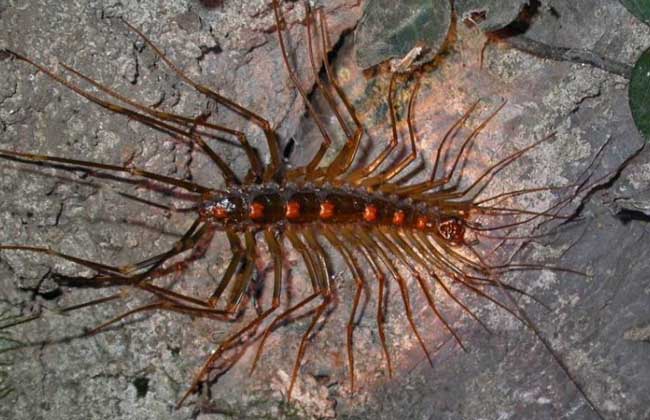
The house centipede is a type of centipede, also known as the straw-sandal sole, coin string, and other names. It is a close relative of the centipede, resembling a centipede but slightly smaller, with a yellowish-brown body color and fifteen pairs of slender legs. It lives in damp, dark places, preys on small insects, and is beneficial to farming. During the day it rests in rotting leaves and decaying wood, and only comes out at night to forage. It moves quickly and feeds mainly on insects and spiders. Now let us take a look at whether the house centipede has venom!
Does the house centipede have venom?
The house centipede has a certain degree of venom. Within a few hours after being stung by a house centipede, the skin develops cord-like erythema and blisters. At first the blisters are semi-transparent, then they become turbid pus or blood, with an obvious red halo around them. The blister walls are often scratched or rubbed open, forming an eroded surface. If the bitten area does not hurt or swell, there is nothing to worry about. If there is itching, 1% menthol calamine lotion can be used, and Nantong Jidesheng snake medicine tablets or Shanghai snake medicine can also be used, mixed with water into a thin paste and applied externally.
What food does the house centipede eat?
House centipedes mostly live outside under large stones, in woodpiles, and in compost heaps. Indoors, they can be found almost anywhere, especially in basements, bathrooms, and toilets. House centipedes feed on spiders, bedbugs, termites, cockroaches, silverfish, ants, and other household arthropods, injecting venom into their bodies with their venomous fangs to kill them.
Differences between the house centipede and the centipede
1. Appearance: The house centipede's body is shorter, and its walking legs are especially thin. It is mostly found running on walls. When part of a house centipede's legs are caught, that part of the walking legs breaks off from the body, allowing the body to escape. This is an adaptation of the house centipede for escaping enemies. The centipede is darker in color, has short legs, and moves in a winding, curved way when crawling, at no great speed. It is usually found more often on the ground.
2. Venom: Behind the head of the house centipede there is a body segment with a pair of hook-shaped maxillipeds. The ends of the maxillipeds are claw-shaped, and the tips of the claws have openings of venom glands that can secrete venom. After touching human skin, it can cause local herpes, making the person feel sharp pain and discomfort. The centipede's venom is relatively strong, and its bite is quite severe. Especially a large centipede's bite is very painful, but it usually poses no danger to life.