How much investment is needed to raise 20 donkeys?
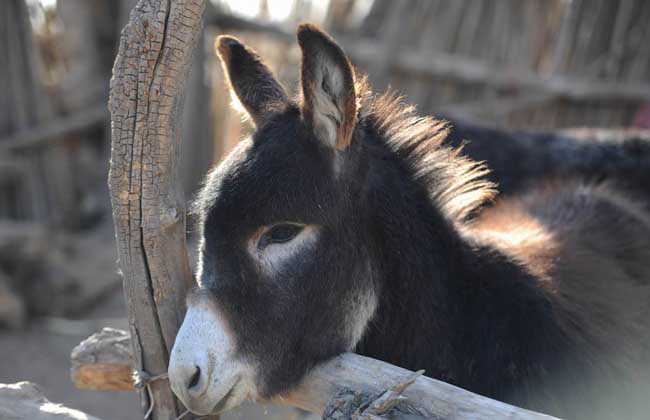
Donkey meat is tender and delicious, with high nutritional value, and has long enjoyed the fine reputation of "dragon meat in heaven, donkey meat on earth." Over the past decade, donkey meat has remained consistently popular in markets everywhere, and its price has been steadily rising, higher than the prices of pork, beef, mutton, horse meat and chicken. The price of donkey meat on the market is almost twice that of horse meat. Let's take a look below at how much investment is needed to raise 20 donkeys!
How much investment is needed for 20 fattening donkeys?
The price of buying one 150 kg donkey foal is about 4,000 yuan, so 20 head total 80,000 yuan. Fattening for 6 months, with 2 kg of concentrated feed per head per day at 3 yuan per kg, comes to 18,000 yuan for 20 head over 5 months of fattening. With 3-5 kg of roughage per head per day at 0.5 yuan per kg, 20 head over 6 months comes to 9,000 yuan, plus 1,200 yuan for water, electricity and disease prevention, and 20,000 yuan for other investment such as site construction, the total investment for raising 20 donkeys is 128,200 yuan. When fattening donkeys reach a body weight of 300 kg, at 26 yuan per kg, the price is about 7,800 yuan per head, and the sale price of 20 head is 156,000 yuan. The profit from fattening 20 donkeys for 6 months is 27,800 yuan.
How much investment is needed to raise 20 female donkeys?
The price of buying one adult female donkey is about 4,000 yuan, so 20 head total 80,000 yuan. Of this, the cost per female donkey is 1,100 days (3 years) × 1.5 yuan = 1,650 yuan. The first foal is sold at 1 year and 7 months of age (570 days in total), of which the first 6 months (180 days) are mainly for nursing, and the feeding cost is (570-180) days × 1 yuan ≈ 400 yuan. The second foal is sold at 6 months of age, and since it is mainly nursed before being sold, the feeding cost is not counted. The cost of two breeding services is 100 × 2 = 200 yuan, so the cost totals 1,650 + 400 + 200 = 2,250 yuan. The feeding cost for 20 head is 45,000 yuan, plus the 80,000 yuan cost of the female donkeys and 50,000 yuan in other expenses (water, electricity, disease prevention, site, etc.), totaling 175,000 yuan. Each female donkey can produce 2 foals in 3 years. At the end of the 3 years, after the second foal's nursing period ends, the first foal has already grown into an adult donkey, with a sale price of about 7,800 yuan, plus the second foal's sale price of 3,000 yuan after weaning, so the income per female donkey over three years is 10,800 yuan, and the total income for 20 head is 216,000 yuan. Therefore, the net profit from raising 20 female donkeys over 3 years is 41,000 yuan + 20 female donkeys.
What is the market prospect for meat donkey farming?
1. Large market demand: With social development and rising living standards, consumer preferences are gradually shifting toward green health-oriented products. Meat donkeys eat grass and grow meat, making them a green food that is better for people's health. Donkey meat is tender and delicious, and has long enjoyed the fine reputation of "dragon meat in heaven, donkey meat on earth." It is much favored by consumers, so donkey meat has consistently been in short supply. According to market surveys, due to the severe shortage of donkey products, the market gap is above 70%, and prices have risen by an average of about 40%, making it a hot commodity in the market.
2. Low farming cost: The donkey is a herbivore with excellent adaptability, strong disease resistance and easy management, making it very suitable for entrepreneurs to showcase their skills. According to relevant experts, compared with raising sheep, pigs and chickens, raising donkeys carries less risk, requires less investment and yields higher returns, and feed sources are also very extensive. Even if pasture grass is insufficient, crop straw, grain by-products and so on can be fully used as feed. Very little concentrated feed such as grain is used, so the feeding cost is low. In contrast, pigs and chickens are all grain-consuming farming operations, with high grain consumption, relatively small meat gain and low economic returns.
3. Donkey meat has many benefits: Donkey meat has health functions such as enriching the blood and tonifying qi and deficiency. It also has the characteristics of "two highs and two lows," namely high protein, low fat, high amino acids and low cholesterol, and has a good health-promoting effect on patients with arteriosclerosis, coronary heart disease and high blood pressure. Donkey hide is a raw material for the traditional Chinese medicine industry and light industry production, and has consistently been in short supply.
4. Strong policy support: National policies encourage individual entrepreneurship, especially in agricultural farming, where financial subsidies and support are granted, and various local governments have also introduced many financial subsidy regulations. You can consult your local government to obtain subsidy funds according to your own meat donkey farming scale.