What are the common snake farming projects?
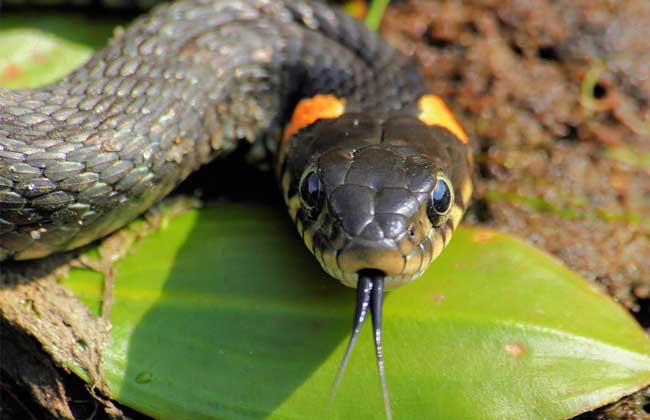
Snakes are a general term for reptiles with degenerated limbs, and every part of them is valuable. The market for snake meat and snake products looks promising, and artificial snake farming has also become a good way for farmer friends and laid-off workers to escape poverty and become rich. Successful experts believe that "raising one snake well is better than raising a flock of chickens." Common species farmed include cobras, water rat snakes, and king ratsnakes. Let us take a look below at what snake farming projects there are!
King ratsnake
The king ratsnake is a large non-venomous snake very common in temperate zones, with the scientific name Elaphe carinata, also known as the cauliflower snake, snake king, stinking yellow-jaw, etc. It relies on its own strong body and powerful constricting force to capture prey, and is named for the pattern on its head that resembles the Chinese character for "king." The snake is large in size and has many advantages such as cold resistance, strong adaptability, fast growth, a short rearing cycle, and ease of keeping and hatching. Many snake farms or snake keepers, especially in the northern provinces and regions, mostly use it as the rearing target among non-venomous snakes.
Cobra
Cobra is the general name for animals in the genus Naja. Although many other snakes in the world also have names containing "cobra" (such as king cobra, water cobra, and spitting cobra), they are not classified in this genus because of insufficient evolutionary relatedness. The genus Naja currently has about more than 20 confirmed species, but taxonomically there is often debate about the independence of species, so some sources may also differ.
Oriental ratsnake
The oriental ratsnake, commonly known as black-fleshed snake, grass brocade snake, long-striped snake, water rat snake, mountain snake, etc., is a non-venomous snake in the genus Ptyas of the family Colubridae. Its back is yellow-brown, and the rear part of its body has irregular black transverse bands. In China it is mainly distributed in the southern regions, living in mountainous, hilly, and plain areas below 800 m in altitude. The snake is relatively fierce in temperament and fast in attack, preying on rodents, toads, frogs, lizards, and other snakes. It hibernates from November to March of the following year, lays eggs from May to July, with 7 to 15 eggs, and each adult female snake lays 12 eggs per year.
Sharp-nosed pit viper
The sharp-nosed pit viper is a venomous monotypic snake under the subfamily Crotalinae of the family Viperidae in the suborder Serpentes. The only species under the genus Deinagkistrodon is the sharp-nosed pit viper, also known as hundred-step snake, five-step snake, seven-step snake, qishe, valley turtle, hundred-flower snake, Chinese moccasin, etc. It is a quite famous snake species in Asia, especially in Taiwan, China and southern China, where it has been highly regarded since ancient times. At present, no subspecies have been confirmed.
Black-tailed rat snake
The black-tailed rat snake, also known as black snake, black wind snake, etc., is a relatively large snake in the genus Zaocys of the family Colubridae. It has a very wide distribution range and belongs to the non-venomous snakes. It mainly lives in hilly areas and is a stenophagous snake, feeding on frogs (staple food), lizards, fish, rodents, etc. Due to habitat destruction and massive human hunting, the number surviving in the wild has greatly decreased, and protection is urgently needed. The black-tailed rat snake grows quickly, has strong adaptability, high disease resistance, and sells well on the market, making it very suitable for artificial farming.
Red banded snake
The red banded snake, also known as fire red chain, red-spotted snake, mulberry root snake, etc., is a venomous snake in the genus Lycodon of the family Colubridae in the order Serpentes. It is widely distributed in China, found in all provinces (regions) except western Inner Mongolia to ** and Tibet. It mostly lives in fields, mountains, plains, hills, and near-water areas, and often appears around residences, frequently found in villagers' courtyards. It feeds on toads, frogs, lizards, fish, mice, snakes, birds, animal carcasses, etc., and nests in tree holes, grave holes, burrows, or under stone piles and tiles.
Many-banded krait
The many-banded krait, also known as guojixia, white-jointed black, money white-flower snake, silver armor band, etc., is extremely venomous and is the fourth most venomous snake on land. It has a relatively gentle temperament and generally rarely bites people on its own, but when laying eggs and hatching, or when disturbed, it will also suddenly attack and bite. It preys on loaches, eels, and frogs, and also eats various fish, rodents, lizards, and other snakes.
Python
The python is one of the relatively primitive snake species in the world today. On each side of its cloaca there is a small claw-like trace, which is the remnant of degenerated hind limbs. Although these hind limbs can no longer walk, they can still move freely. Its body color is black, with cloud-like markings, a yellow-brown patch on the back, and a yellow stripe on each side. It is currently a wild animal under first-class national key protection and feeds on meat.
Pit viper
The pit viper, also known as tuqiuzi, tugu snake, tubudai, tugouzi snake, grass-flying snake, seven-inch snake, tugong snake, etc., is a small venomous snake distributed throughout China. It has strong cold resistance and mostly inhabits plains, hilly areas, thickets, field edges, and roadsides and other places near water sources. Besides being eaten, it has high medicinal value. The source stock is easy to obtain, and the farming method is not difficult, making it a new type of farming industry for people to become rich.
Chinese water snake
The Chinese water snake, also known as Chinese water snake, mud snake, etc., generally lives in streams, ponds, paddy fields, or canals in plains, hills, or at the foot of mountains. Its upper survival altitude limit is about 320 m. Its body contains rich EPA components, which are one of the main components of snake oil. The Chinese water snake is a national "three-have" (beneficial, of important economic value, and of scientific research value) protected animal, and is also a key protected animal in Hunan Province. It is not allowed to be sold or eaten.
King cobra
The king cobra, also known as mountain ten-thousand snake, mountain-crossing wind, etc., although called "king cobra," is different from the true cobra. It is not a member of the genus Naja, but belongs to the independent genus Ophiophagus. It is often seen in southwestern and southern China, usually inhabiting grasslands, open slopes, and forests. The king cobra's main food is other snakes similar to itself, so other kinds of snakes are rarely seen in the king cobra's territory. Its toxicity is extremely strong.
Black and yellow ratsnake
The black and yellow ratsnake, also known as yellow flower pine, black worm, black pine flower, etc., has a relatively gentle temperament and generally does not bite people when not threatened. It feeds on rodents and also eats birds and bird eggs. The black and yellow ratsnake is relatively large in size and can be eaten, used for medicine, and made into industrial products, so it has been massively hunted, and wild populations have been listed as an endangered species. Artificial breeding in China originally existed only in small amounts in Hubei, but it has now improved, and artificial breeding has been achieved in some areas. At the same time, it has also become one of the popular snakes among pet snake keepers.