Detailed Explanation of Mealworm Breeding Methods and Technical Key Points
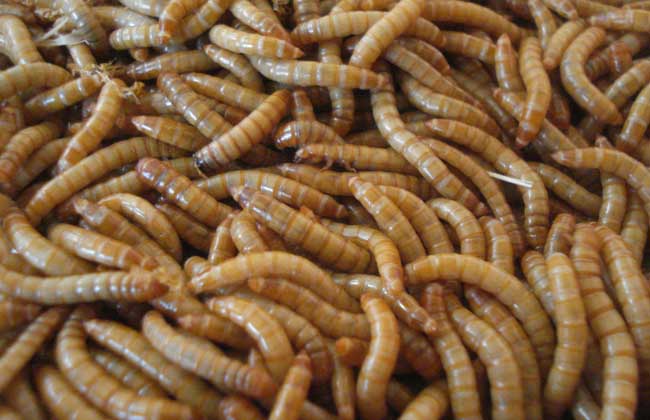
The mealworm, scientifically named Tenebrio molitor, belongs to the genus Tenebrio in insect taxonomy. It originated in North America and was introduced to China from the Soviet Union for breeding in the 1950s. Dried mealworms contain 30% fat and over 50% protein, and also contain macroelements such as phosphorus, potassium, iron, sodium and aluminum as well as various trace elements. They are known as a “treasure house of protein feed.” Let us take a look at the mealworm breeding methods below!
Breeding Methods
The suitable breeding temperature for mealworms is 20-30°C. At 20-25°C, the egg stage lasts 7-8 days, the larval stage 122 days, and the pupal stage 8 days; from egg to adult takes about 133 days. At 28-30°C, the egg stage lasts 3-6 days, the larval stage 100 days, and the pupal stage 6 days; from egg to adult takes only 110 days. Humidity also greatly affects their reproduction. The suitable relative humidity is 60-70%. When humidity is too high at 90%, most larvae die by the 2nd-3rd instar; when below 50%, egg production decreases greatly.
Breeding Site
Mealworms have low requirements for breeding sites. Indoor breeding must prevent rats, birds, geckos, ants, etc., and must prevent direct sunlight, air pollution and excessive noise. Attention should also be paid to ventilation, and the temperature throughout the four seasons should be controlled above 20°C and below 35°C. It is best to build the greenhouse semi-underground, because a semi-underground greenhouse can effectively preserve temperature and greatly save heating costs. The advantages of a semi-underground greenhouse are low cost, easy construction, and warm in winter and cool in summer.
Breeding Equipment
For mealworm breeding, cardboard boxes, basins, vats, cement pools, etc. can all be used. The inner walls are required to be smooth and at least 15 cm deep to prevent the insects from crawling out. At present, the ideal breeding equipment is a square wooden box. Nail wooden boards of 100*50*10 cm into a square wooden box, fasten the bottom with plywood, and seal the surroundings tightly with wide adhesive tape to make the inner walls of the box smooth and prevent the insects from crawling out. In addition, for moth egg-laying, wooden boards of 80*40*10 cm can be nailed into a box, with the bottom fastened with a 51-mesh wire screen (the kind used for sifting wheat). The moths are placed inside, and when laying eggs they extend their tails through the wire screen to lay eggs into the egg-laying box. A layer of bran can be spread in the egg-laying box to prevent the eggs from being damaged.
Feed Selection
Mealworms have a wide range of food sources. In artificial breeding, there is no need to study feed excessively, but in order to produce mealworms as quickly as possible, wheat bran, cornmeal, soybean cake, carrots, vegetable leaves, melon and fruit peels, etc. should be provided. Compound feed for chickens can also be fed to increase nutrition, but it is necessary to have about 60% wheat bran.
1. Common formula for larvae: 70% wheat bran, 25% cornmeal, 4.5% soybean powder, 0.5% feed compound vitamins. Mix the above ingredients evenly, press them into pellets with a feed pellet machine, or mix them into a dough with 16% boiling water, press into small cakes, and use after drying in the sun.
2. Common formula for adults: 4% fish meal, 15% cornmeal, 75% wheat bran, 4% edible sugar, 0.8% feed compound vitamins, 1.2% mixed salt. The processing method is the same as the larval formula. This formula can increase the egg production of mealworms and prolong the lifespan of adults.
Temperature Management
Mealworms are relatively cold-tolerant. Overwintering mature larvae can tolerate -2°C, while young larvae die in large numbers at around 0°C. 2°C is their survival limit, 10°C is the starting point for development, and above 8°C they enter dormancy. 25-30°C is the suitable temperature range, and growth and development are fastest at 32°C, but long-term exposure to high temperatures makes them prone to disease, and above 32°C they die from heat. The above temperatures refer to the internal temperature of the insect body.
Humidity Control
Mealworms are drought-tolerant and can survive in feed with a moisture content below 10%. In a dry environment, growth and development are slow, the insect body weight decreases, and a large amount of feed is wasted. The ideal feed moisture content is 15%, and the humidity is 50-80%. If the feed moisture content exceeds 18% and the air humidity exceeds 85%, growth and development slow down and they are prone to disease, especially moths. If the breeding room is too dry, clean water can be sprinkled; if humidity is too high, ventilation should be carried out promptly. The body moisture content of mealworms is 48-50%.
Light Control
Mealworms were originally warehouse pests. They are naturally afraid of light and are active by nature, and they are active day and night, which shows that they do not need sunlight. Female adults lay more eggs in darker places than under strong light.
Disease Prevention and Control
1. In hot and dry conditions, attention should be paid to adding fresh feed or spraying water in time to prevent dry wilt disease, and at the same time, fresh feed not eaten that day should be removed to prevent feed from rotting and promoting the reproduction of pathogens.
2. In areas with humid weather, the frequency of sifting manure should be appropriately increased, and feeding should be done once every 1 or 2 days, preferably with a slight remainder left in the breeding box. This can also reduce the incidence of disease in mealworms.
3. After each batch of insect breeding is completed, disinfect the site and breeding containers. A 0.5-1.5% potassium permanganate solution can be used to spray the surface of objects for disinfection. Bleaching powder, formalin solution and other disinfectants can also be used.
4. Appropriately reducing breeding density can reduce the occurrence of disease and avoid excessive insect body density causing mutual killing that creates wounds and gives pathogens opportunities to invade.
5. In areas where mites occur more seriously, the feed used should be spread thinly in the sun at noon for 20-30 minutes to kill the mites. If necessary, spray a 40% dicofol 800-1000 times dilution on the breeding site and containers to kill mites.
6. Diseased insects should be picked out in time. At the same time, 0.25 g of oxytetracycline can be ground and mixed with 200-300 g of cornmeal and fed for 3-5 days. Furazolidone, chloramphenicol, etc. also have good curative effects.