What food do thrushes eat? A complete guide to correct feeding methods
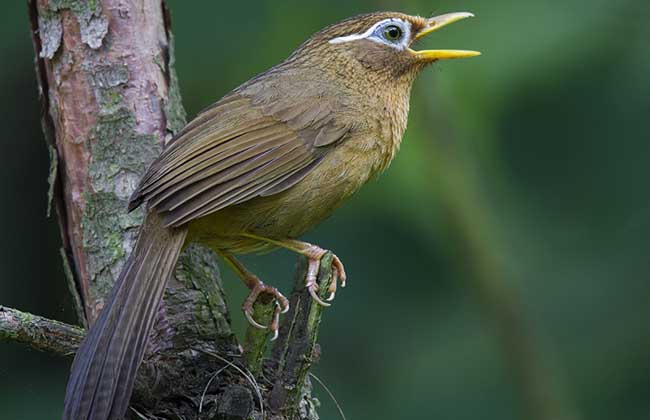
The thrush is a bird of the order Passeriformes, family Timaliidae (thrushes and babblers). It lives in the mountain forest areas south of the Yangtze River in China, likes to fly through and perch in shrub thickets, and often forages in the grass beneath the forest. It is not good at long-distance flight. During the breeding season, the male often hides alone among weeds and branches, and is extremely good at singing, with a very loud voice and a melodious, sweet, and very pleasant song. Now let us take a look at what food thrushes eat!
What food do thrushes eat?
The thrush is an omnivorous bird, but its food throughout the year is mainly insects, especially during the breeding season. Most of these are agricultural and forestry pests, including locusts, stink bugs, pine caterpillars, scarab beetles, larvae of the moth family Notodontidae (Lepidoptera), and larvae of other moths. Its plant-based foods are mainly seeds, fruits, grass seeds, wild fruits, strawberries, and so on. During the breeding season, the parent birds catch large numbers of insects in order to feed the nestlings. In the non-breeding season, as insects gradually become scarce, they feed on various plant fruits, weed seeds, or tender vegetables.
Feed choices for thrushes
1. Young thrushes: mung bean flour, yellow eel paste, tomatoes, and cooked eggs, mixed together in appropriate amounts with water and stirred evenly, fed with a wooden stick, 5 times a day, or tempted to eat with live insects or soft fruit. Once the thrush begins pecking at food, gradually increase the egg yolk powder and switch to the regular feed.
2. Adult thrushes: adult thrushes are mainly fed eggs, rice, and meat. Put millet into a pan and stir-fry over low heat until yellow but not scorched, then pour it into a basin. While still hot, mix in previously beaten raw eggs, knead and mix evenly with your hands, and once cooled, break it apart and rub it loose. The ratio is generally 00.5 kg of rice to 2 to 3 eggs. To mix in beef, cut the beef into pieces the size of two millet grains, dry them in the sun, and feed.
Feed formulas for thrushes
1. Spring formula: cooked corn flour 0.5 jin, soybean flour 0.2 jin, hawthorn 0.2 jin, Chinese yam 0.2 jin, broad bean flour 0.2 jin, mung bean flour 0.4 jin, pea flour 0.1 jin, goji berries 0.4 jin, beef 0.3 jin, free-range eggs 1.6 jin, yellow eel bones 0.5 jin. In spring, you need to boost the bird's spirit but must not let it get overheated, so the proportion of mung bean flour is relatively higher. It is best to provide live food every day (except mealworms).
2. Summer formula: cooked corn flour 0.5 jin, soybean flour 0.2 jin, hawthorn 0.2 jin, Chinese yam 0.2 jin, broad bean flour 0.2 jin, mung bean flour 0.3 jin, pea flour 0.1 jin, goji berries 0.1 jin, chicken 0.3 jin, free-range eggs 1.5 jin, yellow eel bones 0.8 jin. In summer, replace beef with chicken to ensure the thrush's stamina and nutrition, and let the bird slowly bring its “heat” down, which is good for molting in autumn, while at the same time making sure the bird's spirit does not drop too much.
3. Autumn formula: cooked corn flour 0.5 jin, soybean flour 0.2 jin, hawthorn 0.2 jin, Chinese yam 0.2 jin, broad bean flour 0.2 jin, mung bean flour 0.2 jin, pea flour 0.1 jin, goji berries 0.4 jin, beef 0.4 jin, black sesame 0.2 jin, free-range eggs 1.8 jin, yellow eel bones 1.5 jin. Autumn is the so-called season for “fattening up”; boosting spirit and replenishing stamina and nutrition are most important, so the proportion of yellow eel bones is increased, the proportion of beef is increased somewhat compared with spring, and the proportions of free-range eggs and goji berries are also increased. Black sesame is added to make the feathers appear glossy.
4. Winter formula: soybean flour 0.4 jin, hawthorn 0.2 jin, Chinese yam 0.2 jin, broad bean flour 0.2 jin, mung bean flour 0.2 jin, pea flour 0.1 jin, goji berries 0.4 jin, beef 0.4 jin, free-range eggs 2 jin, yellow eel bones 1.5 jin, black sesame 0.3 jin. Black sesame is added to put a gloss on the feathers and also has a certain effect in warming the bird, helping it resist the cold and get through the winter.