What to Do If a Hwamei Doesn't Sing? Cause Analysis and Solutions
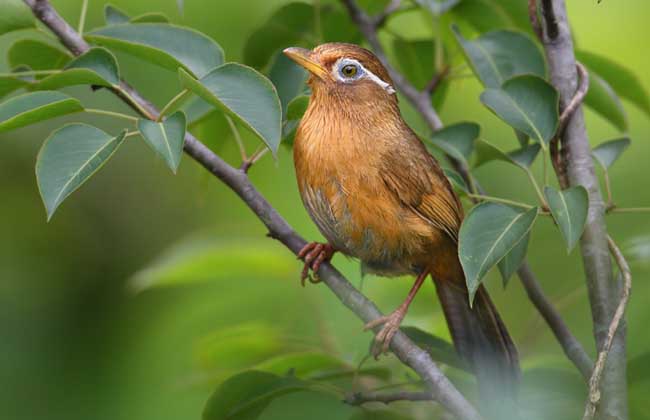
The hwamei (Chinese thrush) is a bird of the order Passeriformes, family Leiothrichidae. Most of its body is brown, with dark brown longitudinal stripes from the crown to the upper back, and a white eye-ring that extends backward into a narrow eyebrow stripe. It inhabits shrublands on hills and thickets or bamboo groves near villages. It is alert and timid, often foraging in the grass beneath the forest, and is not good at long-distance flight. Now let's take a look at what to do if a hwamei doesn't sing!
Environmental Factors
[Cause] A newly arrived hwamei will not sing in the early days because it is not yet accustomed to your home environment.
[Solution] The hwamei doesn't sing because it is unfamiliar with the environment. Just let it stay quietly for a period of time. Don't keep approaching it, or it will get scared and thrash against the cage. Generally, a newly bought hwamei should be kept with the cage covered by cloth for a period of time, then the cloth opened a little each day, so it can gradually adapt.
Fright
[Cause] Excessive fright can also cause the hwamei not to sing, and at the same time it will damage its body and mind, ultimately leaving the hwamei with no courage and no spirit. A hwamei without courage and character will naturally not sing.
[Solution] After a hwamei is frightened, you should pull down the cage cover and place it in a quiet place. Also, you need to see what frightened it, and at the same time pay attention to whether it is in season.
Unsuitable Feed
[Cause] Feeding a hwamei too much roasted feed will cause inflammation of the esophagus and lungs, so naturally it will not sing. At the same time, feed that doesn't suit its taste is also a cause.
[Solution] Young hwamei can be fed mung bean flour, yellow eel paste, tomatoes, and cooked eggs, mixed together in appropriate amounts with water, and fed with a wooden stick, 5 times a day. Or use live insects or soft fruit to entice feeding. When the hwamei begins to peck at food, gradually increase the egg yolk powder and switch to regular feed. Adult hwamei are fed eggs, rice, meat, etc.
Illness
[Cause] Just like humans, illness will cause a bird to be listless and weak all over, losing its original vitality and interest in life. How could a hwamei with such a weak body and low spirits have the strength to sing?
[Solution] If you see water in the bird's nostrils or it keeps shaking its head, it indicates a cold or fever. If it is a cold, grind up human cold medicine into powder and mix it into its water cup for three days. If it does not improve, then switch to fever medicine or other better cold tablets.
Loss of Condition
[Cause] Loss of condition is the main reason a hwamei doesn't sing. For example, not taking the bird out for a walk for too long, or not having contact with other hwamei, will cause the hwamei to lose condition and stop singing.
[Solution] It is best to carry the bird cage out in the morning and at dusk, to mountain forests or park woodlands, and hang the cage on a tree to let it sing, so it gets used to new environments. When moving, carry the cage and lower the cage cover, and let your arms swing naturally as you walk. Be sure not to move too vigorously. If you want to raise a hwamei that is good at singing, taking it out for walks frequently is an essential process.
Physiological Factors
[Cause] First, because the hwamei is afraid of exposing the location of its young, and also busy looking for food, it has no interest in fighting. It only sings, or even doesn't sing, when it is at leisure or when other birds occupy its territory. Second, after molting it consumes a lot of energy, and the bird is very fragile at this time, so it will not sing in order to conserve strength, and even if it sings it won't be for long; that is, it has lost condition.
[Solution] A hwamei not singing due to physiological factors requires "treating the root cause" and should be addressed starting from the rearing environment and rearing methods.